Showing posts with label airline branding. Show all posts

Air India and State Bank of India launch co branded credit cards

By BA Staff

Air India and State Bank of India (SBI) have launched two co-branded credit cards. An Air India SBI Signature Visa card, and an Air India SBI Platinum Visa card.

Highlights of the Air India SBI Signature Card

  • 4 points for every Rs 100 spent
  • 20 reward points for every Rs. 100 spent on Air India website and booking offices
  • Bonus reward points on annual spends of
  • Rs. 3 lakh - 20,000 bonus reward points
  • Rs. 5 lakh - 40,000 bonus reward points
  • Rs. 10 lakh - 90,000 bonus reward points


  • Reward points can be redeemed for
    • Air miles - 1 reward point = 1 Air Mile
    • Attractive gifts from the SBI Card Rewards Catalogue


  • Premium privileges include
    • 1 complementary domestic upgrade voucher
    • Complementary lounge access
    More details here.

    Highlights of the Air India SBI Platinum Card

    • 2 points for every Rs 100 spent
    • 10 reward points for every Rs. 100 spent on Air India website and booking offices
    • Bonus reward points on annual spends of
      • 2 lakh- 5,000 bonus reward points
      • 3 lakh- 10,000 bonus reward points
    • Reward points can be converted to
      • Air India Air Miles for free air travel
    • Premium privileges include complementary lounge access 
    More details here
    • Read more »

      Videos: Singapore Airlines launches its new ad campaign "The lengths we go to"

      by Devesh Agarwal
      Iconic national carrier Singapore Airlines (SIA) has launched a new global brand campaign named “The Lengths We Go To”, showcasing the airline’s commitment to putting the customer at the heart of everything it does.

      Explaining the thinking behind Singapore Airlines service experience, and the brand campaign, Singapore Airlines’ Executive Vice President Commercial, Mr Mak Swee Wah, said
      “Making every customer feel at home when they fly with us has always been the cornerstone of our service philosophy. Our customers’ preferences have always been the foremost consideration in the curation process for our new products which are sourced from all over the world. This new campaign sets out to reaffirm this commitment.”
      Tan Pee Teck, Senior Vice President of Product and Services at Singapore Airlines, along with three of his colleagues explain the customer centric focus of Singapore Airlines in this video which also shows insights on the rigorous training regime that goes to make the iconic Singapore Girl cabin crew.


      Mak further explains
      “The scenarios in the advertisements are examples of our commitment to delivering a special experience to our customers, with the Singapore Girl symbolising the lengths we go to. Despite the progression of time, the essence of the Singapore Girl and her gentle, caring ways remain especially relevant today, in an increasingly competitive environment where service excellence is the key differentiator,”
      And the Singapore Girl, plays the protagonist in all three commercials which were filmed on location – Fujian in China, Glasgow in Scotland, and Venice in Italy – and involved local production crews of hundreds of people.

      The first commercial depicts how SIA tailors quality products to suit the needs of its customers. A tea plantation and teahouse in Fujian were selected as the setting as this is the region from which SIA sources Jasmine tea.


      The second commercial illustrates how SIA delivers the comforts of home through innovative products and services. Renowned Glasgow-based Andrew Muirhead and Son, Europe’s oldest tannery, was used as the filming location as it is where the leather used in SIA’s Business Class seats is produced.


      The third commercial demonstrates SIA’s focus on curation to offer customers the best entertainment from around the world. It is set in Venice and features the Venice Film Festival, for which SIA is the Official Airline this year.


      The commercials will be released progressively over three weeks, with the first being broadcast from today. A combination film, incorporating all three advertisements, will be released later this month.

      The airline has also made a video showing the making of the advertisements.

      Read more »

      American Airlines launches a new livery and branding

      by Vinay Bhaskara

      Yesterday, Dallas-Fort Worth based American Airlines announced a major re-branding effort, including an all-new logo and livery which it unveiled on its new flagship Boeing 777-300ER aircraft. This new branding will be expanded across American's entire fleet over the next 3-5 years, as well as into airports and other corporate venues.

      The full press release from American is displayed below along with several images:

      FORT WORTH, Texas – It’s a new year and a fresh new look for American Airlines as the company today unveils a new logo and exterior for its planes, including the already delivered Flagship Boeing 777-300ER aircraft set to fly on Jan. 31.  In addition, American plans to continue taking delivery of new planes this year as part of its historic orders for 550 new aircraft.  The unveiling of the new logo and livery is the latest step forward in American’s ongoing journey toward building a more modern travel experience for its customers.
      New American Airlines logo


      “Since placing our landmark aircraft order in July of 2011, we’ve been building anticipation toward a moment in time when the outside of our aircraft reflects the progress we’ve made to modernize our airline on the inside,” said Tom Horton, American’s Chairman and CEO. “While we complete the evaluation of whether a merger can build on American’s strengths, we remain steadfast in each step we take to renew our airline, a step we take with great respect for our name American.  Today marks important progress in that journey as we unveil a new and updated look for the first time in more than 40 years.”
      New American Tails and Fuselage
      American is preparing to take delivery of hundreds of new, lighter aircraft featuring composite materials that must be painted.  Since the polished metal look was no longer an option, the importance of the paint selection became critical to honoring American’s silver bird legacy.  Silver mica paint was chosen as a way to maintain the silver heritage which American’s people and customers are passionate about, yet progress ahead with a clean new look.
      “Our new logo and livery are designed to reflect the passion for progress and the soaring spirit, which is uniquely American,” said Virasb Vahidi, American’s Chief Commercial Officer.  “Our core colors -- red, white and blue – have been updated to reflect a more vibrant and welcoming spirit. The new tail, with stripes flying proudly, is a bold reflection of American’s origin and name. And our new flight symbol, an updated eagle, incorporates the many icons that people have come to associate with American, including the ‘A’ and the star.”
      "A new take on the eagle"
      Since entering the restructuring process, American has made a series of strategic investments designed to place customers at the center of all it does and give employees the tools, training and leading technologies they need to provide customers with a uniquely American experience, while also creating growth and opportunity for its people.
      Today’s news is a reminder that while there are still significant decisions that need to be made about the future of the company, American remains focused on continuing the forward movement of the many investments that have been announced in the past year, including:
      The new American livery on their flagship: Boeing 777-300ER
      • Industry’s Most Modern Fleet: This year, American will take delivery of nearly 60 new aircraft, including the new Boeing 777-300ER which will enter into service on Jan. 31.  In July, American will begin taking delivery of Airbus aircraft made of lighter, more fuel efficient composite materials, which must be painted.  The airline continues investments to offer state-of-the-art inflight Wi-Fi, in-seat entertainment, universal AC power outlets at every seat, and Main Cabin Extra seating on all mainline aircraft. In addition, American has plans to offer fully lie-flat premium class seats on all of the airline’s widebody aircraft and transcontinental fleet.
      • Expanded International Service: American strengthens its network this year with expanded service to more destinations worldwide, including more international and domestic routes from Dallas/Fort Worth, more European and domestic service from Chicago O’Hare, new service to Europe from New York, and new service from Miami to Latin America and the Caribbean.  This year, American also will begin the following international services: Dallas/Fort Worth ─ Seoul, South Korea; Dallas/Fort Worth ─ Lima, Peru; Dallas/Fort Worth – Bogota, Colombia; Chicago O’Hare ─ Dusseldorf, Germany; New York JFK ─ Dublin, Ireland; Miami – Pointe-a-Pitre, Guadeloupe; Miami – Fort-de-France, Martinique; Miami – Curitiba, Brazil; and Miami – Porto Alegre, Brazil. 
      • Information in an Instant: The airline announced plans to supply flight attendants, pilots, and maintenance workers with their own tablet devices, designed to give them real-time information and better operational insights to do their job more efficiently. Beginning next month, employees will also be equipped with new technologies at the airport designed to make the travel experience easier and more convenient.
      • Top-Notch Onboard Experience: Earlier this month, the airline rolled out new enhancements in premium class cabins on international routes, including elegant new china, more menu choices, and a more personalized service similar to a restaurant. In addition, American will expand the availability of Samsung Galaxy tablets for entertainment use in the premium cabins to more routes later this year.
      American Eagle and the AAdvantage® program also will get a new look as of today.  The first American Eagle plane will fly the new livery beginning in February.  Updating the new look across American’s network is a long process and will be rolled out over time to the airline’s airports, interiors and exteriors of aircraft, new uniforms, products and services, and technology platforms like AA.com and the American mobile apps.
      Expanding the new brand to in-flight service
      American’s new look was created with input from our customers and our people, and in partnership with FutureBrand – a leading global brand consultancy.  In addition, American today launches a new advertising campaign designed to showcase the new look.  The advertising campaign was developed with agency partner McCann Worldgroup.
      For more information on American’s new look, and to keep up with progress as the brand rollout continues, visit aa.com/newamerican.
      As we said before, American will be repainting these aircraft over the next 3-5 years. Not all of the current planes in American's fleet will be getting the new livery. Both the McDonnell Douglas MD-80 and Boeing 757 fleets are scheduled to be retired (at least in part) over that time-frame, so parts of those fleets could get the new livery, though American is still making decisions on that process. Meanwhile, the fleet of Boeing 767-200ERs, which are exclusively used on premium transcontinental services between New York’s John F. Kennedy International Airport (JFK) and San Francisco International Airport (SFO), and JFK and Los Angeles International Airport (LAX), will be phased out of the fleet between November 2013 and 2014, so they will not receive the new branding.

      Public reaction, based on empirical observation of Twitter and the Web in general, is mixed towards American's new brand. The logo has gotten generally positive reviews, while the opinion on the livery skewed more negative, with a significant vocal group expressing dismay at the loss of iconic images like the eagle in the logo and the double "A"s on the tail. The old American livery has been around for more than 30 years, and it is one of the most recognizable liveries within the United States and around the globe.
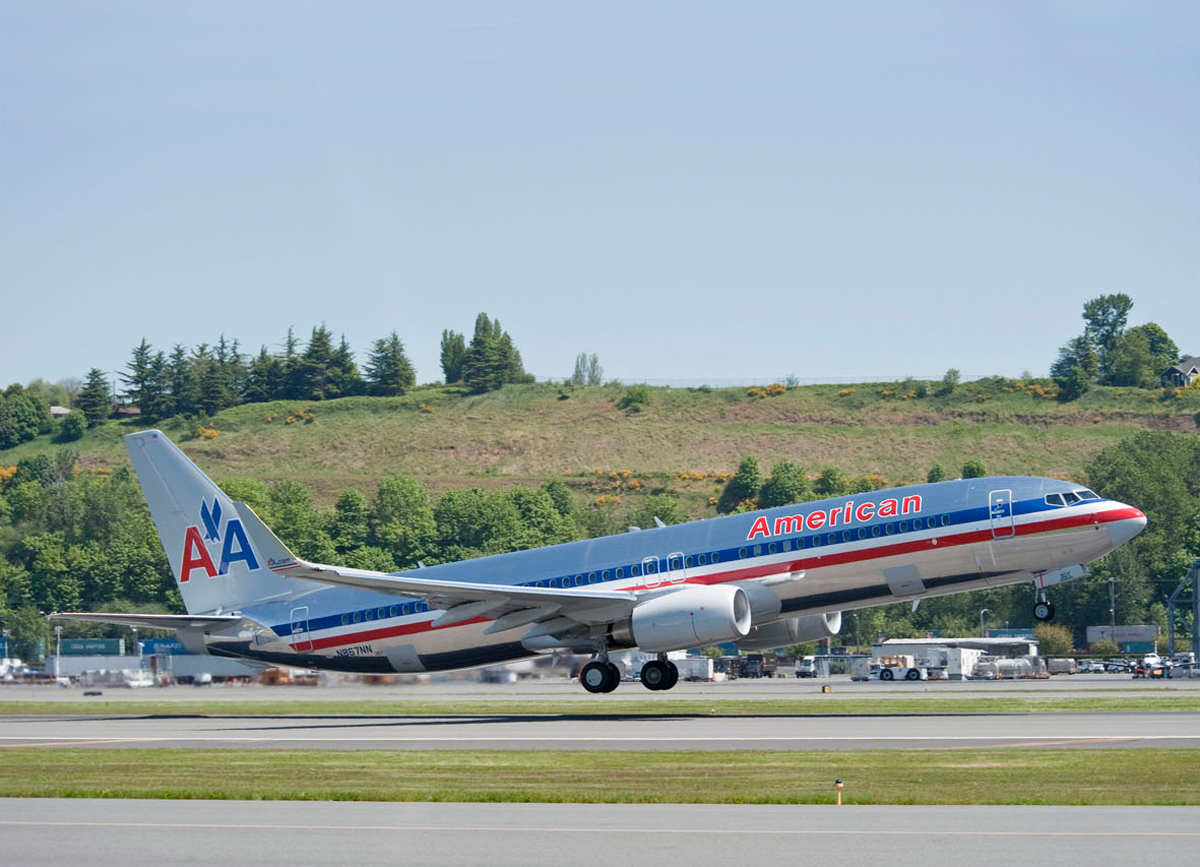
      Old American Airlines livery
      My opinion is that I'll miss the old and iconic American Airlines livery but that it was time for a change. Unfortunately, the sad truth is that the current American Airlines branding was associated with a bankrupt and aging carrier. This new branding is bold and stylized, with a new take on the old American Airlines icons. Readers, what are your thoughts on the new brand for American?
      Read more »

      Video: American Airlines unveils new livery and branding. Go behind the scenes.

      Dallas Fort Worth based American Airlines has unveiled a new livery and branding. In these two videos you can see a CGI simulation of the new livery on the airline's flagship Boeing 777-300ER.

      Also go behind the scenes in a video on how the new branding and logos were created.


      Share your thoughts via a comment.
      Read more »

      Video: Lufthansa's new "nonstop you" campaign's TV ad

      Image courtesy Lufthansa
      At the ITB show in Berlin, German carrier Lufthansa announced a new media campaign titled "nonstop you".

      The new campaign attempts to build on the carrier's strong reputation amongst business travellers and also targets leisure travellers more directly than before.

      Signifying a change in focus by airlines across the globe this year, the campaign focuses on the passengers and their wishes, experiences and dreams that are linked with flying Lufthansa.

      The new brand positioning was explained by Dr. Reinhold Huber, Senior Vice President Product and Marketing, Lufthansa German Airlines,
      “It signals a change in perspective. Now we are no longer talking so much about what Lufthansa does or what we do for our passengers. Rather the focus is on the people we are doing it for.”
      This focus on "passengers as people" is also found at Dubai based Emirates airline which revealed its new "Hello World" campaign and TV spot recently.

      In this, the first English ad, Lufthansa uses owls for the warm cuddly feeling, and moving on to its metal birds and a low fare offering. The one aspect of this ad that escapes me, is the Airbus A380 superjumbo. The ad appears to be targeted at the European market, and the A380 is only used on intercontinental routes by Lufthansa. So why feature it at all?


      Share your thoughts. Comments are welcome.
      Read more »

      Video nostalgia: The TV ads of British Airways - The world's favourite airline

      British Airways is one of the world's most recognisable airlines and at 93 years, one of the oldest. The radio call sign for British Airways is Speedbird, based on the stylised icon of the airline's predecessors, Imperial Airways and BOAC, and probably best symbolised by Concorde.

      The airline has naturally relied upon and continues to rely on history and nostalgia for the "feel good" factor in its advertisements. The musical theme predominantly used is The Flower Duet by Léo Delibes. Yanni's Aria is a variant.

      One of the most famous series of advertisements by the airline were with the tagline "The World's Favourite Airline" which debuted in 1989 with the famous "Face" advertisement, considered one the best TV ads of all time, and also one of the most expensive.


      The above ad is the one revised in 1994 to show the new uniforms. The original 1989 ad can be viewed here. British Airways finally dropped the tag-line 12 years later in 2001 when it was superseded by German flag carrier Lufthansa in terms of passenger numbers.

      Other ads of this era include the Island ad, and the Cry When Happy ad. One of my favourites from this genre is the "Rebecca" ad which touches upon human characteristics. One can only wonder where those wonderful human touches have disappeared to, in today's rushed world of air travel.


      In 2007 the airline adopted a new tag line "Upgrade to British Airways" but still retained the musical theme.

      British Airways also "Indianised" their musical theme in their 'Namaste India' ad which targeted the emerging upscale Indian tourist market.


      In September 2011, to maximise its 90 years of operations, British Airways rolled out its "To Fly. To Serve." ad, the airline's largest TV campaign in almost a decade.


      This year, to celebrate the London Olympic games, British Airways have released an ad titled 'The Race'.
      Read more »

      Jet Airways consolidates low cost Konnect and JetLite brands but increases brand confusion

      Rishul Saraf and Devesh Agarwal

      India's largest domestic airline Jet Airways, has announced a unification of its two low cost brands JetLite and Jet Airways Konnect to be called JetKonnect from March 25, 2012.
      • As per the airline, a "gradual rebranding" of the JetKonnect brand will commence on March 25, manifesting itself on letterheads, the JetKonnect website, boarding passes, tickets, stationery.
      • Signages at all check-in and ticketing counters will have dual branding reflecting the existing Jet Airways and the new JetKonnect logos.
      • Ticket sale for JetKonnect flights will commence from March 20 2012, with travel validity from March 25, 2012 onwards
      • Effective March 26, 2012 guests to jetlite.com would be automatically redirected to the new, re-branded jetkonnect.com
      • Some JetKonnect flights will operate under the S2 code, while others will have flight numbers prefixed by the 9W code. 9W and S2 will also continue their existing Codeshare agreement.
      This is definitely a step forward for Jet which has long battled brand dilution and confusion due to presence of multiple brands which frequently overlapped each other.
          One step forward, two steps back

          Without enlarging, is this a Jet Airways plane or a Konnect?
          Our special correspondent Rishul Saraf had proposed, in his earlier article, that Jet Airways should merge its two low cost brands to remove brand confusion.

          To eliminate the prevailing brand confusion in the Jet Airways setup, Jet has uplifted Konnect from a temporary sticker on mainline full service Jet Airways planes into a full fledged “JetKonnect” LCC brand, and merging the colour schemes of the JetLite brand (see picture of the new livery here.)

          Over the long term this will result in brand recall, but, Jet Airways appears to have taken one step in the right direction, and two steps backwards in the confusion department.

          Two airlines, one brand ..... confusion

          One has heard of one airline operating two brands, but for reasons unexplained, the JetKonnect brand will be operated under both the low cost JetLite airline code (S2) and the existing full service Jet Airways airline code 9W.

          Two airlines, one brand? How will the passenger differentiate the two?

          Unfortunately, there is no clarity from Jet Airways. The airline's answer "we will put a small tag line showing Operated by JetKonnect".

          This is already being done, which then begs the question, why this branding exercise?

          LCC to drag down mainline full service brand ........ what is Jet thinking?!?!

          If the confusion between the two existing LCC brands Konnect and JetLite isn't enough, the crew on the new JetKonnect LCC flights will wear the same uniform as the mainline full service Jet Airways, and JetKonnect will offer the same business class cabin on certain routes where guests will receive identical services as on the mainline full service Jet Airways Club Premiere class.

          If you can imagine what the planners at Jet are/were thinking, please do post a comment, for we cannot. Talk about downgrading the mainline carrier?

          Who is a target customer of Jet for the premium cabin (previously called Konnect Select)? Low fare or premium buyer?

          As an Low Cost brand, JetKonnect cannot command the same fare as the mainline Jet Airways, even though it is the same identical cabin, cabin staff, and service offering. At the same time, by offering the same cabin at a lower fare in the LCC brand, the mainline Jet Airways passenger will come to expect the premium cabin for lesser fares, and then over time, will value it less. It is a lose-lose scenario for Jet.

          Two airline codes, three brands, complete confusion

          Imagine a passenger steps on-board a JetKonnect stickered aircraft, operated under the S2 code, served by a Jet Airways attired crew. How is a passenger supposed to absorb and differentiate the triple combination of airline code, aircraft, and crew attire?

          Step back, review, and revise.

          The consolidation of the two LCC brands within the Jet stable is desperately needed, and JetKonnect as a permanent brand is welcome. However, the manner in which Jet Airways has chosen to proceed with this brand merger appears to create more confusion instead of removing it.

          May be Jet should take a step back, re-think and revise some of its actions, and implement a plan with much more clarity.

          What are your thoughts? Post a comment.
          Read more »

          VIDEOS: A trip down memory lane: Kingfisher and Air Deccan

          Given our recent shift in focus towards an analytical bent on Indian aviation (most of the guilt lies on my shoulders), there has been a dearth of some of the lighter content here at Bangalore Aviation. I think it also gets lost sometimes, just how much the both of us love flying and love this industry.

          Aviation is a mystical, powerful thing, and while the proliferation of low cost carriers has been very bad for the industry's finances, it has allowed more Indians than ever before to experience the magic of flying.

          Which is why I decided to pull out this old Air Deccan commercial from earlier this decade; it really shows how aviation in India has become so accessible in less than 20 years.


          Meanwhile, with the end of the line at Kingfisher starting to look more likely, we also thought that now would be a good time to reminisce. Kingfisher came to life selling a different, premium experience to the Indian traveler and for 4-5 years, it did just that. Please enjoy this trip down memory lane with one of Kingfisher's commercials, and be sure to share your memories of either carrier via a comment below.
          Read more »

          Jet Airways must remove brand confusion by consolidating its low cost Konnect and JetLite services

          TURBOCHARGING JET AIRWAYS PART 1
          By Rishul Saraf

          Jet Airways is a pioneer in Indian aviation. From the earliest stages of India’s economic liberalisation, with a fleet of just four Boeing 737-300 and 737-400, Jet Airways grew to reach a fleet size of over 92 aircraft, by 2008, and become a dominant force in Indian aviation.

          Since then, due to recession, competition and some say waning political clout, the airline and its brand have been on a downward slide. Jet’s finances look bleak and their operations, especially domestic, appear muddled.

          Despite these setbacks, Jet is, in my opinion, the Indian carrier with the highest potential to bounce back to consistent profitability and become the iconic brand of Indian aviation once again. To achieve this, the airline needs to re-energise its operations, remove brand confusion, and address some major hindrances it is facing, and will encounter, in overseas markets.

          Along with the main brand, Jet Airways offers two low cost brands – JetLite and Jet Konnect. These two low cost brands, which operate only domestic flights, constitute over 75% of Jet’s total domestic available seat kilometre (ASK) capacity; and one can infer by extension, the revenues.

          The Jet Airways flights, offer a full service Economy, i.e. meals and soft-drinks included, and Club Premiere, the business class. The erstwhile Air Sahara acquired by Jet, was renamed to JetLite and is operated as a low cost service, but with a separate air operator’s permit (AOP). All Jet Airways flights are coded 9W while JetLite is S2.

          During the 2008 economic slowdown, the low fare brands of IndiGo, SpiceJet and GoAir experienced a meteoric rise. To address rapidly eroding marking share, Jet wanted to increase its low cost capacity, but did not want to dilute the main Jet Airways brand. Jet could not increase JetLite capacity, since it was involved in litigation with the previous owners of Air Sahara at that time. Jet Airways instead came up with Jet Konnect service in which, under its existing air operator permit (9W), it converted much of its mainline dual class Boeing 737 fleet in to an all economy class low cost service. Once the market recovered, Jet converted some of the Konnect aircraft to feature business class seating (2+2 in each row), but, to prevent confusion with its mainline Club Premiere, labelled this class as Konnect Select, and called it an “economy plus” cabin, even though for all practical purposes it is a business class seat.

          While Konnect helped Jet Airways compete with the low fare carriers during lean times, and Konnect Select enhanced incremental revenues, this flooding of new brands on a less than stable base, confused passengers, and has resulted in fragmenting the unified and powerful brand the carrier once commanded.
          The first Jet Airways Konnect flight lands at Bangalore International Airport
          Now, both Konnect and Konnect Select brands’ have run their course, very rarely will one find a Low Cost Carrier running under the same brand as the parent full service carrier. For any organization to have various brands makes sense only if they are differentiable in terms of product prices, features, etc. Jet has failed in both these aspects.

          Going forward, Jet must eliminate its low cost brand confusion by consolidating and developing a distinctly separate and strong low cost brand. The additional air-operator permit (AOP) of JetLite is the perfect vehicle. It has the needed separation from the full service Jet Airways, can compete with low cost carriers not just from India but from overseas, like AirAsia, flyDubai, and others.

          This will also allow Jet to focus on full service and premium traffic and compete with mainline carriers like Emirates, Qatar, Etihad, Thai, Singapore Airlines, and others.

          JetLite continues to be a liability for Jet, apart from having a poor brand image in the market, JetLite continues to lose money year after year. A single unified low cost carrier, will help Jet remove these negative JetLite impacts once in for all.

          Rishul Saraf is an aviation enthusiast for the last three years when not engaged as an Engineering student. He has a keen interest in Jet Airways.
          Read more »

          Analysis of fleet share vs. passenger share in the Indian airline industry

          Every month passengers are bombarded with statistics by various airlines in India. Best on-time performance, largest market share, most preferred airline ...... the list is endless.

          Mathematical logic would dictate that an airline with the largest fleet of aircraft will have also have the largest share of the market, but an analysis of the passenger market share vs. the fleet share, based on the number of aircraft in each airline's fleet, throws up some very interesting results.
          Indian domestic airline market - Fleet share (based on number of aircraft) vs. market share (based on number of passengers)

          The airline with the largest fleet in the domestic market is Air India, but its market share of the number of passengers is low, and therefore results in a low fleet hare to passenger share ratio of 0.62.

          Kingfisher leads the full service carrier segment with a fleet to market share ratio of 0.95, but this also includes figures from their low cost Kingfisher Red service. Passenger market share leader Jet Airways is at 0.82 and this includes their low fare service Jet Konnect.

          For a better comparison between Jet and Kingfisher, if we add-up the numbers of Jet's other low fare subsidiary JetLite, the total group ratio of Jet at 0.865 still remains well behind Kingfisher's 0.95, suggesting a far more aggressive fleet utilisation strategy by Dr. Mallya's airline.

          Expectedly, the low fare carrier side, shows much higher ratios, due to their higher usage of aircraft and also the higher number of seats offered per flight due to an all-economy configuration. The laggard is JetLite with a ratio of 1 while SpiceJet and IndiGo are neck and neck at 1.75 and 1.76. In defence of SpiceJet, their figures appear lower since they inducted their 22nd aircraft only at the end of the month which skews the results.

          The surprise of the whole exercise are the results of industry minnow GoAir, who have an industry leading, fleet to passenger share ratio of 2.04. Clearly the airline has shaken off the demons of the past and is aggressive in their fleet utilisation.
          Read more »

          New age low fare carriers – great value for money and a far cry from RyanAir

          About two weeks ago, Air India announced it was going to extend its low cost operation Air India Express in to the domestic market. Across Twitter, Facebook and other social networking sites I detected a snigger from many fellow aviation bloggers and enthusiasts – Air India, a national carrier going low cost ? How low can Air India fall ?

          It got me thinking, what is the benchmark of a low cost carrier?

          Surely this poor view must have come from impressions of RyanAir - an organisation so cheap that it will even sell lavatory facilities or standing room tickets given the chance.

          Where do carriers like Southwest Airlines or JetBlue or Virgin America stand? How do these “low fare” carriers compare to the US legacy carriers like American, Continental, Delta, United, and US Air, especially in light of the latter's service cutbacks and “ala carte” pricing?

          How do Indian “low fare” carriers IndiGo, SpiceJet, JetLite, Jet Airways Konnect compare to other airlines in the US, or European or Asian low cost/low fare counterparts?

          I search of answers I embarked on a two week quest. The answers in my comparison study revealed some very interesting results.

          Southwest Airlines, JetBlue, Virgin America, EasyJet and most Indian “low fare” carriers like SpiceJet and IndiGo compare favourably to their “full service” counterparts.

          What did surprise me, is despite it's "charge for everything" approach, RyanAir does not offer a significantly lower fare than it's other low fare competitors. Is the RyanAir myth just a creation?

          Airline Seat Pitch Seat Width Food Beverage Water Baggage Airport Check-in One-way fare
          SpiceJet 32” 17” Buy Buy Free 20kg / 44 lbs Free $65.90
          IndiGo 30” 17.7” Buy Buy
          No hot bev
          Free cups. Bottle $0.60 20kg / 44 lbs Free $65.90
          Kingfisher Red 31” 17.8” Free Free Free 25kg / 55 lbs Free $67.94
          JetLite 31” 17” Buy Buy 1 Bottle Free 25kg / 55 lbs Free $67.94
          Jet Airways Konnect 30” 17” Buy Buy 1 Bottle Free 25kg / 55 lbs Free $67.94
          Southwest 33” 17” NA Free Free 2 pc Free $285.70
          JetBlue 34” 17.8” Free Snacks Free Free 1 pc $2 $209.60
          Virgin US 32” 17.7” Buy Free Free $15 / pc Free $225.60
          EasyJet 29” 18” Buy Buy Buy 20kg / 44 lbs Free $137.75
          RyanAir 30” 17” Buy Buy Buy Pay Pay $157.35
          Legacy (AA CO DL UA US) 31” 18” Airbus or 17” Boeing Buy Free Free Per Bag 1st$20 2nd$30
          3rd$125
          Free $333.60
          Air Asia 30” 17” Buy Buy Buy Kg. Slab 15$1.50 20$16.50 25$31.44 Free $56.00
          • One way fare was checked for a flight of approximately 2 hours flying time with a six day advance purchase.
          • RyanAir does not provide details. However their Boeing 737-800 aircraft configuration is the same 189 all economy seats as most other low fare carriers.
          • Indian carriers are prohibited from serving alcohol on domestic flights so beverage comparison is limited to non alcoholic drinks only. Most US and European carriers charge for alcoholic beverages.
          • EasyJet charges for baggage check-in and these fees are included in the fare.

          Compared to most of the full service legacy carriers across the world, these value carriers offer a fantastic product in terms of value for money. When compared to legacy carriers in the United States in most cases value carriers offer superior services right from the booking to on-board the flight, newer aircraft, and many more included services like baggage allowance and airport check-in, for free in their bouquet.

          With the cutbacks in service levels, the introduction of a-la carte pricing coupled with reasonably high fares, should the legacy carriers in the United States be even considered “full service” any more? The answer is a resounding no.

          In Europe too, some legacy airlines like British Airways are beginning to experiment the US in service level cutbacks, and will soon feel the pinch of the value carrier even harder.

          The expectations from a value carrier is in many ways dictated by the service levels of a full service carrier. In most Asian countries, two factors come in to play.

          First is the lack secondary airports, thereby making the airport cost structure the same for the value carrier when compared to the full service carrier. Value carriers have narrower options to obtain better efficiencies than their full service counterparts, which they achieve by :
          • turning around their planes faster. 30 minutes compared to 40~45 minutes
          • using a lean staff structure. Typically only one gate agent compared to four or five
          and other techniques common to value carriers across the world like common aircraft type, single class cabin, less food, less waste, higher aircraft usage etc.

          Second, the higher service levels of the legacy carriers in Asia forces the value carriers to offer a superior service and more "freebies". Indian value carriers do not charge for over-sized luggage, unaccompanied minors service, and when connecting to international flights, offer their passengers a two piece baggage instead of the traditional 20 kg allowance.

          In India, the only difference I could find between the full service carriers Air India, Jet Airways and Kingfisher was the availability of reading material, a hot meal on flights greater than one hour and free flow of beverages and water on board. The service levels of Kingfisher Red are almost the same as the regular Kingfisher with free hot snacks, mileage accrual, reading material, in flight entertainment system, right down to a valet service, but then Kingfisher is the exception not the norm.

          The value carriers like IndiGo and SpiceJet even have a "frequent flier" program for corporate travellers. Both airlines reserve their first five rows which have extra legroom, while SpiceJet adds a hot continental breakfast. GoAir too has introduced a concept of a "Business class" for an additional $20 where the legroom is increased to 34", meals are complimentary, the middle seat is left vacant, free baggage allowance of 35kgs/77lbs, and rebooking fees are waived.

          Traditional Indian hospitality, and the concept of Atithee (guest is greater than me) ensure smiling faces, helpful attitudes, and attentive service, regardless of airline.

          I was rather surprised at the fares. Indian carriers have surprisingly low fares, despite facing fuel costs which are almost double that of the international rates, and infrastructure and equipment costs in line with international norms. It will be great to hear from some informed readers on the possible reasons other than sheer competition since both SpiceJet and IndiGo both appear to be making profit.

          What is an airline? Is it a transport business? or is it a hospitality business?

          For RyanAir and most US legacy carriers, it appears to be the former. For the luxurious Emirates and Singapore Airlines it is probably the latter, but the sweet spot appears to be somewhere in between, but regardless it always boils down to Quality, Cost, Delivery, Service i.e. offering your customer the maximum value for their money.

          It will be great to hear from Bangalore Aviation readers on what differences you perceive between the "value" and the "full service" carriers.
          Read more »

          Airlines need to build strong digital brands to survive the recession in 2009

          In my first post of the year, I had collated predictions from industry experts for the future of the airline industry in 2009. Here's my own analysis on the current situation, and I feel, among other things, 2009 presents an opportunity for airlines to tap on technology to build stronger brands.

          Allen Adamson, MD of Landor Associates, made a statement in a recent article he wrote that resonated with me completely.
          "Conventional wisdom says that in tough economic times you take out the scalpel. You cut jobs, budgets, and programs, especially in the areas of advertising and brand-building. Well, for the first time in marketing history, there's an option that will increase rather than decrease your horsepower."

          Allen was referring to digital branding - or using technology to build the brand. And as you'd have realized from some of my previous articles, I'm a die-hard fan of this emerging field. Branding through technology allows not just airlines, but all companies to leverage on a tool that not just creates buzz, but is often free or cheap compared to traditional marketing means.

          Before I dive into why and how airlines can build a digital brand, let me address why airlines are shying away from digital branding.

          Uncharted waters may be risky, and what about ROI?

          Airlines, of all industries, tend to be very risk averse, due to the high cost environment that they operate in. It's only natural to take calculated risks, especially in this environment. But the essence is to take calculated risks. If the risks are well defined and counter-actions thought of in advance, then they're certainly worth a shot. The best way to beat fear is to define it.

          The other factor that often comes in while taking a marketing investment decision is that of Return on Investment (ROI). In some cases, Web 2.0 initiatives can be directly linked to revenues, but many of the times, soft ROI metrics need to be employed. For example, the purpose can be to engage a new target market, like students, by building an online community like GenFlyLounge by Lufthansa. Another aim can be to engage the employees better, just like Malaysia Airlines does with their blog. The key is to have a well-defined ROI metric before embarking on the project.

          Now that I've settled some nerves about venturing online with your brand, the question is why do it? For that, let's revisit what branding actually is.

          Brand Building 101

          Here's my own very simple definition of what airline branding is all about (feel free to quote me on this!).
          An airline first needs to define itself and know what it stands for. Next, it needs to communicate this message effectively to its target markets.
          I believe all airlines will be able to build a brand through the above two-part process. But to really stand out, a brand needs to be unique (something others can't offer), it needs to be genuine (and often personal) and it needs to be buzzworthy (worth talking about). And this is exactly what I believe technology can help airline brands achieve with relative ease.

          Airline branding using technology

          Advantages of building an airline brand online

          There are four key factors I feel airlines can benefit from, which come with building a brand online.
          1. Interaction without interruption - Airline brands are able to reach their target audience without disrupting the flow of their normal activities. Instead of having distracting (and expensive) billboards or advertisements, they can seamlessly integrate the message with a medium well suited for engagement. Virgin Atantic's Facebook page is a great example of this.

          2. Co-creation: Consumers these days like to have a say in the product and marketing strategy. And online tools like Twitter to gather feedback and use of sites like Suggestionbox.com gives consumers a stake in the game.

          3. Building a personality: It's much easier to build a personality online, rather than offline. For example, having employees blog about the airline, or having the CEO maintain his own blog suddently adds life to a faceless airline.

          4. Ease of experience: Airlines can use online tools to allow passengers to experience the brand without even stepping on-board the plane. Cathay Pacific's online experience site is a great example of this.
          So, doesn't it make sense to venture online with your airline's brand?

          These are just very brief points on the advantages of building a strong airline brand online. If you're keen to learn more, I'd like to invite you to register for a free educational webinar being led by me tomorrow, Janurary 8, entitled "Airlines 2.0: Using technology for innovative branding through the recession."

          Remember, you can still win a 2GB Apple iPod by commenting on any of the articles and subscribing to SimpliFlying by emailRSS for regular updates. The deadline for the contest is this Saturday, 10 Jan 2008. Hurry!
          -------------------------
          This is a guest post by Shashank Nigam, the author of SimpliFlying, a leading airline branding blog. He is a leading airline brand strategist and a well respected speaker and columnist on the topic.
          Reblog this post [with Zemanta]
          Read more »