Showing posts with label 100 Years of Civil Aviation. Show all posts

Commercial Aviation News Briefing: September 26th

by Vinay Bhaskara

India:
Air India launches austerity drive

Air India, in a move that defies its traditional profligacy, will be launching an austerity drive beginning October 1st.
  • Rohit Nandan, Air India's chairman, related in a memo that Air India will be enacting the following initiatives.Payments on reimbursements of entitlements and vouchers will be cut by 10%, in addition to a 10% cut in petrol and fuel entitlements.
  • Daily allowances for domestic and international travel will be cut by 10% across the board.
  • Lunch and meal allowances for company executives and managers, as well as mandatory "off" for working weekends, and holidays for this same group have been abolished
  • All reiumbursement for foreign travel for the purposes of conferences, workshops, and meetings will be stopped. Only travel for technical, and/or operational requirements will be reimbursed
  • 10% of the company's overseas employees will be laid off and/or re-located to India.
From a cost-cutting perspective, targeting such entitlements makes sense. The majority of world carriers have abolished such lavish employee benefits (though most do provide some free travel), especially for front-line employees. And Air India certainly needs to cut its costs, having suffered through net losses of more than US $1 billion in each of the past two fiscal years.

But such moves could end up causing discontent if company executives (especially the CMD) are seen to be flaunting such rules. While the travel of a few executives has a small effect on the finances of an airline, their entitlements can cause far worse problems for employee morale. Moreover, it's entirely possible that the austerity drive could be halted by political meddling; employee unions could easily mobilize a few "well meaning" politicians behind their cause (of keeping their entitlements).

Other Indian News:

Kingfisher cancels flights due to "scheduled maintenance"


Airline stocks take a tumble on the BSE

World: United Airlines pilots sue to stop merger integration with Continental

The United Airlines branch of the Air Line Pilots Association (ALPA) filed suit in a New York district court for the halting of merger integration between United and Continental, saying that the speed of integration does not allow adequate time for employee groups to learn new safety procedures. The suit is currently scheduled for a hearing on September 28th, just 2 days before the scheduled date for integration of new training and procedures, September 30th.

Wendy Morse, the head of the pilot union at United and a 777 captain, said pilots watched a computer-based slide show that lasts 54 minutes, and that some pilots have been designated to answer questions from fellow aviators. But pilots have gotten no classroom instruction or other training in the new procedures, she said, further relating that procedural changes include allowing the autopilot to fly the plane out of a severe wind gust rather than flying the plane manually as United pilots currently do, she said. (source Associated Press).

Given the complex nature of these safety issues, and the relatively short time allotted for pilots to complete such training (and perhaps the inadequacy of such training- which Ms. Morse said affected numerous issues beyond the wind-gust changes), the United pilots may have a valid reason for wanting more time. Yet United's pilots, who have been angered in recent years by benefit cuts and increased CPA flying, may just as easily be using the merger timeline as a negotiating tool as they bargain to "regain" some of their lost benefits and flying.

Other World News:

EasyJet founder plans rival LCC

Boeing 787-9 completes critical design review


Read more »

Feature: Major plane accidents in the 100 years of Indian civil aviation - Part 2

Continuing our series of major scheduled civil aviation accidents with fatalities in the 100 years of Indian civil aviation. Yesterday we covered till the year 1952, today we continue forward till 1957.

The early 1950's were a torrid time for Indian aviation from a safety perspective, and 1953 continued the high rates of accidents in India. The war surplus Douglas DC3/C-47 Dakota continued to remain the main stay of the civil aviation fleet as well as the crashes. The newly created Indian Airlines Corporation which was formed in 1953, by nationalising seven private airlines, inherited a fleet of 99 aircraft including 74 Douglas DC-3 Dakotas, 12 Vickers Vikings, 3 Douglas DC-4s and various smaller types from the seven airlines that made it up. However, 1953 also saw the first crash of a jetliner in India.

On March 14, 1953, a Convair CV-240 AP-AEG of Orient Airways with 11 passengers and 5 crew, on a flight from New Delhi Safdarjang to Dhaka, East Pakistan, crashed in to mountain after the pilot descended in poor visibility to determine his location visually. All aboard died.

On April 14, 1953, a cargo Douglas DC3/C-47 Dakota VT-AUG of Airways India with 3 crew, disintegrated mid-air in the Khasi hills of Meghalaya on a flight from Guwahati to Calcutta. Structural failure was suspected. All aboard died.

Just a fortnight later, on May 2, 1953, about 16:30 (4:30pm) India witnessed the first crash of a jetliner, when a De Havilland DH-106 Comet-1 G-ALVY of British Overseas Airways Corporation (which subsequently became British Airways) with 37 passengers and 6 crew, burst in to flames soon after take-off from Calcutta Dum Dum on a flight to New Delhi. Structural failure was suspected. All aboard died.

In immediate succession, on May 9, 1953, a Douglas DC3/C-47 Dakota VT-AUD of Air India with 13 passengers and 5 crew crashed just five minutes after take-off from Delhi Safdarjang airport bound for Ahmedabad. The cause is suspected to have been caused by an in-experienced pilot who over-banked the aircraft in to a turn and flew it in to the ground. All aboard died.

On December 12, 1953, a Douglas DC3/C-47 Dakota VT-CHF of the newly created Indian Airlines with 10 passengers and 4 crew crashed soon after take-off from Nagpur, in very similar circumstances to the Delhi crash. A false engine fire indication panicked the flight crew who over-banked the aircraft at too low a speed and too low an altitude in their haste to return to the airport and flew the aircraft into the ground. Only one person, a crew member, survived the crash.

1954, began on an ironical note. On February 25, 1954, in an attempt to understand the reasons behind the Nagpur crash, Indian Airlines attempted a test flight to re-create the incident using one of its Douglas DC3/C-47 Dakota VT-ATU near Delhi with 3 crew on-board. During the test flight, this aircraft too crashed, killing all aboard.

On April 30, 1954, a Douglas DC3/C-47 Dakota VT-DEM of Darbhanga Aviation with 8 passengers and 3 crew crashed soon after take-off from Calcutta, when its left engine caught fire and the plane stalled. Two passengers and all three crew perished.

On January 21, 1955, a cargo Douglas DC3/C-47 Dakota VT-COZ of Indian Airlines with 3 crew had a CFIT (controlled flight into terrain) crash while approaching Guwahati airport during foggy conditions. No one survived.

On February 2, 1955, a Douglas DC3/C-47 Dakota VT-CVB of Indian Airlines with 6 passengers and 4 crew crashed soon after take-off from Nagpur at around 04:00 (4am). Again the flight crew was blamed for over-banking the aircraft causing it to fly into the ground. All aboard were killed.

On April 11, 1955, Air India had its first experience with terrorism. Its Lockheed L-749A Constellation registration VT-DEP and named Kashmir Princess 11 passengers and 8 crew was the victim of a time-bomb near the Natuna islands in the south China sea, on a flight from Hong Kong Kai Tak airport to Jakarta, Indonesia. The target of the assassination was the Chinese Premier, Zhou Enlai, who changed his travel plans at the last moment and was not on-board. Only 3 crew members survived the crash. All passengers mainly journalists, to the Asia-Afro Bandung Conference perished. The captain of the plane, D.K. Jatar who perished in the crash, later along with Co-Captain M.C Dixit and flight engineer Anant Karnik, became the first civilians to be awarded the Ashoka Chakra for "most conspicuous bravery, daring and self-sacrifice".

On March 21, 1956, a Douglas DC3/C-47 Dakota VT-CGN of Indian Airlines with 18 passengers and 3 crew crashed while landing at Tezpur, in the North East. Two passengers were killed and the aircraft hull was written-off.

On March 31, 1956, a cargo Douglas DC3/C-47 Dakota VT-DCM of National Air Operators with 3 crew crashed about 30 miles from Bagdogra. An overloaded aircraft flying in to turbulent weather was the suspect cause. All aboard were killed.

On May 15, 1956, a Douglas DC3/C-47 Dakota VT-DBA of Indian Airlines with 30 passengers and 3 crew over-ran the runway at Kathmandu, Nepal. 14 passengers and one person on the ground were killed. This was the first crash of the domestic carrier in a foreign country.

On October 19, 1956, a cargo Douglas DC3/C-47 Dakota VT-DGK of Indian Airlines with 3 crew crashed while repeatedly attempting to land in poor visibility at Agartala. All aboard were killed.

On March 13, 1957, a Douglas DC3/C-47 Dakota VT-CFB of Indian Airlines with 2 crew crashed at Kingsway camp near Delhi during a training flight for a captain. Both crew and 3 persons on the ground died.

On May 15, 1957, a cargo Douglas DC3/C-47 Dakota VT-AUV of Indian Airlines with 3 crew crashed soon after taking off from Silchar in a severe thunderstorm. One crew member perished.

On August 20, 1957, a cargo Douglas DC3/C-53 VT-ARH of Indamer with 8 crew stalled and crashed in to mountains while dropping relief supplies in Assam. All members were killed.

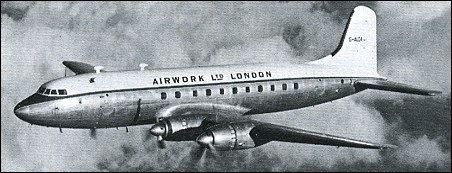
On September 1, 1957, the first case of a two aircraft collision occurred in India, when a Handley Page HP.81 Hermes G-AKFP of Airwork Ltd., with 58 passengers and 6 crew on a special flight from the United Kingdom to Singapore via Delhi and Calcutta, landed on the wrong runway at Calcutta Dum Dum, and crashed in to a cargo Douglas DC3/C-47 Dakota VT-AUA of Indian Airlines with 4 crew. All aboard the Hermes survived while the 4 crew aboard the Dakota died. The captain of the Hermes was found responsible for the accident. Both aircraft were written-off.

The saga continues next week.
Read more »

Feature: Major plane accidents in the 100 years of Indian civil aviation - Part 1

Yesterday we focussed on the highlights of the last 100 years of Indian civil aviation. Today we focus on the tragedies.

We are listing the major scheduled commercial civil aviation accidents with fatalities that have occurred to Indian carriers or within the geographic confines of India. Military, non-scheduled, and private/business jet/charter aircraft are excluded or the list will be too long. For a full list of accidents in India please visit the Aviation Safety Network which has been a valuable source of information for this article along with other sources like Wikipedia and Simon Hradecky at Aviation Herald which along with ASN, I consider as one of the finest websites for all aviation incident related news.

This list is by no means exhaustive, and if you are aware of any accidents that have been missed, please do help us spread the information via a comment.

Part 1 (till 1952)

The early days of Indian aviation were dominated by war related accidents and incidents of military aircraft during World War II.

The earliest recorded crash with fatalities was soon after independence on December 27, 1947, when a Douglas DC-3 Dakota VT-AUG of Air India crashed at Korangi Creek in Pakistan on a flight from Karachi to Bombay killing all 19 passengers and 4 crew.

On January 16, 1949, another Douglas DC-3/C-47 Dakota VT-CDZ of Dalmia Jain Airways crashed at Banihal Pass in India while enroute to Srinagar killing all 9 passengers and 4 crew.

On July 12, 1949, in the worst accident of the Constellation aircraft, at the time, a KLM Royal Dutch Airlines Lockheed L-749 Constellation PH-TDF from flight from Jakarta to Amsterdam via Delhi and Bombay, with 34 passengers and 11 crew, was flown in to a hill side (a situation today called CFIT - Controlled Flight Into Terrain) while on approach to Bombay Santa Cruz airport (today known as Mumbai Chhatrapati Shivaji International Airport). All aboard perished.

On July 17, 1950, near Pathankot, Punjab, the port wing of a Douglas DC-3/C-47 Dakota VT-ATS of Indian National Airways failed in turbulence during a flight from New Delhi Safdarjang airport to Srinagar. All 18 passengers and 4 crew lost their lives.

On November 3, 1950, the first accident of an Indian carrier outside the sub-continent. An Air India Lockheed L-749 Constellation VT-CQP with 40 passengers and 8 crew had a CFIT (controlled flight into terrain) when it was flown in to the side of Mont Blanc in France at an elevation of 15,000 feet, while performing flight AI-245 from Bombay to London via Cairo and Geneva. The plane and the bodies were located only after 2 days.

Just a month later, on December 13, 1950, in another case of CFIT, a Douglas DC-3/C-47 Dakota VT-CFK of Air India was flown in to the side of Kotagiri, the highest peak in the Nilgiri mountain range on a flight from Bombay to Coimbatore. All 17 passengers and 4 crew were killed.

On July 12, 1951, a Douglas DC-3/C-47 Dakota VT-CHT of cargo operator Indamer crashed about 50km NW of Tezpur. The 3 crew aboard were killed.

On September 15, 1951, a Douglas DC-3/C-47 Dakota VT-CCA of Air India with 23 passengers and 4 crew lost control while taking off from Bangalore HAL airport bound for Trivandrum. The cause was attributed as "lost control and crashed when attempting to take off with the autopilot engaged". 1 crew member was killed. The hull was damaged beyond repair and written off.

On November 21, 1951, a Douglas DC-3/C-47 Dakota VT-AUO of Deccan Airways with 13 passengers and 4 crew crashed in to trees while attempting to land in poor visibility at Calcutta Dum Dum airport on a flight from Bombay Santa Cruz via Nagpur. The lone survivor was a passenger, Mr. C.N. Mehta. Read the Indian Express newspaper of the day here.

A month later, on December 31, 1951, a Douglas DC-3/C-47 Dakota VT-COA of Kalinga Airlines performing a cargo flight crashed in to trees when climbing out of Calcutta Dum Dum airport. The 3 crew aboard were killed.

On February 19, 1952, a Douglas DC-3/C-47 Dakota VT-AXE of Deccan Airways with 12 passengers and 4 crew crashed in to trees while attempting to land at night at Nagpur. One passenger and two crew perished. The cause was attributed to pilot error due to a wrong altimeter setting. [Note: the VT-AXx series of registration is now currently used by Air India Express.]

On April 10, 1952, a cargo Douglas DC-3/C-47 Dakota VT-DFN of Kalinga Airlines with 4 crew crashed at Agartala in north east India, while attempting an emergency landing following an engine failure. All aboard were killed.

On April 30, 1952, a Douglas DC-3/C-47 Dakota VT-AUN of Deccan Airways with 5 passengers and 4 crew crashed while approaching New Delhi Safdarjung airport on a flight from Madras. All aboard were killed. The cause was attributed to fuel starvation of the port engine due a fuel imbalance during a steep turn causing the pilot to lose control.

On October 22, 1952, a cargo Douglas DC-3/C-47 Dakota AP-AAZ of Orient Airways with 3 crew on a flight from Dhaka, East Pakistan to Karachi, Pakistan, crashed while attempting a forced landing at Jamshedpur (the home of Tata Steel). One crew member died in the accident. The aircraft hull was a total loss.

The torrid decade in Indian Aviation will continue tomorrow. Stay tuned for Part 2.
Read more »

Feature: Significant milestones in the 100 years of Indian civil aviation

In what is considered the world's first airmail service, on 18 Feburary, 1911 the first commercial civil aviation flight in India took place in India between Allahabad and Naini, a distance of 6 miles when Henri Piquet carried 6500 mails on a Humber biplane.

The first international flight to and from India commenced in December 1912, when the Indian State Air Services in collaboration with UK based Imperial Airways introduced the London-Karachi- Delhi flight.

In 1915 Tata Sons Ltd. started regular air mail services between Karachi and Madras and on January 24, 1920 the Royal Air Force started regular airmail services between Karachi and Bombay.

1924 saw the commencement of construction of civil airports in India in Calcutta at Dum Dum, Allahabad at Bamrauli and in Bombay in Gilbert Hill.

April 1927 saw the setting up of a separate Department of Civil Aviation to look after all civil aviation matters and also the establishment of Aero Club of India.

In February 1929, JRD Tata was awarded the first pilot license by Federation Aeronautique International on behalf of the Aero Club of India and Burma. The same year Aga Khan announced a solo air race between London and Bombay. There were three participants - JRD Tata, Man Mohan Singh and Aspy Merchant. The race was won by Man Mohan Singh.

Lt. Col. Shelmerdine was appointed the first Director General of Civil Aviation (DGCA) in 1931 to look after civil aviation regulatory issues.

In 1932 Tata Airlines came to being as a division of Tata Sons Limited. On October 15, 1932, J.R.D. Tata flew a single-engined De Havilland Puss Moth carrying air mail from Karachi's Drigh Road Aerodrome to Bombay's Juhu Airstrip via Ahmedabad. The aircraft continued to Madras via Bellary piloted by former Royal Air Force pilot Nevill Vintcent. Tata Airlines was based out of a hut with a palm thatched roof at Juhu Aerodrome with one pilot and two apprentice mechanics along with 2 piston engined aircraft, one Puss Moth and one Leopard Moth aircraft. 1932 also saw the first Indian woman Urmila K. Parikh get a pilot’s license.

Between 1933 and 1934 a number of private Indian airlines – Indian Trans Continental Airways, Madras Air Taxi Services, Indian National Airways commenced operations.

The Indian Aircraft Act was promulgated in 1934 and was formulated in 1937.

In 1940, industrialist Walchand Hirachand in association with the then Mysore Government set up Hindustan Aircraft at Bangalore. We today know this company as Hindustan Aeronautics Ltd. or HAL.

India’s first aircraft, the Harlow trainer was rolled out for test flight in July 1941.

On April 2, 1942 the colonial government announced that Hindustan Aircraft had been nationalised by its buy-out of the stakes of Walchand Hirachand and other promoters.

In 1943 the Bangalore facility of HAL was handed over to the United States Army Air Force but still using HAL management. The factory expanded rapidly and became the centre for major overhaul and repair of American aircraft and was known as the 84th Air Depot. When returned to Indian control in 1945, HAL Bangalore had become one of the largest overhaul and repair facilities in the East.

In July 1945 the Deccan Airways, jointly owned by the Nizam of Hyderabad and Tatas, was founded.

On 29 July 29, 1946 Tata Airlines became a public limited company under the name Air India. Deccan Airways also commenced its first flight this year.

Post independence, in 1948, 49% of the airline was acquired by the Government of India, with an option to purchase an additional 2%. In return, the airline was granted status to operate international services from India as the designated flag carrier under the name Air India International. On June 8, 1948, the airline operated its first long-haul international flight from Bombay to London via Cairo and Geneva, using a Lockheed Constellation L-749A named Malabar Princess (registered VT-CQP)

In 1948 Prem Mathur became the first female commercial pilot and started flying for Deccan Airways, having obtained her commercial pilot’s license in 1947.

In 1950 Air India International increased its service to Nairobi, Kenya via Aden.

1953 was the black year for Indian aviation. In March 1953, the Indian parliament, passed the Air Corporations Act, which forced nationalisation of the entire airline industry. On August 25, 1953, the Government of India exercised its option to purchase a majority stake in Air India International. At the same time seven former freedom domestic airlines, Deccan Airways, Airways India, Bharat Airways, Himalayan Aviation, Kalinga Airlines, Indian National Airways and Air Services of India, were merged to form the new domestic national carrier Indian Airlines Corporation. Indian Airlines inherited a fleet of 99 aircraft including 74 Douglas DC-3 Dakotas, 12 Vickers Vikings, 3 Douglas DC-4s and various smaller types from the seven airlines that made it up. 1953 also saw the introduction of India’s Civil Helicopter Services.

In 1956 Ms. Durba Banerjee was inducted as the first woman pilot of Indian Airlines.

In 1960, Air India International entered the jet age when its first Boeing 707-420, named Gauri Shankar (registration VT-DJJ), was delivered, and on May 14, 1960, the national carrier commenced jet services to New York City via London.

On June 8, 1962, the airline's name was officially truncated to Air India. Three days later, on June 22, 1962, Air India became the world's first all-jet airline.

In 1971, the airline took delivery of its first Boeing 747-200B named Emperor Ashoka (registration VT-EBD). This coincided with the introduction of the 'Palace In The Sky' livery and branding. A feature of this livery is the paintwork around each aircraft window. This aircraft holds a special significance for me as it was the first aircraft I ever flew as a passenger at the ripe age of 8 years. Sadly, the Emperor Ashoka crashed on new year's day 1978 performing Air India Flight AI-855 about 3 km (1.9 mi) off the coast of Bandra, Bombay (now Mumbai), India.

In 1972 the International Airports Authority of India (IAAI) was constituted to operate the international airports in India.

April 1976 saw the first three Airbus A300 wide-body jets being introduced in to domestic service with Indian Airlines which has always maintained a close relation with the European airframer.

Vayudoot Airlines (again government owned) started operation in the year 1981 to service the north-eastern states of India where road facilities were limited due to mountainous terrain.

In 1984 Squadron Leader Rakesh Sharma of the Indian Air Force became the first Indian astronaut and the 138th man in space spending 8 days in space abroad Salyut 7.

In 1985 Captain Saudamini Deshmukh commanded the first all women crew flight on an Indian Airlines Fokker Friendship F-27 on the Calcutta-Silchar route. She later also commanded the first Boeing all-women crew flight in September 1989 on the Mumbai-Goa sector. 1985 also saw the establishment of Pawan Hans Helicopters Limited (again government owned) and the establishment of the government owned Indira Gandhi Rashtriya Uran Academy in Fursatganj, Rai Bareli in Uttar Pradesh for training of pilots.

In 1986, the National Airports Authority was established to operate purely domestic airports. (I am sure you see the steady rise in the levels of bureaucracy and multiplicity of organisations essentially performing the same service).

In 1987, the Bureau of Civil Aviation Security was established following the mid-air bombing over the Irish sea of Air India Boeing 747 Emperor Kanishka performing flight AI-182 between Montreal and New Delhi in 1985.

In 1989, Indian Airlines continued its close relations with Airbus to become one of the earliest adopters of the new A320 aircraft.

1990 saw Air India entering the Guinness Book of World Records when it conducted the largest evacuation effort by a single civilian airline flying over 111,000 people from Amman, Jordan to Mumbai over 59 days operating 488 flights, just prior to the first Gulf war. 1990 also saw Captain Nivedita Bhasin of Indian Airlines becoming the youngest commander of a jet aircraft at age 26. She subsequently became the first female check pilot on an Airbus A300 aircraft.

1990-93 saw the entry of private airlines after the de-regulation of the civil aviation sector. Private airlines were given permission to operate charter and non-scheduled services under the ‘Air Taxi’ Scheme. East West Airlines was the first national private airline to operate in the country after almost 37 years.

In 1994, following the repeal of the Air Corporation Act private airlines were permitted to operate scheduled services and a number of private players including Air Sahara, Damania Airways, East West Airlines, Jet Airways, Modiluft, and NEPC Airlines and commenced domestic operations. Most airlines closed before the end of the decade, with the exception of Jet Airways. Air Sahara was bought by Jet and re-branded JetLite. Modiluft which closed in 1996, was re-incarnated as SpiceJet in 2005.

In 1995 the private airlines accounted for about 10% of domestic traffic, today they account for almost 85%.

Also, in 1995, the Airports Authority of India (AAI) was constituted after the merging of the International Airport Authority of India with National Airports Authority.

In 1998 Dr. Kalpana Chawla became the first Indian-born woman to fly to space as part of a NASA team. 1998 also saw the first private airport under the Public Private Partnership (PPP) model come up in Cochin, Kerala.

2003 saw the introduction of the ‘Low Cost Carrier’ business model in the country with Capt. G.R. Gopinath launching Air Deccan which was ultimately purchased by Kingfisher Airlines and re-branded Kingfisher Red. Today the LCC segment accounts for half the domestic air travel in the country.

In 2004 the government approved the setting up of private greenfield airports at Hyderabad and Bangalore which subsequently commenced operations in 2008.

In December 2004 private airlines with a minimum of 5 years of continuous operations and a minimum fleet size of 20 aircraft, were permitted to operate scheduled services to international destinations.

On December 7, 2005, Indian Airlines was re-branded as Indian for advertising purposes as a part of a program to revamp its image in preparation for an initial public offering. Conveniently the IPO was ditched and the airline was made to haemorrhage scare funds. In the same year, the flamboyant Dr. Vijay Mallya launched Kingfisher Airlines.

In 2006 the government approved the restructuring and modernisation of Mumbai and Delhi Airport through Public Private Partnership.

In 2007, the Government of India announced that Indian would be merged into Air India. As part of the merger, a new company called the National Aviation Company of India Limited (NACIL) was established, into which both Air India (along with Air India Express) and Indian (along with Alliance Air) will be merged. The merger remains controversial and incomplete till today.

In 2008 the Parliament passed the Airports Economic Regulatory Authority (AERA) Bill but the authority was set up only in 2009. Within a year there are already significant disputes between the Ministry of Civil Aviation and the Authority which is leaning towards the single till system not wanted by private airport operators.

In July 2010, the mammoth Terminal 3 (T-3) integrated terminal was inaugurated at New Delhi’s Indira Gandhi International Airport.

At present India is the 9th largest aviation market in the world with 82 operational airports, 735 aircraft, 12 operational scheduled airlines and 121 non-scheduled operators (read private companies creating charter companies to import their business jets free of customs duty). The number of air passengers travelling in India crossed 50 million.

Thanks to the Ministry of Civil Aviation for its inputs.
Read more »

Civil aviation minister and Bengaluru International Airport kick-off centenary year

Civil Aviation minister Vayalar Ravi kicked off the centenary year celebrations at the nation's capital New Delhi, earlier this morning.

Bengaluru International Airport Limited, the airport operator of Bangalore, together with its partners and concessionaires began the celebrations with an auspicious lighting of the lamp followed by unveiling of the official Civil Aviation Centenary Year logo. The two large installations will be displayed at the terminal building for a month and have been created with ambient lighting and a revolving base. The ceremony saw attendance from the airport authorities, airlines, partners and the BIAL staff. Some passengers joined in the celebrations as well.


Do tune in to Bangalore Aviation next week for a feature on the major events of the last one hundred years.

The speech the minister read out is presented below.
“It is a great occasion for India that we are today celebrating the completion of 100 years of commercial civil aviation in this country. A hundred years ago, on this very day a plane flew from Allahabad to Naini, carrying 6500 mails. This marked not only the birth of commercial civil aviation in India but also the first airmail service in the world.

We have gathered here today to celebrate the achievements of civil aviation during the last hundred years and I welcome you all on this occasion.

Flying has been an eternal dream for humanity. It has been symbolic of the spirit of freedom – the desire to reach the skies.

India took to wings only 7 years after the historic flight of the Wright brothers. It is believed that the first planes came to India and perhaps to Asia in 1910 though the first commercial civil aviation flight took off only on the 18th February 1911.

Since then India and Indians have never looked back. Through the eventful decades, Indian civil aviation has flown from strength to strength and is today one of the fastest growing aviation market in the world.

Contributing to this growth has been the undaunting spirit of our entrepreneurs, pilots, engineers, crew-members and scientists. It is not only a proud but a grateful nation which remembers those remarkable Indians who have steered the sector through thick and thin to reach its present heights.

Today, we are remembering Late Rajiv Gandhi ji who rose to become the Prime Minister of India from being a pilot and who laid the foundation of some outstanding aviation related institutions like Indira Gandhi Rashtriya Udaan Academy and Pawan Hans Helicopters Limited.

I would also like to acknowledge Late JRD Tata who is generally considered to be the father of Indian Civil Aviation.

Civil aviation is a major driver of the economy. The International Civil Aviation Organisation estimates that every 100 dollars spent on air transport produce benefits worth 325 dollars for the economy. Hundred additional jobs in air transport result in 610 new jobs in the economy.

The last hundred years have seen Indian civil aviation expand exponentially. From the days of the first flight when aircrafts landed on plain grounds without any navigational aids, we have traveled a long distance to modern and world-class airports of Hyderabad, Cochin, Bangalore and of course T-3.

Today the handling capacity of our airports has reached to 235 million people, which is sufficient to fulfill our needs for the next few years. I would like to point out that airports are being improved not only in the major Metros but also 35 non-Metros, in a phased manner.

It is a matter of satisfaction for us that during the last two decades from a fleet of only about 100, the scheduled operators today have 435 aircrafts connecting the nation and the world. This growth is going to be further accelerated in the years to come and we expect that in another decade or so India would have about 1000 more planes and 500 more helicopters.

The acquisition of these modern aircrafts and the investment in airports is expected to generate business opportunities worth about 150 billion dollars that will revolutionize the sector. Civil Aviation is clearly the sunrise sector of the Indian economy that is likely to change the way Indians move, think and live.

The last hundred years have posed innumerable challenges in the civil aviation sector which we successfully overcame. The new century that lies ahead of us, is also bound to throw up new challenges. It is necessary for us, as a nation, to foresee those challenges and to prepare ourselves to meet them effectively.

The increase in the number of aircrafts is bound to put a heavy pressure on our regulatory and oversight systems. Today India is considered to be one of the safest countries in terms of civil aviation. Recently, the Federal Aviation Administration (FAA) of America even cited India as a role model in the Asia-Pacific region.

In order to retain this position and to assure all travelers the guarantee of safety, it would be necessary to redefine the parameters of regulation. We are already looking into this matter and considering to restructure the DGCA into a more comprehensive system, which works well above international standards.

One of the biggest challenges before us is to lend renewed vibrancy to public sector undertakings like Air India and Airports Authority of India. These two organisations have rendered historic service to the nation and their continued vibrancy is critical for optimal growth of the sector. The Government is committed to support these organizations to ensure their healthy future.

Civil aviation is a major employment creator and according to available studies it is expected that this sector will create new employment opportunities for nearly 26 lakh Indians by 2025.

Catering to this human resource need is in itself a challenge. We shall strive to develop and nurture a strong world class training infrastructure in the country to ensure continuous production of skilled and professional manpower to fulfill the requirements of this sector.

Civil Aviation industry is extremely sensitive to the economic environment in which it operates. Issues of taxation, investment policies and competition are vital to its survival. As the sector grows, there would be an acute need to fine-tune our system of competition management, taxation laws and investment strategies, while remaining socially responsible towards the aspirations of common Indians.

The increase in civil aviation activity is bound to impact the environment too. It is necessary that we should nationally gear up to face this challenge and move towards better technologies and mitigation strategies to minimize the effect of aviation on environment. A socially harmonized growth of aviation alone will ensure its sustainability.

While we are celebrating our continuous growth it is also necessary to be eternally cautious of the threats to our security from various quarters. We have to remember the tragedies of Kanishka and IC 814 to remain constantly vigilant of the dangers that lurk round the corner.

Maintaining security is the priority that cannot be overlooked even for a single moment. It might have some effect on passenger facilitation but it is imperative in the larger interest of travelers as well as of the nation

As we move ahead into the next century, it is our resolve to let this sector blossom fully but responsibly. At the centre of this entire system is the common man and we would like all the players in the sector to make the flying experience of passengers safe, secure, comfortable and happy.

The rights of the passengers need to be respected and protected at all times. While we will ensure a liberal and competitive environment for the growth of the private sector, they must strive to maintain the centrality of the consumer.

We have recently taken significant steps for consumer protection through Civil Aviation Regulations on disability related rights, refunds, cancellations, delays, over-bookings and denied boardings.

We would appreciate that Airlines and Airports should compete with each other in offering to passengers better of facilities, services and protection of their Rights. We in the Government propose to further strengthen this initiative in the days to come.

In conclusion, I would like to congratulate the entire country for the success story of the last hundred years. This function today just marks the beginning of a year-long series of events and initiatives which will make this centenary year a memorable one.

During the year we propose to set up institutions like Universities, Museums, Archives etc which will strengthen the sector. A century has been completed and we assure the nation that the new century that dawns today would see this sunrise sector spread the sunshine of prosperity all round the country.”
Read more »

Tomorrow is the 100th year anniversary of civil aviation in India

Tomorrow, February 17, 2011 marks the 100 year anniversary of civil aviation in India. To commemorate this milestone, the year 2011-12 has been being declared as the 'Civil Aviation Centenary Year’.

From humble beginnings, India has grown in to the ninth largest civil aviation market in the world. Airlines, airports, aircraft, and pretty much anyone connected with civil aviation in India will commence on a year long celebration.

Indian carriers will feature the 100 year anniversary logo. Low cost carrier IndiGo has already painted it fleet with the logo. If you are travelling look out for it to the right of the entrance door of the aircraft.

Bangalore Aviation will be bringing a feature article showcasing the highs and some lows over the last one hundred years.

My first flying experience was aboard Air India's very first Boeing 747-200, named Emperor Ashoka registration VT-EBD, in late May or early June 1972 when I was not even 8 years old.

While I do not recall much from that time in my life, I still vividly remember clinging on to my mother's hand and arching my back to try and see the top of the tail towering five storeys high as we climbed into the aircraft for our flight from Bombay's Santa Cruz airport to New Delhi's Palam airport. Today the area the jumbo-jet was parked in is Terminal 1C.

The memories of the unique moan of the GE engines on the first Airbus A300B4's of Indian Airlines still produce a smile in the mind. Bangalore used to have just three flights a day when we moved to the city in 1973. I used to cycle to the airport, sit on the bund, that today marks the boundary wall of the Karnataka Golf Association near HAL wind tunnel road, just to catch a glimpse of a plane, any plane, coming in to land.

The innocent fantasies of childhood have turned in to a lifelong passion, which I thank my parents for introducing me to.

Please join Bangalore Aviation in celebrating this centenary. Spare a moment, post a comment, re-live your memories, ..... and share your passion for flight.
Read more »