Showing posts with label 737MAX. Show all posts

Air Canada signs agreement to buy up to 109 Boeing 737 MAXs

by Devesh Agarwal

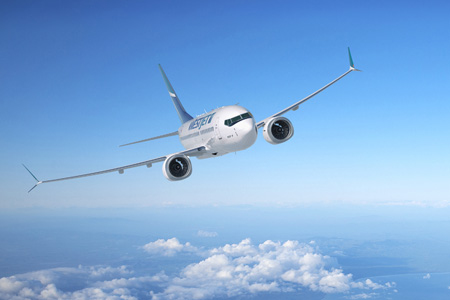
Boeing 737 MAX 9 final concept CGI rendering. Boeing image.
National carrier Air Canada has agreed to buy up to 109 Boeing 737 MAX single aisle narrow body aircraft as part of its fleet renewal plan. Boeing has wrested back an existing Airbus narrow-body customer as the MAXs will replace Air Canada's existing mainline fleet of Airbus A320 family.

The agreement with Boeing, which is subject to completion of final documentation and other conditions, includes firm orders for 33 737 MAX 8 (equivalent to A320) and 28 737 MAX 9 (equivalent to A321) aircraft with substitution rights between them as well as for the 737 MAX 7 (equivalent to A319) aircraft. It also provides for options for 18 aircraft and rights to purchase an additional 30. Deliveries are scheduled to begin in 2017 with 2 aircraft, 16 aircraft in 2018, 18 aircraft in 2019, 16 aircraft in 2020 and 9 aircraft in 2021, subject to deferral and acceleration rights.

With regards to the existing regional jets fleet, the airline said
Air Canada continues to evaluate the potential replacement of its Embraer E190 fleet with more cost efficient, larger narrowbody aircraft that are better suited to its current and future network strategy. Consistent with this strategy, the agreement with Boeing provides for Boeing to purchase up to 20 of the 45 Embraer E190 aircraft currently in Air Canada's fleet. The E190 aircraft exiting the fleet will be initially replaced with larger narrowbody leased aircraft until the airline takes delivery of the Boeing 737 MAX aircraft. The company will be reviewing various options over the next six months for the remaining 25 Embraer E190 aircraft including continuing to operate them or replacing them with a yet to be determined number of aircraft in the 100 to 150 seat range.
Air Canada's plan is for its total fleet including Air Canada rouge™, but excluding aircraft flown by its contracted regional carriers, to grow from the existing 192 aircraft to approximately 214 aircraft by the end of 2019. Air Canada has 13 options and rights to purchase 10 Boeing 787 aircraft, rights to purchase 13 Boeing 777 aircraft as well as the 18 options and 30 purchase rights for Boeing MAX aircraft.
Read more »

Video - Boeing updates on 737 MAX

Boeing has put together this nice compact tongue in cheek video update on the 737 MAX. Enjoy the weekend. Comments are welcome as always.


Read more »

Boeing, flydubai announce historic single-aisle agreement

By BA Staff

Boeing and flydubai announced a commitment for up to 100 737 MAX 8 airplanes and 11 Next-Generation 737-800s at the Dubai Airshow.

The commitment from the airline of the emirate of Dubai, valued at $11.4 billion at list prices (including orders and purchase rights), is the largest ever Boeing single-aisle airplane purchase in the Middle East. flydubai operates an all-Boeing 737 fleet.

His Highness Sheikh Ahmed bin Saeed Al-Maktoum, Chairman of flydubai said:
"flydubai is pleased to continue its partnership with Boeing. We believe that the commitment for up to 111 Boeing 737 aircraft will give flydubai one of the best performing aircraft available in the single-aisle market. This will ensure that flydubai is well positioned to continue to set new standards in aviation and support the further economic development of the United Arab Emirates."
Boeing Commercial Airplanes President and CEO Ray Conner said:
"We are extremely proud of the confidence that flydubai continues to place in our products operating an all-Boeing fleet. We look forward to continue strengthening our partnership and seeing the Next-Generation 737-800 and subsequently the 737 MAX play a central role in flydubai's rapid expansion plans."

flydubai placed its first order for 50 Next-Generation 737-800s in 2008. The airline took delivery of its first airplane in 2009 and was the first airline in the world to debut the Boeing Sky Interior. To date, flydubai has taken delivery of 33 Next-Generation 737-800s. In the past two years, flydubai has more than doubled the number of destinations it flies to and has around 1,200 weekly flights. flydubai carried 5.1 million passengers in 2012 and has become the second largest carrier, by passenger numbers, operating out of Dubai International, after big brother and fellow group company Emirates airline.
Read more »

Boeing to increase 737 production rate in 2017

By BA Staff

Courtesy of Wikipedia
Boeing announced that production on the 737 program will increase to 47 airplanes per month in 2017, the highest rate ever for the best-selling airliner in history.

Once implemented, the 737 program will build more than 560 airplanes per year, and will have increased output by nearly 50 percent since 2010.

Beverly Wyse, vice president and general manager, 737 Program, Boeing Commercial Airplanes said:
"We're taking this step to make sure our airplanes get into the hands of our customers when they need them. Our employees and our suppliers have successfully increased the production rate to unmatched levels over the last three years. This increase will lay a solid foundation as we bridge into production on the 737 MAX."
Boeing currently produces 38 airplanes per month from its Renton, Wash., factory and will increase the rate to 42 per month in the first half of 2014. First delivery of the 737 MAX is on track for third quarter of 2017.

The rate increase announced is not expected to have a significant impact on 2013 financial results.
Read more »

Boeing continues to Improve 737 MAX performance

By BA Staff

The Boeing 737 MAX program continues to make steady development progress since reaching Firm Configuration on the 737 MAX 8 in July.

Engineers have completed an assessment of the airplane's performance confirming an additional 1% fuel-efficiency improvement over the 13% already promised to customers.

Keith Leverkuhn, vice president and general manager, 737 MAX program, Boeing Commercial Airplanes said:
"Program and airplane performance just continues to improve. We have been very disciplined in our approach and continue to realize more benefit for our customers as we retire risk on the program and get further into development. This recent fuel-efficiency gain will widen the performance gap in the single-aisle market, reinforcing the 737 MAX's position as the value leader."
The 737 MAX will feature several new systems that will improve the management of maintenance information. For example, some Built-In Test Equipment (BITE) information will be brought into the flight deck. Today, maintenance technicians access this fault data in the forward electronic equipment bay of the airplane. By bringing this data up to the flight deck, maintenance issues can be resolved faster.

The MAX also will include an enhanced onboard network system comprised of a digital flight data acquisition unit (eDFDAU) and network file server (NFS). These systems will provide a centralized data collection system with more storage capacity, doubling the maintenance data available during flight. The system will be capable of connecting the airplane in flight to airplane operations on the ground enabling airlines to better prepare for potential dispatch issues.

Michael Teal, chief project engineer, 737 MAX said:
"We are enhancing the capability of the 737 MAX to meet the future needs of a digital world. Recognizing that the Next-Generation 737 is already the most reliable single-aisle airplane with 99.7 percent of flights departing on time, we are being very deliberate about any changes we make to the airplane systems on the 737 MAX to make the airplane even easier to operate and maintain. Through careful testing and selective application on the Next-Generation 737 before MAX enters service, we can ensure these systems are ready to enhance the management of our customers' fleets." 
Some of these systems such as the eDFDAU and NFS are under development for initial delivery on the Next-Generation 737 prior to the 737 MAX. Many of these systems were tested during the 737 ecoDemonstrator program last year, showing the value they will provide to airlines operating the 737 MAX.

Engineers continue to make progress on the detailed design of the airplane. Recently the team completed the Firm Systems Definition, which defines the hardware locations for the systems on the airplane.

Leverkuhn said:
"Throughout the design process we'll continue to look for opportunities to improve operational performance, schedule and cost for our customers. We are on track for first delivery of the 737 MAX in the third quarter of 2017."
Read more »

Boeing, WestJet firm up order for 65 737 MAX Airplanes

By BA Staff

Boeing and WestJet announced today that they have firmed up an order for 65 737 MAX airplanes, fulfilling the carrier's letter of intent to purchase the airplanes announced on Aug 29. The order, valued at $6.3 billion at list prices, consists of 40 737 MAX 8s and 25 737 MAX 7s. The airplanes are a key component of the Calgary-based airline's fleet renewal initiative.

WestJet President and CEO Gregg Saretsky said:
"We are pleased to announce the finalization of the MAX purchase agreement and look forward to being among the first North American airlines to fly the 737 MAX in 2017. The increased fuel efficiency and enhanced in-cabin amenities provided by the Boeing 737 MAX will contribute to both lower operating costs and a remarkable in-flight guest experience which is supportive of our low-cost business model and combined with our lease renewal options, maintains our fleet plan flexibility going forward."
The 737 MAX brings the most advanced engine technologies to the world's best-selling airplane, building on the strengths of today's Next-Generation 737. The 737 MAX incorporates the latest-technology CFM International LEAP-1B engines to deliver the highest efficiency, reliability and passenger comfort in the single-aisle market. Airlines operating the 737 MAX will see a 13 percent fuel-use improvement over today's most fuel-efficient single-aisle airplanes. The order brings the total number of 737 MAX orders to date to 1,567 airplanes.

Brad McMullen, vice president of North America Sales, Boeing Commercial Airplanes said: 
"The 737 MAX is an excellent complement to the WestJet fleet and its low-cost business model. The airplane's efficiency, reliability and passenger amenities will enable WestJet to continue to provide its customers high-quality service at a low cost."
Read more »

Analysis: Jet Airways to add second daily flight between Mumbai and Singapore

by Vinay Bhaskara

Image Credit: Devesh Agarwal
India's largest full service carrier, Jet Airways, is adding a second daily flight between its largest hub at Mumbai, and Singapore. The second daily flight, effective 1st November 2013, will be served using 154 seat Boeing 737-800 aircraft in a 2-class configuration (16 J / 138 Y).

The proposed new flights, 9W 10/9 will be scheduled very tightly with the existing daily flights on-board the Airbus A330-200; 9W 12/11. Jet Airways Flight 12 currently departs Mumbai at 23:30, arriving at Singapore at 07:25 the next day. The return, Jet Airways Flight 11 departs Singapore at 19:05 after nearly 12 hours on the ground, returning to Mumbai at 22:00. The outbound, Jet Airways Flight 10, will be offset as a morning departure, leaving Mumbai at 09:50 and arriving to Singapore at 18:00. However, the return Jet Airways Flight 9 is currently scheduled to depart Singapore at 20:05 (just one hour after the existing flight), and return to Mumbai at 23:01.

These flight timings make little sense squished so close together on the return to Mumbai. While it is a good idea for Jet Airways to grow its international operations to Asia given the better performance of its international division as a whole. However, placing the return flight so closely with the existing flight is a missed opportunity for Jet. Especially with an integrated terminal coming to Mumbai by the end of 2014, Jet should be looking to maximize connectivity out of Mumbai, especially on international to domestic and vice-versa. A better schedule for the flight would have been a morning departure from Singapore at around 5:50 am, which would have arrived back at Mumbai at 8:50 am, in time for connections with morning departures to dozens of domestic destinations, while still leaving enough time for a turnaround to depart at 9:50 am. Jet already offers double daily flights to Singapore from Chennai and Delhi, and the second dailies to both of those destinations use a similar schedule to the one we propose here.

However, the addition of a second daily Mumbai-Singapore is a good move for Jet, and it points to future international growth opportunities for Jet. Even as the westbound international operations will largely be culled in favor of routing passengers through Abu Dhabi via the Jetihad partnership, there remain opportunities for Jet to grow its eastbound international operations. Air travel demand between India and East/Southeast Asia is growing rapidly, and Jet could offer more flights to the region moving forward, especially with the purchase of 50 737 MAX aircraft offering increased range on tap. 
Read more »

WestJet orders 65 Boeing 737 MAX

by Vinay Bhaskara
Image Credit: Boeing


Canadian low cost carrier (LCC) WestJet announced today that it has signed a letter of intent (LoI) to purchase 65 Boeing 737 MAX aircraft (40 737 MAX 8 and 25 737 MAX 7) from Boeing, in a deal worth $6.3 billion at list prices.

Deliveries of the 737 MAX will commence from September of 2017, and the order marks a net addition of 50 frames to WestJet's order book, as 15 of the orders have been converted from existing WestJet orders for the Boeing 737NG. WestJet currently operates a fleet of 107 aircraft (103 Boeing 737 NG and 4 Bombardier Dash 8 Q400 turboprops operated for regional subsidiary WestJet Encore), with 123 more on order (65x 737 MAX, 42x remaining 737 NG, and 16 more Q400s for Encore).

WestJet President and CEO Gregg Saretsky had this to say about the order
We are proud to continue our long-standing relationship with Boeing and are thrilled that we will be among the first North American airlines to fly the new 737 MAX in its first year of commercial operation. This pending order reinforces our strategy of maintaining the flexibility in our fleet plan while enabling us to introduce new fuel-efficient technology and enhance our inflight guest experience... Our strong balance sheet allows us the opportunity to support our low-cost business model and contribute to our profitable growth through the renewal of our fleet with a lower operating cost aircraft. 
Said Brad McMullen, Vice-President of North America Sales, Boeing Commercial Airplanes:
We are pleased to see that the 737 MAX will continue the tradition of supporting WestJet's vision to be one of the most successful international airlines in the world. The 737 MAX's efficiency, reliability and passenger amenities will be a successful combination with WestJet's famous customer service.
WestJet expects that a definitive purchase agreement will be signed before 30th September 2013.

The order from WestJet marks a victory for Boeing in the ever heated competition with rival Airbus' A320neo, though an expected one (given WestJet's large fleet of 737NGs). The order brings the 737 MAX to a solid 1,602 purchase commitment (1498 firm orders, 104 MoUs). But the MAX still lags behind the A320neo, which has racked up a massive 2,455 purchase commitments to date (2380 firm, 75 MoU - albeit having been offere for a full year longer than the 737 MAX).
Read more »

Turkish Airlines finalises order for 50 737 MAXs and 20 Next-Generation 737s

Turkish Airlines has finalized a firm order on US airframer Boeing for 40 737 MAX 8s, 10 737 MAX 9s and 20 Next-Generation 737-800 jets, valued at $6.9 billion at list prices. The order, originally announced as a commitment last month, also includes options for an additional 25 737 MAX 8s and is the largest Boeing order in Turkish Airlines' history.

Today's announcement brings the total number of 737 MAXs ordered to date to 1,285 and Boeing currently has more than 3,100 unfilled orders for 737s.

With today's announcement, Turkish Airlines has 100 Boeing airplanes on order including Next-Generation 737s, 737 MAXs and 777-300ERs.
Read more »

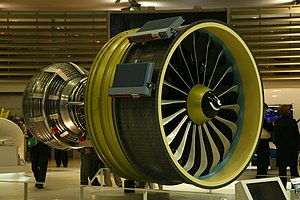
CFM LEAP-1B engine for Boeing 737 MAX completes design freeze.

by Devesh Agarwal
Image courtesy Wikipedia
CFM International announced that it has completed design freeze, i.e. freezing the design and engine configuration, for the LEAP-1B, the exclusive engine for the Boeing 737 MAX. LEAP is an acronym for "Leading Edge Aviation Propulsion". The company expects the first full engine to test by mid 2014. CFM International, is a 50/50 joint company between Snecma (Safran) and General Electric.

Over the next six months, CFM will finalize and release detailed engine design drawings, leading in to parts manufacturing which will build-up towards end 2013. The current schedule calls for the LEAP-1B engine to undergo CFM flight testing in 2015 and engine certification in 2016, which is keeping in view the 2017 Entry Into Service (EIS) of the 737 MAX.

Unlike Airbus which offers its customers a choice of engines including CFM, Boeing has an exclusive relation with CFM, whose engines have been the sole powerplant for all 737 aircraft sold since 1981.

CFM has been conducting component and rig tests on LEAP hardware for more than five years; the program is now moving into an exhaustive engine ground test phase. The first full LEAP-1A egine, which is an option for the Airbus A320neo is currently being built and is on schedule to begin ground testing this fall. There are twelve LEAP-1B certification engine builds schedule over the next three years.

Overall, CFM will have a total of 28 certification engine builds and 30 flight test engines across the three LEAP engine models.

The LEAP engine will use advanced aerodynamic design techniques, lighter, more durable materials, and leading-edge environmental technologies to provide a 15% reduction in specific fuel consumption (SFC) compared to today’s CFM56 engines which power the current Boeing 737NG.
Read more »

Timeline and Fleet Matrix of Turkish Airlines expansion

by Vinay Bhaskara

Istanbul-based Turkish Airlines has been pursuing a strategy of rapid fleet and destination growth over the past few years. Already, they are the airline which serves the most countries in the world, and  they have already announced plans to start 41 new destinations over the next two years.

The following table details Turkish Airlines' expansion plans over the next two years. Of the 41 destinations, 26 have definite start dates spread across the end of 2012 through June 2013 while the rest have more nebulous timelines. Geographically, there are 16 new destinations in Africa, 11 in Europe, 7 in the Americas, 6 in the Middle East and Central Asia, and 3 in Asia proper. These new flights would add a grand total of 147 new weekly frequencies to Turkish Airlines' already massive hub in Istanbul.


Meanwhile, Bangalore Aviation can also release the fleet matrix for Turkish Airlines' growth plans. Currently, the plan calls for Turkish Airlines to grow from a fleet of 192 aircraft today (37 widebody, 155 narrowbody) to a fleet of 220 aircraft (69 widebody, 151 narrowbody) by the end of 2017. With a current orderbook of 67 aircraft, this means that Turkish Airlines will be retiring more than 39 aircraft from the fleet (3 widbodies and 36 narrowbodies). The widebody fleet plans seem relatively definite, as the next generation Boeing 787 and A350 are sold out till past 2017. However, the fleet growth plans may change slightly, given that Turkish Airlines has expressed interest in ordering between 6-12 large widebodies (Boeing 747-8 intercontinental or Airbus A380). On the narrowbody side, Turkish Airlines will likely order both the 737 MAX and the Airbus A320neo reengined products, but the majority of such deliveries would take place after 2017 anyhow given the current respective orderbooks. Turkish Airlines could also add a smaller type such as the Embraer E190 or the Bombardier C-Series and those would be available more quickly, changing the dynamic of the fleet plan considerably. In fact, Bangalore Aviation thinks that it is likely that Turkish Airlines will order a smaller narrowbody (probably the C-Series given its longer range) as it vanquishes current expansion paths and adds even-thinner new routes.


Read more »

Boeing 737 MAX achieves "Firm Concept" milestone

Boeing has achieved a major milestone in the 737 MAX program, the re-engined upgrade of its best-selling 737 narrow-body jetliner.
Boeing 737 MAX -8 Firm Concept
The Boeing 737 MAX -8 firm concept. Upgrade from the current 737-800
Explaining this milestone called 'Firm Concept', Beverly Wyse, vice president and general manager 737 program said
"The program has achieved this development milestone by defining the significant changes needed to deliver the performance we've committed to our customers," "The team has a firm plan in place to incorporate all the changes necessary to realize a 13 percent fuel-use reduction within the scope and schedule of the program."
Boeing 737 MAX-9 firm concept rendering with dual winglets
Boeing 737 MAX-9 Firm Concept. Upgrade from 737-900ER.
Fuel-use reduction changes include new LEAP-1B engines from CFM International, a redesigned tail cone and Advanced Technology dual winglets. The Boeing team has further refined the geometric shape of the 737 MAX, eliminating the small bump on the nose-gear door that appeared in earlier design iterations (see images).

System upgrades include an electronic bleed air system that will be supplied by Honeywell and large-format displays, supplied by Rockwell Collins, for the flight deck. The 737 MAX flight deck will have four new large displays with significant growth capability while maintaining a common look-and-feel with the existing 737 -700, -800, -900ER, Next-Generation (NG) aircraft

Along with Firm Concept, the factory plan for the 737 MAX also has been defined. A new 737 MAX transition line will be built for assembly of the initial 737 MAXs, in parallel with NGs. Later the MAX will be integrated back into existing 737 production lines in Renton, Washington state.

Michael Teal, chief project engineer, 737 MAX, said
"The 737 MAX remains on track for first delivery in 2017," "Now we are focused on the finer details of the configuration and we are confident we'll be ready to begin detailed design in mid-2013."
Read more »

Analysis - SpiceJet likely to order Boeing 737 MAX, but not immediately

Earlier this week, the Wall Street Journal quoted a report from the Center for Asia Pacific Aviation (CAPA) as saying that India’s largest publicly-traded low cost carrier (LCC), Chennai-based SpiceJet, was “is in advanced discussions to order 30-40 Boeing 737 MAX aircraft, the Centre for Asia-Pacific Aviation (CAPA) has said.” This report was then seized on by several outlets in India, including one that quoted SpiceJet CEO Neil Mills as saying that SpiceJet may consider ordering Airbus aircraft as well.

First, we feel that SpiceJet is likely to order the Boeing 737 MAX at some point. While Mr. Mills may be paying lip-service to the idea of ordering next generation narrowbodies from Airbus, our own internal projections, as well as those of most independent analysts find that the A320neo and the 737 MAX will end up within two percent of each other in terms of operational costs per seat mile, with the primary variables for decisions likely to be pricing and commonality with the current fleet. SpiceJet currently operates a fleet of 35 Boeing 737NGs (29 -800s and 6 -900s), so that would tilt the scales between three to four percent towards the MAX. As a loyal Boeing customer, SpiceJet would also likely get a discount on the MAX of between 35-45% off of list price. The combination of these two factors would require such a large discount from Airbus to overcome that SpiceJet is unlikely to order A320neos (a sentiment supported by our sources at the LCC).

As for the timing of the order, while SpiceJet is in all likelihood discussing a MAX order with Boeing at the moment, the order is unlikely to be finalized any time soon. Furthermore, we do not feel that it would be prudent for SpiceJet to order any new 737s at this time.

The size of the proposed order (30-40 airframes) is smart. When combined with SpiceJet’s outstanding order for 20 737NGs, it would allow for fleet replacement and a limited amount of growth, while not over-committing SpiceJet to new airplanes. The latter is a common outcome for LCCs around the world that ordered large numbers of narrowbodies during the mid 2000s and are now stuck in a cycle of profitless growth. But making the order now would not be a smart move. To start with, financing right now is a challenge for Indian carriers; SpiceJet itself is supposedly having trouble financing the 3 remaining Q400 deliveries and is likewise hesitant to firm up its 15 purchase options for the 78 seat turboprop because of credit constraints. The current environment for financing aircraft deliveries in India is not favorable – the combination of an ever-weakening Rupee and several sectors of prolonged losses have sent interest rates for aircraft deliveries skyrocketing.

More to the point, there is a stock market analogy to explain why SpiceJet should not order the 737 MAX right now. Many industry analysts have concluded (and we agree with this view) that there is currently an aircraft order bubble for narrowbodies. This means that the prices of these aircraft are artificially inflated thanks to higher than normal demand. The general rule of thumb you hear when playing the stock market is to buy low and sell high - this strategy works - if you had purchased stocks in March 2009 at the trough of the recession, today those stocks would have (on average) doubled in value. The same principle applies to assets. Several LCCs (most notably purchased 737s and A320s in the down period while the industry was in post-9/11 doldrums, then made a cash profit on sale-leaseback as aircraft valuations boomed during the latter part of the decade. On the flip side, carriers that purchased large quantities of narrowbodies during the boom times of the 90s had to deal with heavy losses due to depreciation in that post 9/11 period. Right now, conditions for aircraft purchases are similar to those during the 1990s, SpiceJet would thus do well to wait for pricing to become a bit more rational. The 737 MAX is already sold out till 2019 at the earliest - waiting another six months to one year to place an order will not put SpiceJet too far behind the curve.
Read more »

Exclusive interview: Giorgio De Roni - CEO GoAir - Part 1: GoAir is profitable

Over the last 18 months, the soft spoken Giorgio De Roni has been quietly turning around the Wadia family promoted GoAir. From a rock bottom position, dismal market share, and reputation for frequent cancellations, De Roni has grown GoAir to surpass Kingfisher Airlines and JetLite in market share, and made GoAir a contender in the Indian airline industry, with the confidence to place large orders for 72 Airbus A320neo aircraft.

In a broad ranging two-on-one interview, Devesh Agarwal and Vinay Bhaskara spoken to De Roni. During the interview, De Roni dispelled the misconception that IndiGo is the only profitable airline in India.

GoAir is profitable, and this profit is achieved purely by operations, without the income from sale and lease back of aircraft.

In the first of this two part report, we cover the financial and strategic aspects of the interview.

Q: In March this year, at India Aviation, Mr. Dinesh Keskar was saying that India is having "profitless growth." Airlines were experiencing growth in passenger numbers but profits were very hard to come by. In less than 3-4 months, growth has stagnated, but profits are there. What are your thoughts on this odd situation?
My thoughts are that the industry should not operate below cost of production. Unfortunately the situation in the past in India was that most competitors were more interested in market share rather than profit. So I more than welcome the shift in strategy from most of my competitors. And this has brought fares in line with costs, and in fact we have been able to deliver a profit for the first quarter.
Q: Any numbers you could share?
No, not really, we are not a listed company and as a policy, we do not share our results. I can say, that I am relatively satisfied of the results. The net profit was in percentage terms higher than IATA average, and differently from some of my competitors, it was purely reached by operational factors; so by revenue from passengers, and not from non-operational sources [referring to sale and leaseback income and other non passenger sources of revenue]. I never comment on my competitors, I try to learn from them…. And it’s [Sale and lease-back income] not something that only happens in India.
Editor’s Note: The IATA figure is 1.4%. Since GoAir’s figures came purely from passenger revenues, they outperformed the passenger figures at both SpiceJet and Jet Airways.

Q: You were mentioning your fellow competitors. If you look over the past year at your fellow LCC competitors, both SpiceJet and IndiGo have pursued a rather aggressive growth in their own form. SpiceJet has been going into virgin territory withthe Q400 in to Tier II and Tier III markets, and IndiGo has been adding a new A320 literally every 3 weeks; and they have gained a lot by the implosion or the contraction, of Kingfisher. However, GoAir has pursued a very modest growth path. In fact we think you’ve added only one aircraft net in the last year.
In this financial year we added two net aircraft. One in April and one in August, with a third one coming in January 2013. Yes, we have a more cautious approach to growth. We are exclusively targeting profitability and not really market share. We do have an ambitious expansion plan, and in fact last year we ordered 72 A320neos.

So we are committed to better serve the country. I think that we had some advantage in being a small carrier last year. Our losses were limited. It’s an airline 100% owned by the [Wadia] family . They are committed to the airline business, but I feel personally that we can grow only if we deliver profit. So I would prefer to deliver a profit and remain small as opposed to growing rapidly and having challenges on the bottom-line.
Q: Could you describe what trends you’ve seen in the unit PRASK revenues (passenger revenue per available seat kilometer) in the past several months, because we do know that SpiceJet recorded PRASK growth of more than 17% and Jet Airways recorded PRASK growth of more than 15% on its domestic network. Are you seeing similar numbers?
Yes, I would say that we are pretty satisfied of the [PRASK] growth. What is inconvenient is that the cost structure also suffered a significant increase. Airport charges increased due to the devaluation of the rupee against the dollar, fuel prices increased heavily. Since September 1st, I think we reached the historical peak of the cost of fuel in India, which is not the case in other parts of the world. So I just wonder how we structure the cost of fuel in India versus other geographical areas.
Q: Is it possible for you to share in percentage terms roughly the breakup of costs at GoAir?
Fuel costs are about 50%, more precisely it might reach around 55% of our total cost now with fuel at Rs. 72 per litre? That is the figure I remember most clearly, because it is a huge amount. I would say that the cost of personnel is pretty efficient, also because the most expensive community, the pilots are pretty well utilized with more than 900 hours per year, the cap being 1,000 per year in India. Certainly we are suffering from the weakness of the Rupee as far as lease rentals and maintenance costs are concerned; due to the fact that maintenance is performed primarily with US dollars.
Q: And you did mention airport charges?
Of course airport charges are huge. You are aware that Delhi Airport increased charges by 334%. It was a number that did not meet their expectation of a 700% increase. But I’m challenging anyone to find any other airport in the world with such a huge increase year by year.

And this is a serious concern.

Of course when we say that fares have increased year over year, we have to consider that we have to shift to the customer the burden of increasing costs. Because we cannot absorb any increase in costs, we have to transfer them to the customer. What is the result? The result is that volume and demand have decreased, as the data in June and July have shown.

So I don’t think that the way airports keep growing their costs and increase their inefficiency is smart. At the end of the day, they suffer due to a decrease in demand.
Q: Can you give us a brief financial outlook for the next year, and then maybe 3 years out?
Well I can tell you that we forecast to achieve a profit at the end of the year. Of course the first quarter was positive. The second quarter was the weakest from a cyclical point of view of the financial year, so we are definitely suffering. That said, for the entirety of the year, I am relatively confident that we will deliver a profit.
Q: What do you assume will be your revenue growth over the next one and three years, relative to 2011-12?
Well what is important to us is to remain flexible. Although we have a purchase order for roughly 80 aircraft between today and 2020, we should bear in mind that if the market is not growing, if there are turbulences, we have to be more flexible and be cautious. Or if the market offers more opportunities, we have the flexibility to take more aircraft and our part of the growth.
Q: Do you currently have any purchase options for the A320neo?
We don’t have options at the moment. 72 A320neo and the 7 remaining A320 classic orders are all firm. Anyway you know that there is a sort of over-production of narrow-body aircraft. And it’s not really a problem to add aircraft if the market requires.
Q: How do you think valuations in the used market are looking as both the 737MAX and A320neo are coming closer to delivery? Are you finding any impact on the secondary markets?
The residual value will be impacted definitely. We still have to see whether those manufacturers will deliver as per the schedule, or if, as it is normally, there might be some delays. But the impact on the present values might be negative.
Q: GoAir has selected the PurePower (Pratt and Whitney GTF) engine for the A320neo. And we’ve heard that CFM has not quite been able to deliver on the performance parameters of the LEAP-X?
I would disagree. First of all, we are very satisfied with CFM engines for the current fleet. Then, as I told you a few minutes ago, I don’t want to go for over-promising. And I don’t like my providers to over-promise. And since I’m not commenting on my competitors, I don’t understand why my provider comments on their competitors. They are free to do whatever they like.
[Editor's note: Our source of information on the LEAP-X engine is not Pratt and Whitney]

Q: So can you talk about some of the factors that drove your decision to purchase the PurePower engine?
So we did an overall evaluation from a financial and technical point of view and in the end we found Pratt and Whitney’s proposal to be better. But this is not to say that we are not satisfied with the present [CFM] engines that we have on our fleet.
Q: You did mention aircraft program delays briefly. And since both Boeing and Airbus have had trouble with delays recently on the 787 and A350 programs respectively, how concerned are you about delays [on deliveries].
We are among the first carriers in the world to receive the A320neo in the first quarter of 2016. So far, I do not expect any delays. But we aware that in new aircraft, some delays might happen. Although, considering that 95% of the airframe is common to the current airframe, and considering that the same engine technology will be utilized on other aircraft in the next year, I feel relatively confident that Airbus will be able to deliver the aircraft as per schedule. You are aware that anyhow that we have current engine A320s on order, and so we are not really planning for an environment with delays. But it might happen.
Q: Will GoAir be adding Sharklets to its A320 classic fleet?
Yes, our next [A320] delivery in January will be with Sharklets. In fact, I think we will be among the first airlines to have sharklets; most probably the first in India, though it’s not really a race against IndiGo.
[Editor's note: Sharklets are new wingtip devices fitted on the A320 family aircraft]

Q: Has Airbus indicated the possibility of retroffiting sharklets?
Yes they have. There is no clear picture on the cost involved and the time-frame of grounding the aircraft. As soon as they come out with a final picture, we will evaluate. We are keen to reduce fuel burn, both for savings and for the pollution reason.
Q: What sort of numbers are you looking at in terms of fuel burn reduction from the Sharklets?
Based on our network, we are looking at something around 1.5% savings.
Q: And what about the A320neo?
On paper, they [Airbus] say that there will be a saving in the range of 15%. That would be a great achievement.
Q: Your order for 72 A320neos have a list price of almost $5.6 billion dollars, which will require around $280 million in upfront financing costs. How is GoAir planning to pay for this order?
[De Roni laughs] Your calculation is pretty precise.

We are well funded. If there are opportunities in the market we will consider them carefully, but there is no concern [about paying for the aircraft].
Q: So there is no feeling at GoAir that it is time to turn to the public market with an IPO?
Well inside the company last year, there was a project to develop an IPO. It was not pursued due to the overall position of the market. We are open, but that is a question that needs to be asked of the chief shareholder. I will say that overall we are comfortable with the funding for the next set of deliveries.
Stay tuned for Part 2 of this interesting interview. Comments and feedback are always welcome.
Read more »

Special Report: Jet Airways 2012 Financial Analysis and 2013 Outlook

Jet Airways reported a large net pre-tax loss (Jet Airways and JetLite combined) of Rs. 1,331 Crore for fiscal year 2012, a very disappointing result. Revenue and passenger growth were robust as usual at 14.8% and 16.3% respectively. But the carrier's net margin of -8.5% is indicative of tangible flaws in the business, and goes beyond the explanations of higher fuel prices and rupee depreciation given by Jet, though these factors did play a major role.

To be sure, Jet Airways did have to deal with a large rise in fuel costs; a 51.8% rise in absolute terms, or 39.2% per ASKM. And the decline of the rupee to around 55 Rupees to the dollar, from 45 INR per dollar just a year ago has certainly hurt Jet, who accrues a larger share than normal of its operating costs in US dollars thanks to its international presence. But these are challenges faced in common by all of the Indian carriers, and most of the world in terms of fuel prices. In times of rapidly rising inputs, the onus is on the carrier to make the changes necessary to maintain profitability.


The best thing an airline can do in response to a rise in costs beyond its control is to maintain cost discipline in the inputs which are controlled by the airline. Yet not only did Jet fail to cut costs, it actually allowed its non-fuel costs to appreciate at levels greater than the growth in capacity.
The general rule of thumb is that as an airline’s cost rises, it should maintain capacity discipline, taking a hard look at the profitability of its network and cutting out the most marginal routes. But Jet, to a large degree has simply maintained the status quo, growing capacity as if nothing has changed. ASKM growth for fiscal year 2012 was 12.6%, hardly indicative of a carrier that is cutting marginal routes from its network. To a large degree, the US carriers have embraced capacity discipline, with Delta Air Lines in particular taking sharp steps to cut marginal and unprofitable European flights from its network. And while the US carriers haven’t been world beaters in terms of profitability, they’ve managed to stave off losses, while Jet Airways saw net margin decrease by 10 percentage points while inducting 5 more aircraft and increasing fleet utilization.

International Cuts to Boost Profitability

Recent weeks have seen Jet Airways sharply curtail its international services, with a slew of gauge reductions, frequency cuts, and outright cancellations. The full list of cuts can be found below, but the most recent reductions were the cut of 2 flights (seasonally for now) per week on the Delhi-Milan route, and the downgrade of daily Delhi-Singapore service from widebody Airbus A330-200s to narrowbody Boeing 737-800s.

Chennai - Dubai ~ Cancelled
Hyderabad – Dubai ~ Cancelled
Thiruvanantapuram – Dammam ~ Cancelled
Brussels – New York JFK ~ Cancelled (Chennai – Brussels remains in operation)
*Chennai – Kuala Lampur ~ Cancelled
Delhi – Colombo ~ Cancelled
**Mumbai – Johannesburg ~ Cancelled
Delhi – Milan ~ Frequency dropped from daily to 5 flights per week
Delhi – Singapore ~ Service downgraded from A330-200 to 737-800
_______________________________________________________________________________

*Following the Jet cancellation, Malaysia Airlines added 4 weekly flights Kuala Lampur-Chennai to take their offering on the route to 11 flights per week
**Following the Jet cancellation, South African Airways re-deployed capacity from its cancelled Cape Town – London Heathrow service to add 2 extra weekly flights on Johannesburg – Mumbai, bringing its total up to 6 flights per week on 222 seat Airbus A330-200s.

While the footnotes above might give the appearance that Jet Airways simply mis-managed the flights and allowed other carriers to profit from their loss, the reality is that this list of cuts was hard but necessary in order for Jet’s international operations to get a step closer to profitability.
Having just lambasted Jet for not showing enough capacity restraint over the last year, similarly I must applaud them for taking steps to shore up their international operations which have been critically weakened by the loss of value in the Rupee. Jet bears a large percentage of its international costs in US dollars and as such, its international operations have become a lot harder to support fiscally (because its financial results are tabulated for the most part in Rupees, and much of Jet’s international sales are done in Rupees as well). The nearly 25% drop in the value of the Rupee essentially pushed Jet’s seat-kilometer costs (CASK) up at least 10-12%, with a corresponding rise in break even fare and load factor. For the 4th quarter, international breakeven load factors reached a dangerously high 92.2%, unit revenues (RASK) were up 18.0% to 2.68 Rs. Per available seat kilometer, but much of that revenue growth was driven by Rupee depreciation.

Ultimately, the signal for Jet that things had gotten out of hand was the 41.8% decline in the net international result to a Rs. 1,051 Crore net loss from Rs. 741 Crore a year prior. Pruning the most unprofitable routes then had to be a concern for Jet. These routes (unsurprisingly) had very good loads.

In fact during the 4th quarter analyst’s call, Jet released the following load factor figures for Q4.

UK routes were 91.7%
ASEAN routes were 85.7%
Gulf routes were 86.0%
SAARC routes were 76.8%
Africa route was 78.2%
Italy route was 83.7%

But even ceteris paribus (all else equal), these loads would not be good enough in the face of cost increases. In particular, Bangalore Aviation’s sources say that the Johannesburg route had very low fares which led to large losses in the face of steadily rising costs. Meanwhile the Gulf routes are under severe pricing pressure from both Air India (Express and mainline) and the slew of LCCs while business class passengers mostly elect to take the Etihad/Qatar/Emirates triumvirate. The added costs and A330-200 returns meant as well, that Delhi-Singapore could no longer support a widebody service.

The critical point to remember here is that these changes are good, even cathartic for Jet Airways. They represent a re-balancing of international capacity towards Jet’s Mumbai stronghold, which is a good idea as Jet can now try to improve and streamline the quasi-hub they have there at the moment. They also represent smart business strategy, the first occurrence in a 6-8 month stretch which has seen a confused, conflicting strategy from Jet on domestic operations, JetLite/Konnect combination and the like. As Mr. Sudheer Raghavan, Jet’s chief commercial officer put it, “We [Jet Airways] are focusing on network rationalization, selectively adding flights to profit making markets such as Gulf & Middle East and ASEAN routes and pulling out of loss making routes... We have taken a call on pulling out of some of the routes which are loss making. To name some of them, the Johannesburg route is one of them. The Delhi-Colombo route is one another route that we are announcing to get out of. As well as one or two other routes in to Dubai from the south of India.”

Widebody fleet plans to have an uncertain effect on Jet’s finances

The next few quarters will see a moderate shift in Jet Airways’ widebody fleet. The total fleet will grow from the current 16 to 18-20 aircraft, but the composition will change. Currently, Jet Airways operates 5 Boeing 777-300ER, and 11 Airbus A330-200 aircraft. They also have on order 5 Airbus A330-300 (to be leased from Intrepid Aviation Group), and 10 Boeing 787-8 ordered directly from Boeing.
Over the next year, Jet will induct 2 A330-300s to replace 2 A330-200s that are being returned to lessors, as well as 1-2 A330-300s for growth. Additionally, 2 more Boeing 777-300ERs will be returned from Thai Airways International.

Jet Airways is reportedly considering converting (only these two aircraft at first) the 777-300ER economy class into 10-abreast 3-4-3 configuration (as Emirates and numerous other airlines do). Additionally, they are looking at various A330-300 configurations, including a 268 seat one (38J/230Y). As for the first plan, it is a good move, though it would have been better had Jet also withdrawn its first class “pods” that are so heavy that they cause severe performance issues for Jet’s 777-300ERs (cutting hundreds of miles off of these aircraft’s range). Meanwhile a 268 seat configuration in 2 classes for the A330-300 is also disappointing because it does not take advantage of the full cost potential of the A330-300. US operators Delta Air Lines and US Airways both get more than 290 seats in 2 class seating into their A330-300s (Delta even includes a premium economy cabin in its 298 seat configuration).
However, despite these plans, a broader question exists… Can Jet Airways even profitably induct the limited number of widebodies it is taking on? The 777-300ERs have been widely recognized as a failure, ostensibly because they are too big for Jet’s origin and destination (O&D) traffic driven route network. Yet when the A330-300s are inducted, they too will be bigger than the A330-200s that have been Jet Airways’ most successful (in relative terms) aircraft. There are certain routes on which the lower CASK of the A330-300 will help no doubt, but are these markets numerous enough to support a fleet of 5 aircraft?

Longer term the best strategy for Jet is to replace all of its 777-300ERs with A330-300s (the latter can be stretched to 290 seats or so) converting to a 3-class configuration with premium economy (removing first class) and growing to a fleet of around 10 frames or so. As Jet’s route network stands currently, there is not a single route that cannot be performed with either an A330-200 or an A330-300 and it is likely to remain as such for the foreseeable future unless Jet is planning nonstop flights to the US and/or to Australia. Additionally, Jet should take delivery of all 5 remaining A330-200s on order bringing them to a fleet of 14 of the type. Then Jet should place an order for 15 787-9s as well as 6-8 additional 787-8s and replace the A330-300 with the 787-9 and the A330-200 with the 787-8 by 2020. This type of fleet plan will allow Jet to streamline its fleet around one aircraft type (except in the interim period of replacement), while providing the correct blend of low costs and right-sized capacity in the Indian market.

Ancillary revenue is a potential goldmine but fraught with risk

One particularly interesting shift in the business model of Jet Airways is that the carrier is giving signals that it will in fact begin to shift its service offering towards the a-la-carte model (a.k.a. charging for everything or “nickel and diming” the passenger) currently in favor amongst the profitable US airlines. The model, the most visible example of which can be found at European low cost carrier Ryanair, chiefly involves unbundling the various services an airline provides to its passengers (checked baggage, onboard refreshments, et. al) from the standard ticket price. A variant on this model can be found at full service US carriers, where non-elite economy class passengers can get access to some of the perks offered to their counterparts traveling in business or first class (such as expedited boarding, expedited security, et. al).

During Jet’s quarterly conference call, Mr. Raghavan had this to say about Jet’s ancillary revenue efforts:
“So, there are some very compelling reasons for us to say that we really need to start changing our model and start selling optional services and from a consumer perspective, I think it is a meaningful thing to do rather than charging all sundry the same fare. The concept of allowing people to pay for what will enrich their travel experience is increasingly becoming more sensible thing to do.”
When asked what specific programs Jet would implement, he further clarified:
“I think, there is buy on board food; there is preferred selection of seats, lounge facilities, preferred check-in. There is a potential to sell miles to companies who want to revert their good customer. So, the list is endless. In fact, I have seen more and more airlines getting very creative at building new sources of ancillary revenue.”
There is no question that ancillary revenues could be huge for Jet Airways, especially in counteracting some of the economy class pricing pressure coming from the low cost carriers. The top US carriers routinely score more than 20% of their ticket prices in additional fees, and if Jet Airways can replicate this figure, then it would take a big step towards profitability. At the same time, one has to question just what the tolerance level is amongst Indian passengers for this type of pricing model. While buy-on-board food has become commonplace with LCCs IndiGo and SpiceJet and the remaining services mentioned by Mr. Raghavan largely fall into the category of upgrading the travel experience (as opposed to unbundling). But in all honesty (outside of selling frequent flyer miles, which could be big business), there’s no real money in these services at a macro level, at least not to the degree (20% of the average ticket price or Rs. 1500 for Jet ~ Rs. 1000 on the domestic network) that Jet is talking about.

Ultimately, scoring such large revenue gains from ancillary services will come down to charging for checked bags (something like Rs. 250 a bag would be an ideal level) or charging high fees whenever a customer changes his or her reservation. And Bangalore Aviation feels that these particular fees are not going to fly at the moment with Indian travelers. Jet also has to be very careful that it does not dent its good customer service reputation. Indian travelers today are extremely price conscious, and as such Jet must strike a balance between charging extra for whatever possible and not losing passengers to poor service.

2013 Outlook Mixed – Fuel and Kingfisher withdrawal to help premium and international segments, domestic view uncertain with new entrants and SpiceJet growth

So following a dismal 2012, how will Jet Airways perform financially in Fiscal Year 2013? The correct answer is that things are very fluid. There is no question that the recent down-slide in fuel prices towards a likely stabilization in oil prices between $70 and $90 per barrel (West Texas Intermediate or WTI measure – likely to occur because of rising US oil production and the return of Libyan oil) will benefit Jet Airways substantially – the ultimate trend in Jet’s finances is that they make money when oil prices are low and lose money when they are high. So a push towards stability in the oil market is a very good thing for Jet, though it’s too bad that they cannot “hedge” (buy some form of oil futures now, then pocket the gains to offset fuel price increases if oil spikes).

image courtesy of Air Insight

On the other side, the recent trend of rising fares in the domestic market and abroad will be helped by Kingfisher’s diminished service; which will prop up premium fares domestically and international fares to a lesser degree. Capacity as a whole in the Indian market has been much more flat in the past couple of months which should help the bottom line. Jet will also see boosted profitability on the international front, as it sheds the most unprofitable routes in its network and benefits from a hopefully stabilizing rupee.

On the flip side, the domestic market might be further destabilized if all of the proposed new entrants actually take flight. The combination of Pegasus, Volk Airlines, and Air Costa, all of whom plan to operate 70-90 seat aircraft could be a big destabilizing force in the domestic market. Remember these aircraft do not pay full amounts of fuel sales tax and airport charges, thus allowing operators to lower prices (artificially some would say). Considering that they are all-new carriers, these airlines would likely be very eager to regain lost market share, which would throw pricing in the domestic market off completely. Of course there are still many steps to take before these carriers are fully certified, but the downside risk from new entrants is there.

A more quantifiable risk can be found in LCC SpiceJet’s continually growing Bombardier Q400 operation. The airline, which operates a total of 15 Q400s, recently took delivery of 5 new aircraft, and immediately used them to establish a regional base at Delhi. These aircraft will now be used to target high fare regional routes where Air India and Jet Airways once shared a duopoly (the latter using ATR 72-500 aircraft). While our sources say that SpiceJet will not be ordering more Q400s right now due to equity limitations, the combination of new markets added out of Delhi, and the continued maturation of SpiceJet’s southern Q400 operations will put increased pricing pressure on Jet’s regional routes, which are some of their most profitable ones domestically. Jet has re-adjusted to this reality and stopped taking delivery of new ATRs, but regional operations are likely to trend downwards financially.

Jet Airways unlikely to order Airbus A320neo

Earlier this year, a major hubbub was raised when the Sydney based aviation consultancy the Center for Asia Pacific Aviation (CAPA) said that Jet Airways was likely to purchase 100 Airbus A320neo aircraft in the coming fiscal year. While Jet Airways is likely talking to Airbus about the neo, at least to drive down the price on Boeing’s offering if nothing else, we feel that they will in all likelihood order the Boeing 737 MAX, though the timeline on this order is at least 9 months away. Jet too is suffering from a dearth of cash at the moment, and as such is in no position to order 100 aircraft. As for the rationale for the MAX over the neo, Jet is currently a very happy 737NG operator (recently converting some of their 777-300ER orders into 737s) and the advantages of commonality (with regards to training, procedures, and the like) are likely to outweigh whatever minimal operating cost advantage the neo might have.

In conclusion, fiscal year 2013 is an uncertain one for Jet Airways. On one hand, they will undoubtedly benefit from stabilization of yields, capacity, and oil prices both within India and abroad. At the same time, there is significant downside risk from new entrants and SpiceJet’s regional operations. The most likely result is that Jet will perform better financially, but not yet at an adequate level of profitability. Like the suddenly shaky Indian economy, Jet might be on a path to simply muddle through in 2013.
Read more »

Farnborough Orders on Day 2


Once again, this is courtesy of Aspire Aviation.

Airbus
Date
Customer
Quantity
Model
Remarks
9th July
Arkia Israel Airlines
4
A321neo
Agreement
10th July
Cathay Pacific
10
A350-1000
Agreement; convert 16 existing -900 into -1000
10th July
Drukair
1
A319
Firm


Boeing
Date
Customer
Quantity
Model
Remarks
9th July
Air Lease Corp (ALC)
60
737 MAX 8
Firm;
Reconfirmation rights for 25 more
9th July
Air Lease Corp (ALC)
15
737 MAX 9
10th July
GECAS
75
737 MAX 8
Agreement
10th July
GECAS
25
737-800
Agreement
10th July
ALAFCO
20
737 MAX 8
Agreement


Bombardier
Date
Customer
Quantity
Model
Remarks
10th July
Air Baltic
10
CS300
LOI; purchase rights for 10 more


Pratt & Whitney
Date
Customer
Quantity
Model
Remarks
9th July
IndiGo
300
PW1100G-JM
Firm
9th July
CIT
60
PW1100G-JM
Firm
9th July
Cebu Pacific
60
PW1100G-JM
Firm
9th July
Norwegian Air Shuttle (NAS)
100
PW1100G-JM
MoU


CFM
Date
Customer
Quantity
Model
Remarks
9th July
Air Lease Corp (ALC)
150
CFM Leap-1B

10th July
GECAS
150
CFM Leap-1B
Agreement
10th July
GECAS
50
CFM56-7BE
Agreement
10th July
ALAFCO
40
CFM Leap-1B
Agreement


Embraer
Date
Customer
Quantity
Model
Remarks
9th July
Hebei Airlines
5
E-190s
Booked in Q2 backlog
Read more »

Farnborough Orders on Day One

Courtesy of Aspire Aviation, the following table provides a breakdown of announced orders on Day 1 of the Farnborough Air Show.

Airbus
Date
Customer
Quantity
Model
Remarks
9th July
Arkia Israel Airlines
4
A321neo
Agreement


Boeing
Date
Customer
Quantity
Model
Remarks
9th July
Air Lease Corp (ALC)
60
737 MAX 8
Reconfirmation rights for 25 more
9th July
Air Lease Corp (ALC)
15
737 MAX 9


Pratt & Whitney
Date
Customer
Quantity
Model
Remarks
9th July
IndiGo
300
PW1100G-JM

9th July
CIT
60
PW1100G-JM

9th July
Cebu Pacific
60
PW1100G-JM
For 30 firm A321neos
9th July
Norwegian Air Shuttle (NAS)
100
PW1100G-JM
MoU


CFM
Date
Customer
Quantity
Model
Remarks
9th July
Air Lease Corp (ALC)
150
CFM Leap-1B


Embraer
Date
Customer
Quantity
Model
Remarks
9th July
Hebei Airlines
5
E-190s
Booked in Q2 backlog
Read more »

Norwegian Air Shuttle confirms order for 100 Airbus A320neo

Norwegian Air Shuttle AS which operates under the brand Norwegian has confirmed an order, earlier announced in January, with Airbus S.A.S. The order makes Norwegian a new Airbus customer, and as well, one of the biggest A320neo customers.

In January this year, Norwegian had also announced a firm order for 100 737 MAX airplanes which was developed by Boeing in response to the A320neo.

At 16 million passengers, Norwegian is the third-largest low-cost airline in Europe today. The carrier currently operates a fleet of 48 737-800s and 14 737-300s, and has an order backlog with Boeing of 184 airplanes, including 100 737 MAX, 78 737-800, and six 787 Dreamliners.
Read more »