Showing posts with label Virgin Australia. Show all posts

Virgin Australia expands codeshare on Air New Zealand domestic routes

By BA Staff

Virgin Australia has expanded its codeshare agreement with Air New Zealand, adding its code to an additional 17 routes across New Zealand.

Virgin Australia already codeshares to all Air New Zealand destinations in New Zealand however today’s announcement means that customers now have more choice than ever before on how to get to their destination.

Virgin Australia Chief Commercial Officer Judith Crompton said:
“Following the recent reauthorisation of our trans-Tasman alliance with Air New Zealand, we have expanded our codeshare agreement in order to provide customers with more choice when travelling in New Zealand. We are committed to being the alliance of choice across the Tasman and we will continue to actively review our network and schedule to ensure we are meeting the needs of our customers.” 
The trans-Tasman alliance between Virgin Australia and Air New Zealand was launched in 2011 and was recently reauthorised until October 2018. The alliance has enabled the two airlines to offer consumers a better choice of flights, improved connections and increased capacity across the Tasman.
Read more »

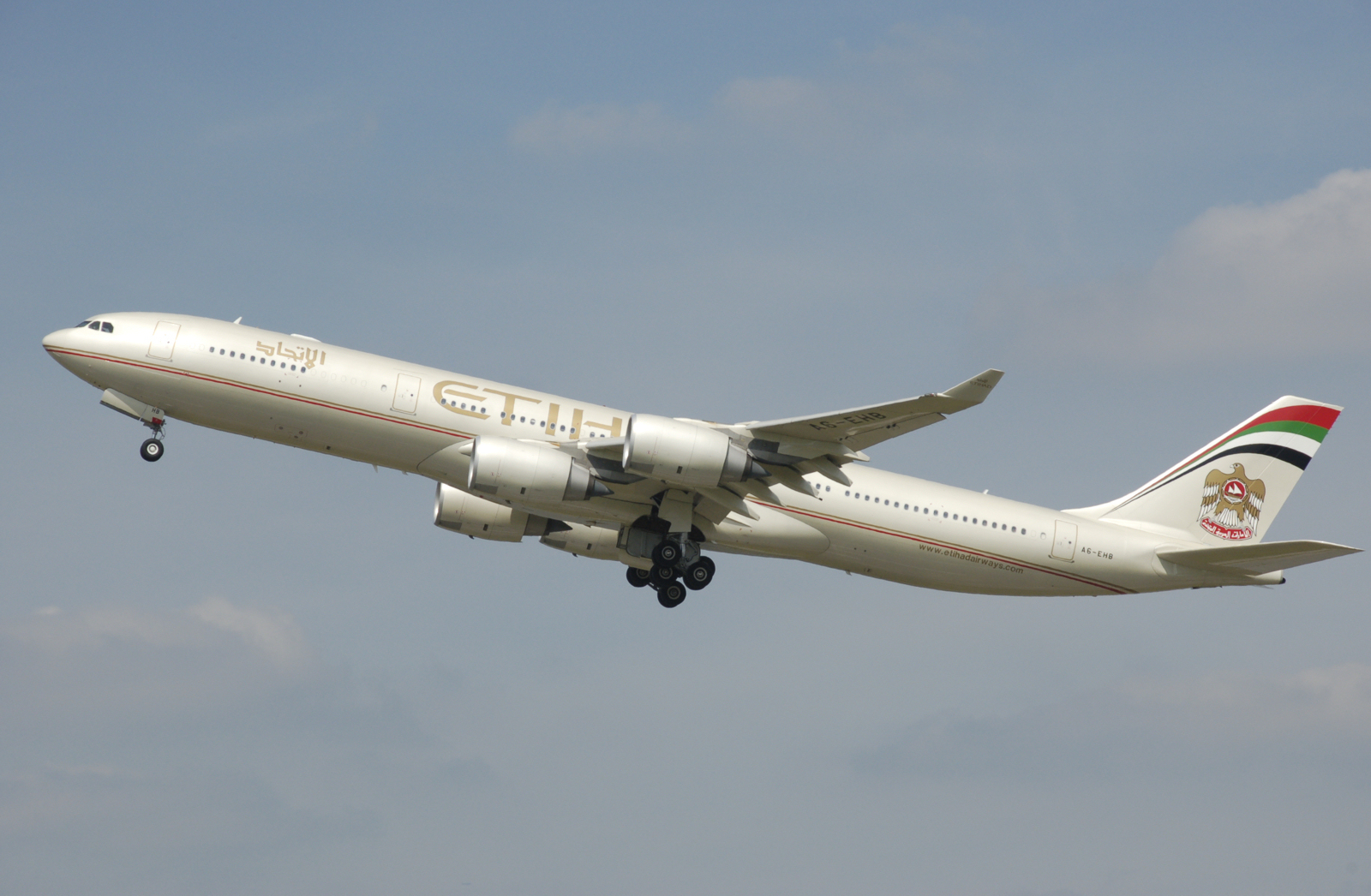
Ethiad Airways increases stake in Virgin Australia to 19.9 percent

By BA Staff

Etihad Airways, the national airline of the United Arab Emirates, confirmed its equity stake in Virgin Australia Holdings had reached 19.9%.

This follows a series of on-market purchases of Virgin Australia shares over recent weeks. The Abu Dhabi-based airline now holds more than 515 million shares in the airline.

At 19.9%, Etihad Airways has reached the threshold approved by Australia’s Foreign Investment Review Board in June 2013.

James Hogan, President and Chief Executive Officer of Etihad Airways, said: 
“We are delighted to have reached this milestone. It reflects our strong support for the business strategy and management team of Virgin Australia and our enduring commitment to the Australian market. It also reflects the close working relationship between our two airlines and we look forward to strengthening its commercial foundations. The strategic partnership continues to deliver significant revenue streams and other benefits to each airline. Increasing our equity in Virgin Australia will further enrich the commercial benefits which the partnership delivers for both airlines as well as increasing the benefits to Australian travellers and visitors to Australia.”"
Etihad Airways and Virgin Australia signed a ten year strategic partnership agreement in August 2010 that includes code-sharing on flights, joint sales and marketing activities, and reciprocal earn-and-burn on their respective frequent flyer programs.

Those benefits include seamless connectivity to more than 40 codeshare destinations in Australia, New Zealand, Indonesia and Thailand and loyalty program privileges such as priority baggage handling, priority boarding and airport lounge access for top tier program members.

Combined, Etihad Airways (25) and Virgin Australia (3) operate 28 flights a week between Abu Dhabi and Australia and passengers have access to a combined global network of more than 280 destinations.

Etihad Airways began flying to Australia in March 2007, when it launched services to Sydney. Flights to Melbourne and Brisbane followed in 2009. The airline has carried more than 2.5 million passengers between Abu Dhabi and these three Australian gateways in the past six years. The airline plans to operate services to Perth in Western Australia in the future.

Etihad Airways also holds equity investments in airberlin, Air Seychelles, Virgin Australia and Aer Lingus, will acquire 49% of Air Serbia from January 2014, and, subject to regulatory approval, will acquire 24% of India’s Jet Airways. It also has codeshare partnerships with 47 airlines worldwide.
Read more »

SilkAir joins Virgin Australia Velocity frequent flyer programme

By BA Staff

SilkAir (MI), the regional airline of Singapore Airlines, will become the latest airline partner to join Virgin Australia's Velocity frequent flyer program.

From October 10, 2013 onwards, Velocity members will be able to earn points and status credits or redeem their Points on the SilkAir network across South East Asia, India and China. This includes the ability to redeem points for reward seats or any seat up to 331 days in advance on any Virgin Australia marketed flights.

Velocity Frequent Flyer CEO Neil Thompson said:
“Today’s announcement builds on our existing offering with Singapore Airlines. Asia is a very important market for business and leisure travellers and we now offer the ability to earn Points and Status Credits to more destinations than ever before.”
Velocity’s Gold and Platinum members will also be able to use their Elite Benefits across the SilkAir network including priority check-in, priority boarding and complimentary lounge access for the member and a guest on day of travel.

SilkAir is Singapore Airline’s full service regional subsidiary flying to over 44 destinations across 12 countries. SilkAir flies from Darwin to Singapore, connecting the Northern Territory with Singapore Airlines’ global hub.
Read more »

Virgin Australia announces new direct service between Brisbane and Cloncurry

By BA Staff

Virgin Australia today announced that it will commence direct flights between Brisbane and Cloncurry in regional Queensland on 27 November 2013. Virgin Australia’s 98 seat Embraer E190 jet will operate a return Brisbane-Cloncurry service on Wednesdays and Fridays. 

Virgin Australia Chief Commercial Officer Judith Crompton said:
Cloncurry is an important regional centre that has seen strong growth in the agriculture and resources industries. Up until now, those wishing to travel to Brisbane have needed to transit through Mount Isa or Townsville. From November guests will be able to enjoy direct flights on our premium jet aircraft.
As we have seen in other markets such as Moranbah and Bundaberg, a direct service brings many benefits to the community including greater access to specialist services and increased visitation.
Today’s announcement would not have been possible without the support of the Cloncurry Shire Council especially the Mayor, Cr Andrew Daniels, Council CEO David Neeves and the entire council leadership team.
We are proud to be supporting local residents and businesses as well as the resources industry with choice and value. In addition, guests will be able to take advantage of Virgin Australia’s award-winning loyalty program, Velocity Frequent Flyer
Brisbane's is Virgin Australia's third largest hub, with more than 80 daily departures to 35 destinations around the Pacific.
Read more »

Analysis: Qantas more than doubles full year profit as rival Virgin Australia loses money

by Vinay Bhaskara
Image Credit: Paul Spijkers


Australian airline group Qantas Group has reported an underlying pre-tax profit of AUD 192 million (US $171.5 million) for the year ended 30th June 2013, more than doubling from AUD 95 million for the year ending 30th June 2012.

Broken up by segment, profit for Qantas mainline domestic fell 21% year-over-year (YOY) to AUD 365 million thanks to a fare war with Australia's second largest airline, Virgin Australia. Profits also fell 20% YOY at Qantas freight on Asian demand weakness to AUD 36 million, while Jetstar Group saw a deep 32% YOY decline in profit to AUD 132 million thanks to the start up costs of Jetstar Japan and Jetstar Hong Kong. Profits at the loyalty (frequent flyer) division remained strong, rising 13% YOY to AUD 260 million, but the biggest improvement came from the reduction in losses at Qantas' international division, with losses halving to AUD 246 million from AUD 484 million YOY.

Group operating revenues rose 1% to AUD 15.9 billion while operating costs remained essentially flat thanks to a 2% reduction in fuel costs. This contributed to a 5% reduction year over year in unit costs excluding fuel (cost per available seat kilometer - CASK ex. fuel), which was partly offset by a 2% decline in yields.

For the year, capacity as measured by available seat kilometers (ASKs) was essentially flat YOY, while passenger traffic in revenue passenger kilometers (RPKs) was down around 1%. However, passengers carried actually grew 3% YOY to 48.3 million as the Group re-balanced capacity towards shorter haul routes.

For Qantas, the strong improvement in its international results was a partial validation of the turnaround plan announced last year with an eye towards returning the international division to profitability by fiscal year 2015. The biggest part of that turnaround plan, a tie-up with Emirates, has also been partially validated, as it contributed to the results via a doubling of bookings onto code share services to Europe (versus the previous partnership with British Airways). And the partnership's contribution should continue to improve into FY14 as much of the partnership has not been fully implemented and FY13 had to deal with the start-up costs of launching operations in Dubai.

Moreover, the cost-base on international operations improved 5% thanks to reduction of loss-making routes, aircraft retirements, and the reconfiguration of 9 Boeing 747s and 12 A380s improving fleet economics. Qantas International has certainly paid the price for poor strategic vision in the sense of not taking advantage of the rise of Asia over the past decade. But the decision to join hands with Emirates and cut loss-making routes from the international network was the right decision. Bigger is not always better. By reducing some of the lower yielding destinations like Frankfurt and Buenos Aires, Qantas has cut its way towards profitability.

And the turnaround domestically has allowed Qantas to re-focus efforts on the group's primary profit center; Domestic. As Qantas struggled to re-make its international operations over the past few years, Australia's second largest carrier, Virgin Australia evolved from a low cost nuisance into a true full service rival. Having reconfigured its short haul fleet of Boeing 737s and Embraer E190s with a business class cabin, Virgin Australia even took a major shot across Qantas' bow by introducing Airbus A330-200 aircraft with lie-flat business class seats on lucrative transcontinental routes from Perth in 2011.

New Qantas A330-200 business class - Image Credit: Qantas
But Qantas now has the funds and shareholder confidence to fight back. Earlier this month, they announced a new updated product on its own fleet of 10 transcontinental A330s with lie-flat suites aimed at clawing back market share from Virgin Australia. Qantas also announced a new premium product for five Boeing 717-200s, to be flown by subsidiart QantasLink in competition with Virgin Australia Embraer E190s out of Australia's capital Canberra.

Even as Qantas is revving up for a fight, Virgin Australia continues to struggle. With a jumbled strategy of acquisitions aimed at modeling Virgin Australia Holdings after Qantas Group (including the transformation of regional provider Skywest into Virgin Australia Regional and the purchase of a 60% stake in ultra low cost carrier [ULCC] Tigerair Australia) weighing on results, Virgin Australia reported a post-tax loss of AUD 98.1 million for FY13. The competitive tide in the Australian market, for the moment, appears to have shifted back in Qantas' favor.


Read more »

Etihad Airways signs code share agreement with Kenya Airways; strengthened ties with SkyTeam?

by Vinay Bhaskara

Abu Dhabi based Etihad Airways has inked a code share with Nairobi based Kenya Airways, expanding access to second and third tier African destinations for its consumers. Etihad Airways will place its code on flights by Kenya Airways to 27 destinations across Kenya Airways' African network. Meanwhile, Kenya Airways will place its code onto 32 onward destinations from Etihad's global hub. The Kenya Airways code will also be placed onto Etihad's daily Abu Dhabi-Nairobi service with 136 seat (16J/120Y) Airbus A320 aircraft, while Kenya Airways will launch a thrice-weekly service Nairobi-Abu Dhabi from mid 2013 onwards.

James Hogan, Etihad Airways President and Chief Executive Officer, said: “The partnership agreement with Kenya Airways is in line with our strategy of forming alliances with airlines around the world to enhance our network and marketing reach. This agreement will also allow both airlines to benefit from cost savings achieved through synergies and economies of scale.

Dr. Titus Naikuni, Managing Director and Chief Executive Officer, Kenya Airways, said: “The new codeshare partnership with Etihad Airways is a significant strengthening of the global network of both airlines, which provides more choice to all our passengers. As part of the agreement we are looking for greater collaboration and coordination on cargo operations, training and procurement opportunities which will make us more cost efficient and customer responsive.”

Code share agreements in and of themselves aren't huge news, but this agreement is notable because it marks increased ties for Etihad with the SkyTeam alliance. After fellow Gulf rival Qatar Airways broke tradition and joined the oneworld alliance, it has become increasingly speculated that Etihad will follow suit and join SkyTeam (Star Alliance is seen as too crowded for another middle-eastern carrier with Turkish Airlines already in the fold).

Etihad now has code share partnerships with nine SkyTeam carriers, including its founder member, Air France. While Etihad touts the benefits of its so-called "equity alliances" composed of its investments and reciprocal codeshares in European LCC airberlin, African regional carrier Air Seychelles, Australian carrier Virgin Australia, and Irish national carrier Aer Lingus, it would undoubtedly benefit from the increased feed provided by membership in a global alliance. While this particular agreement does not mean that a deal is imminent, it does add incrementally to the likelihood of Etihad joining SkyTeam.
Read more »

Analaysis: Etihad reports full year 2012 profit; equity investments beneficial for both Etihad and partners

by Vinay Bhaskara

Etihad Airways Boeing 777-300ER -- Image Credit Etihad Airways
Abu Dhabi based Eithad Airways reported its second straight year of profitability, with calendar year 2012 witnessing a net profit of US $42 million (versus $14 million), on revenues of $4.8 billion (up from $4.1 billion in 2011). Full year EBITDAR (earnings before interest, taxes, depreciation, amortization, and rents) hit $753 million while EBIT (earnings before interest and taxes) was $170 million.

Strong expansion helped fuel Etihad’s successful performance, even as they dealt with local headwinds including continued demand softness in the Middle East and North Africa due to political instability, and a decrease in Iranian demand due to runaway hyperinflation causing decreased purchase power. Moreover, global business travel demand registered weak growth overall thanks especially to a declining European market. However, Etihad (and its so-called Middle East Big 3 [MEB3] rivals Qatar Airways and Emirates) persevered through these headwinds and continued on a path of robust expansion.

For the year, passenger traffic as measured by revenue passenger kilometers (RPKs) grew 23% to 48 billion year over year, while capacity as measured in available seat kilometers (ASKs) grew 20% to 61 billion. These contributed to a 2.4 percentage point increase in load factor from 75.8% to 78.2%. The carrier added 6 aircraft to its fleet which now includes 70 aircraft serving a network of 86 passenger and cargo destinations. Revenue passengers carried crossed the 10 million passengers mark for the first time, 10.3 million to be exact.

Freight loads, as measured in metric tons, recorded a robust 19% growth to 367,837; bucking the global trend of declining cargo volumes. The carrier also reported a decline in non-fuel cost per available seat kilometer (CASK – the most reliable indicator of an airline’s cost discipline) of more than 5%. While fuel prices remained volatile throughout the year, Eithad used a strong program of fuel hedging (more than 80% of total use) to offset that volatility.

Said Etihad President and CEO James Hogan about the quarterly results:
We understand how to manage costs without compromising our innovative product and outstanding service experience….We have delivered improved net profit, the second consecutive year we have been in the black, a remarkable achievement given the youth, ambitious growth and ongoing investment made by this airline in a challenging global economic environment… And we have met our mandate of contributing to the economic development of Abu Dhabi, growing its aviation sector and building trade and tourism connections across the globe.
Etihad CEO James Hogan (left) and CFO James Rigney
(right) - Image Credit  Etihad Airways
An important contributor to Eithad’s success in 2012 was its quasi-alliance of partner airlines, all of whom Etihad has invested in. This so called ‘equity alliance’ is comprised of Etihad investments in Air Seychelles (40% stake), airberlin (29.21%), Virgin Australia (9%) and Aer Lingus (2.987%).

According to Etihad, these investments and the resultant code shares have already played a vital role in Eithad’s finances. Equity and code share partners transferred more than 1.2 million passengers onto the Etihad route network, with airberlin in particular transferring 300,000 passengers, which drove $130 million in joint revenue synergies.

The model in which Eithad’s equity partners transfer certain long haul traffic flows through Abu Dhabi to Etihad while focusing on regional opportunities and long haul traffic flows not viably served via Abu Dhabi appears to have paid dividends. Aer Lingus just reported record quarterly and annual profits, while airberlin appears to have stabilized financially and recently launched a trans-Atlantic expansion. Similarly, Virgin Australia has displayed a renewed focus on the Australian domestic, trans-Tasman, Asian, and trans-Pacific markets where it is challenging a weakened Qantas  for lucrative business travelers and frequent flyers.

All of this takes on especial importance when one considers the increased likelihood that Etihad will take an equity stake in India’s largest private carrier Jet Airways under the new foreign direct investment (FDI) regime that allows foreign airlines to invest in the Indian airline market. While the vagaries of such an investment can be analyzed once the deal is finalized and officially announced.
Hogan had this to say about a potential investment in Jet Airways. "We are doing our due diligence (on Jet Airways) in the next week. We will present it to our board and take it from there.”

He also explained a visit with senior ministers in India “We wanted to understand the new rules under the Foreign Direct Investment (FDI) scheme. We also wanted to understand the issues that have impacted Indian domestic aviation and how these are being addressed in the coming years.”

Suffice to say that the experience of other carriers shows that an Eithad investment would not necessarily be detrimental to Jet’s financial health as many in the Indian media and aviation community fear. Rather, a hybrid model for Jet Airways’ international network could be developed to build off of the synergies offered by Etihad.

Kudos to Etihad for a very successful 2012 and for its incredible development. In 2006, Etihad was a $750 million a year business serving primarily regional traffic. Today, just six years later, it has become a global powerhouse; a $5 billion dollar a year powerhouse that serves intercontinental traffic flows. And with each passing year of profitability Etihad helps prove wrong the skeptics who doubted the viability of the MEB3 (and Turkish) business model.


Read more »