Showing posts with label 737. Show all posts

InterGlobe and CAE inaugurate India’s largest pilot training facility

by Devesh Agarwal

Rahul Bhatia, InterGlobe, Marc Parent, CAE
InterGlobe Enterprises, the parent company of India’s largest domestic airline, IndiGo, and CAE, a global leader in flight simulators and training, inaugurated India’s largest pilot training facility in India. Located in Greater Noida, in the National Capital Region (NCR), the Centre, CAE Simulation Training Private Limited (CSTPL), is a joint venture between InterGlobe Enterprises and CAE with an initial investment of $25 million.

The Centre starts with two CAE Series 5000 A320 full-flight simulators certified level D, and has the capacity to expand to six simulators. The facility provides "wet" and "dry" type-rating, recurrent, conversion and jet indoctrination training for commercial aircraft pilots of IndiGo, and will commence training, GoAir’s A320 pilots from December. CSTPL will also be the first centre in India to impart Airbus certified training, and can train up to 5,000 pilots per year.

CSTPL is the fourth aviation training location that CAE operates in India. CAE already trains more than 1,500 crew members every year at its training centre in Bengaluru, the first independent training centre in India and the first to earn approval as a fixed-wing Type Rating Training Organisation (TRTO). CAE also operates a joint venture helicopter training centre in Bengaluru and in partnership with the Government of India, CAE operates ab-initio flight schools in Gondia and Rae Bareli, located in the parliamentary constituencies of former civi aviation minister Praful Patel, and India's first political dynasty, the Gandhis.

India is expected to be the fourth largest aviation market in the world, with a large demand for narrow-body pilots. IndiGo and GoAir have placed orders for 180 and 72 A320 family aircraft respectively. IndiGo already has 71 A320-232 aircraft in its fleet from an original order for 100 A320s.

The country's other two major carriers, Air India and Jet Airways have their own in-house training facilities.
 
Read more »

Video - Boeing updates on 737 MAX

Boeing has put together this nice compact tongue in cheek video update on the 737 MAX. Enjoy the weekend. Comments are welcome as always.


Read more »

Jet Airways cancellation of Colombo-Chennai tied to Jetihad?

by BA Staff

Earlier today, it was announced that Indian full service carrier Jet Airways would be cancelling its longstanding daily flights between its Southern hub at Chennai, and Colombo from 3rd January, 2014. The route, which was operated with Boeing 737-800 equipment, had schedules as follow:

9W252 ~ MAA - CMB ~ 0055 – 0210 ~ 738 ~ Daily
9W253 ~ CMB - MAA ~ 0310 – 0430 ~ 738 ~ Daily

Jet Airways will continue to serve Colombo from its largest hub at Mumbai. The move comes as a bit of a surprise, given that the India-Sri Lanka market, especially with regards to inbound medical tourism at Chennai, remains robust. And at a time when Jet continues to incur massive losses on its domestic network, it makes little sense for Jet Airways to cancel a route of roughly domestic length, but with fares 30% higher. There are however, a pair of countervailing factors that could be the reason behind the move. The first is that SriLanka Airlines is planning a major Indian expansion, which could drive down fares and yields. But even more importantly, with the Jetihad partnership recently finalized, Etihad now has the ability to dictate Jet Airways' international route decisions. Is Etihad behind this route cancellation? Let us know in the comments below. 
Read more »

Boeing selects Bombardier business jet for maritime surveillance aircraft program

By BA Staff

Boeing has selected Bombardier's Challenger 605 business jet as the platform for its Maritime Surveillance Aircraft (MSA) program.

Tim Peters, Boeing vice president and general manager, Mobility, Surveillance and Engagement, said at the Dubai Airshow:
"The Challenger 605 is an ideal platform to host MSA's mission system, sensors and communications equipment. It also provides the power, payload capacity, range, speed and endurance that our customers tell us they need for missions such as anti-piracy; coastal and border security; and long-range search and rescue."
Boeing team-mate Field Aviation will modify the Challenger 605's structure and air vehicle systems into the MSA configuration.

Peters said:
"Field Aviation has extensive experience engineering and modifying the Challenger family of aircraft for a variety of missions, including maritime surveillance."
Field Aviation is currently modifying a Boeing-owned Challenger 604 jet into an MSA demonstrator aircraft that will complete ground and flight testing of the mission systems and be presented to potential customers in 2014.

MSA incorporates technologies developed for the P-8A Poseidon, the U.S. Navy’s newest anti-submarine warfare, anti-surface warfare and Intelligence, Surveillance and Reconnaissance system based on the Boeing Next-Generation 737 commercial airplane.  

Read more »

Boeing to increase 737 production rate in 2017

By BA Staff

Courtesy of Wikipedia
Boeing announced that production on the 737 program will increase to 47 airplanes per month in 2017, the highest rate ever for the best-selling airliner in history.

Once implemented, the 737 program will build more than 560 airplanes per year, and will have increased output by nearly 50 percent since 2010.

Beverly Wyse, vice president and general manager, 737 Program, Boeing Commercial Airplanes said:
"We're taking this step to make sure our airplanes get into the hands of our customers when they need them. Our employees and our suppliers have successfully increased the production rate to unmatched levels over the last three years. This increase will lay a solid foundation as we bridge into production on the 737 MAX."
Boeing currently produces 38 airplanes per month from its Renton, Wash., factory and will increase the rate to 42 per month in the first half of 2014. First delivery of the 737 MAX is on track for third quarter of 2017.

The rate increase announced is not expected to have a significant impact on 2013 financial results.
Read more »

Boeing continues to Improve 737 MAX performance

By BA Staff

The Boeing 737 MAX program continues to make steady development progress since reaching Firm Configuration on the 737 MAX 8 in July.

Engineers have completed an assessment of the airplane's performance confirming an additional 1% fuel-efficiency improvement over the 13% already promised to customers.

Keith Leverkuhn, vice president and general manager, 737 MAX program, Boeing Commercial Airplanes said:
"Program and airplane performance just continues to improve. We have been very disciplined in our approach and continue to realize more benefit for our customers as we retire risk on the program and get further into development. This recent fuel-efficiency gain will widen the performance gap in the single-aisle market, reinforcing the 737 MAX's position as the value leader."
The 737 MAX will feature several new systems that will improve the management of maintenance information. For example, some Built-In Test Equipment (BITE) information will be brought into the flight deck. Today, maintenance technicians access this fault data in the forward electronic equipment bay of the airplane. By bringing this data up to the flight deck, maintenance issues can be resolved faster.

The MAX also will include an enhanced onboard network system comprised of a digital flight data acquisition unit (eDFDAU) and network file server (NFS). These systems will provide a centralized data collection system with more storage capacity, doubling the maintenance data available during flight. The system will be capable of connecting the airplane in flight to airplane operations on the ground enabling airlines to better prepare for potential dispatch issues.

Michael Teal, chief project engineer, 737 MAX said:
"We are enhancing the capability of the 737 MAX to meet the future needs of a digital world. Recognizing that the Next-Generation 737 is already the most reliable single-aisle airplane with 99.7 percent of flights departing on time, we are being very deliberate about any changes we make to the airplane systems on the 737 MAX to make the airplane even easier to operate and maintain. Through careful testing and selective application on the Next-Generation 737 before MAX enters service, we can ensure these systems are ready to enhance the management of our customers' fleets." 
Some of these systems such as the eDFDAU and NFS are under development for initial delivery on the Next-Generation 737 prior to the 737 MAX. Many of these systems were tested during the 737 ecoDemonstrator program last year, showing the value they will provide to airlines operating the 737 MAX.

Engineers continue to make progress on the detailed design of the airplane. Recently the team completed the Firm Systems Definition, which defines the hardware locations for the systems on the airplane.

Leverkuhn said:
"Throughout the design process we'll continue to look for opportunities to improve operational performance, schedule and cost for our customers. We are on track for first delivery of the 737 MAX in the third quarter of 2017."
Read more »

Boeing, EL AL Israel Airlines finalize order for two more 737-900ERs

By BA Staff

El Al Boeing 737-800. Image by AF1621 courtesy Wikimedia
Boeing and El Al Israel Airlines have finalized an order for two additional Next-Generation 737-900ER (Extended Range) airplanes.

The order comes just two weeks after the Israeli flag-carrier took delivery of its first 737-900ER. This order brings the total number of 737-900ERs ordered by EL AL to eight.

Elyezer Shkedy, president and chief executive officer of El Al Israel Airlines said:
"This decision by EL AL to purchase two more 737-900ER aircraft demonstrates our good relationship with Boeing. We are committed to provide our passengers on our medium and short-haul routes with the highest quality product and service, allowing EL AL to continue to be the first choice now and in the future."
The order was finalized at a special event hosted by EL AL at the carrier's base at Tel Aviv's Ben Gurion International Airport to celebrate the recent arrival of EL AL's first 737-900ER. The Boeing 737-900ER will complement EL AL's existing fleet of Next-Generation 737-700s and 737-800s.

 Todd Nelp, vice president of Sales for Europe, Boeing Commercial Airplanes said:
"We delivered EL AL's first 737-900ER earlier this month and are confident it will fit seamlessly into its short and medium-haul fleet, providing greater flexibility for the carrier's operations across Europe. This order is the latest chapter in a partnership between Boeing and EL AL that stretches back to the foundation of Israel, and it is a sense of enormous pride to the entire company that such a prestigious airline continues to operate an all-Boeing fleet."
EL AL operates an all-Boeing fleet of nearly 40 airplanes including Next-Generation 737s, 747-400s, 767s and 777s and serves more than 40 destinations worldwide from its base in Tel Aviv.  
Read more »

Boeing reports third quarter deliveries

by BA Staff

American manufacturer Boeing has reported its aircraft deliveries for the third quarter of 2013, with 213 deliveries recorded in the three month period, split as 170 Commercial and 43 Defense & Space. For the year to date, Boeing has recorded 595 deliveries, split as 476 Commercial and 119 Defense & Space.

Find the full breakdown of Boeing's third quarter and year to date deliveries in the table below:

Program3rd Quarter 2013Year to Date 2013
Commercial


737NG
112
330
747
4
16
767
5
17
777
26
73
787
23
40
Total
170
476


Defense & Space


AEW&C
0
0
Apache
11
31
Chinook
15
32
C-17
2
8
F-15
0
3
F/A-18EF & EA-18G
12
36
P-8
2
7
Satelites
1
2
Total
43
119
Read more »

Boeing, WestJet firm up order for 65 737 MAX Airplanes

By BA Staff

Boeing and WestJet announced today that they have firmed up an order for 65 737 MAX airplanes, fulfilling the carrier's letter of intent to purchase the airplanes announced on Aug 29. The order, valued at $6.3 billion at list prices, consists of 40 737 MAX 8s and 25 737 MAX 7s. The airplanes are a key component of the Calgary-based airline's fleet renewal initiative.

WestJet President and CEO Gregg Saretsky said:
"We are pleased to announce the finalization of the MAX purchase agreement and look forward to being among the first North American airlines to fly the 737 MAX in 2017. The increased fuel efficiency and enhanced in-cabin amenities provided by the Boeing 737 MAX will contribute to both lower operating costs and a remarkable in-flight guest experience which is supportive of our low-cost business model and combined with our lease renewal options, maintains our fleet plan flexibility going forward."
The 737 MAX brings the most advanced engine technologies to the world's best-selling airplane, building on the strengths of today's Next-Generation 737. The 737 MAX incorporates the latest-technology CFM International LEAP-1B engines to deliver the highest efficiency, reliability and passenger comfort in the single-aisle market. Airlines operating the 737 MAX will see a 13 percent fuel-use improvement over today's most fuel-efficient single-aisle airplanes. The order brings the total number of 737 MAX orders to date to 1,567 airplanes.

Brad McMullen, vice president of North America Sales, Boeing Commercial Airplanes said: 
"The 737 MAX is an excellent complement to the WestJet fleet and its low-cost business model. The airplane's efficiency, reliability and passenger amenities will enable WestJet to continue to provide its customers high-quality service at a low cost."
Read more »

Jetairfly to Launch Miami-Brussels

by BA Staff

Image Credit: Mopje18
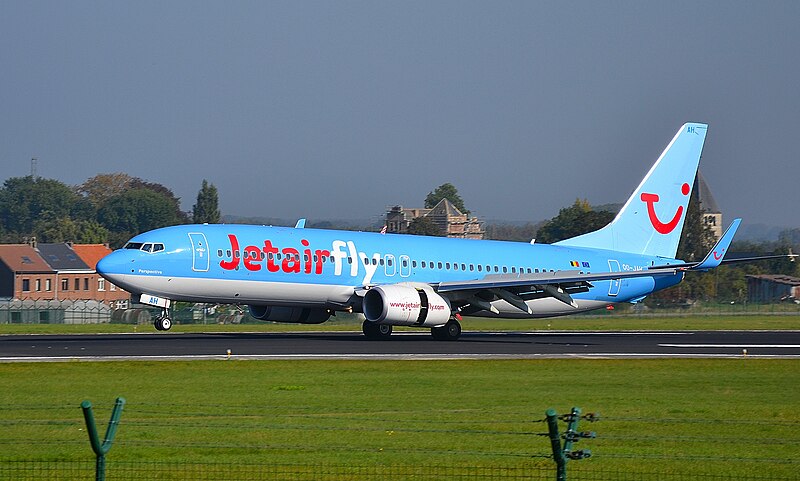
Belgian charter operator Jetairfly has announced the launch of twice weekly flights between its home base at Brussels and Miami, commencing 4th April, 2014 using Boeing 767-300ER aircraft. Miami becomes the airline's 107th destination around the globe, its 9th in the Americas, but its first in the United States.

Jetairfly is a subsidiary of parent company TUI Travel, a UK based charter airline group which includes Jetairfly, Corsair International, Thomson Airways, TUIFly, TUIFly Nordic, and Arkefly. Currently, Jetairfly operates a fleet of 22 passenger aircraft (4x Boeing 737-700, 14x Boeing 737-800, 2x Embraer E190, and 2x Boeing 767-300ER). Jetairfly also has 1 Boeing 787-8 Dreamliner on order and an undisclosed amount of 737 MAX as part of the larger TUI Travel order.

Jetairfly's long haul 767s are configured to seat 257 passengers with 2 classes of service (though no difference in seat). Economy Class offers full economy service with catering, while Comfort Class offers more legroom, amenity kits, iPad IFE, premium meals, free champagne and alcohol, newspapers, and at Brussels airport access to the VIP-lounge, separate check-in and security fast lane.
Read more »

Routes: Copa Airlines grows its Panama City hub further

by BA Staff

Already one of the world's fastest growing airlines, Central American Star Alliance carrier Copa Airlines is growing its hub at Panama City's Tocumen International Airport further this winter by increasing frequencies to several destinations.

San Jose (CR) - 8th daily flight introduced from 3rd October using Boeing 737-700 equipment, with schedule as below:

CM116 ~ PTY-SJO ~ D:1526  A:1546 ~ 73G ~ Daily
CM115 ~ SJO-PTY ~ D:1804 A:2020 ~ 73G ~ Daily

Kingston - service increases from 3x weekly to 4x weekly from 16th December on Embraer E190 equipment

Montego Bay - service increases from 4x weekly to 5x weekly on varied equipment from 11th December

Punta Cana - service increases from 25x weekly to 30x weekly from 14th December (up to 32x weekly from 1st February 2014)

St. Maarten - service increases from 2x weekly to 4x weekly using E190s from 12th December

Charlottetown - service increases from daily to 11x weekly


Read more »

Ethiopian Airlines reports record profits, stands behind Dreamliner despite fire

Image Credit: Konstantin von Wedelstaedt
by Vinay Bhaskara

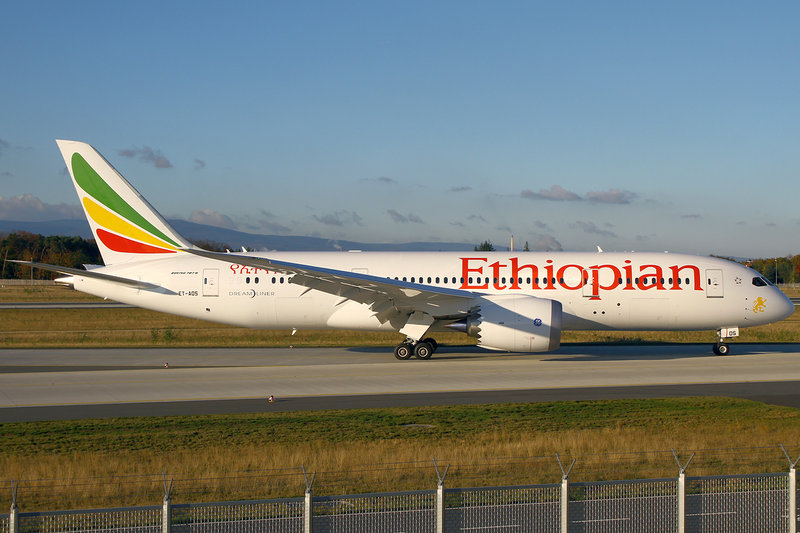
African carrier Ethiopian Airlines has announced a record net profit of 2.03 billion birr (US $107.6 million) for the period from July 2012 - June 2013, up 178% from 734 million birr (US $39.2 million)year-over-year (YOY). Operating profitability also rose a healthy 170% YOY to 2.7 billion birr (US $143.1 billion), from 1 billion birr (US $53.0 million). While the carrier has not yet formally released its financial results, CEO Tewolde Gebremariam presented these figures as coming from Ethiopian's un-audited results for the period. The formal announcement of results should come soon.

Interestingly, Gebremariam attributed Ethiopian's profitability in part to the troubled Boeing 787-8 Dreamliners, citing the fuel savings driven by the aircraft's increased fuel efficiency. His comments come just a month and a half after an Ethiopian Dreamliner memorably caught fire at London's Heathrow Airport in early July (an incident later attributed to a Honeywell Emergency Locator Transmitter), and a three month long grounding of the aircraft due to battery issues earlier this year. Gebremariam admitted that the Dreamliners had caused some issues for Ethiopian this past financial year:
Definitely the incidents and grounding have some impact. We were very fortunate that coincidentally the grounding of the planes were in what we call slack season. It's a slow demand season. So were able to minimize the level of the impact.
However, he also said that the carrier has seen a demand boost from the Dreamliners:
Whenever we introduce the aircraft in any route, the load factor immediately increases, which means our customers love the plane, they are enjoying its features
Ethiopian says that it will take delivery of its remaining 8 Dreamliners on order (5 direct orders and 3 leases), bringing the carrier's active fleet of 787-8 Dreamliners to 12 (13 frames on the books but one is currently indisposed at Heathrow Airport). Ethiopian currently operates a fleet of 54 passenger aircraft (with 31 more on order - 14 Airbus A350-900s, 8 Boeing 787-8 Dreamliners, 4 Boeing 777-300ERs, and 5 Boeing 737-800s) serving 80 passenger destinations around the globe. Based in Addis Ababa, Ethiopian is a member of the Star Alliance partnership of global airlines, and is one of the world's fastest growing airlines.
Read more »

Boeing Launches 787 Training in Miami

Training capability at Miami campus enhanced across airplane types

by BA Staff

Florida Gov. Scott and BFS VP Carbary in the 787 simulator
Boeing launched customer training for its 787 Dreamliner aircraft in Miami, Florida, site of the company's largest commercial aviation training campus. Aeromexico and LAN Airlines are the first two customers to train on the new 787 suites at the Boeing Flight Services Miami campus.

At an event attended by Florida Governor Rick Scott as well as a number of other federal, state and local officials, community leaders and airline customers, Boeing also established Miami as its pro forma flight training campus for the Americas -- the location where airline crews will receive the initial training provided to Boeing customers for new model airplane introductions.

Sherry Carbary, vice president, Boeing Flight Services said
"Miami has always been an important Boeing training campus and the largest campus in our global network. Now it will also play an expanded role in training the pilots and technicians who will fly and maintain the groundbreaking 787 Dreamliner," "Miami's location at the crossroads of the Americas offers tremendous advantages as a preferred location for airlines based in Latin America, Canada and the United States. Customers also travel from Europe, Africa, the Middle East and China to conduct training in Miami."
Boeing has greatly enhanced its overall training capability in Florida following an announcement in March 2013 that the company would relocate training devices from Seattle to Miami. To better serve airlines and meet growing personnel training requirements, two 787 full-flight simulators are now located at the Miami campus as well as an additional Next-Generation 737 full-flight simulator and 717, 747 and 767 simulators. An additional 777 simulator will be located in Miami later this year. These seven devices will bring total capability in Miami to 17 full-flight simulators across airplane types, making the campus one of the largest commercial flight training facilities in the world.

The consolidation of Boeing flight training campuses in the Americas is designed to bring training closer to where customers operate, reducing travel times for airline crews and the costs of sending students for training. Miami is an international hub for commercial aviation training and provides geographic diversity within the framework of Boeing's global commercial training network - and convenience that airlines prefer.

About the Boeing Edge

Boeing offers a comprehensive portfolio of commercial aviation services, collectively known as the Boeing Edge. Read more here.

Boeing Flight Services, is a business unit of Commercial Aviation Services, and operates a geographically diverse network of 20 flight and maintenance training campuses on six continents. In addition to Miami, Boeing offers 787 training in strategically located campuses in Singapore, Shanghai and London.
Read more »

Analysis: Jet Airways to add second daily flight between Mumbai and Singapore

by Vinay Bhaskara

Image Credit: Devesh Agarwal
India's largest full service carrier, Jet Airways, is adding a second daily flight between its largest hub at Mumbai, and Singapore. The second daily flight, effective 1st November 2013, will be served using 154 seat Boeing 737-800 aircraft in a 2-class configuration (16 J / 138 Y).

The proposed new flights, 9W 10/9 will be scheduled very tightly with the existing daily flights on-board the Airbus A330-200; 9W 12/11. Jet Airways Flight 12 currently departs Mumbai at 23:30, arriving at Singapore at 07:25 the next day. The return, Jet Airways Flight 11 departs Singapore at 19:05 after nearly 12 hours on the ground, returning to Mumbai at 22:00. The outbound, Jet Airways Flight 10, will be offset as a morning departure, leaving Mumbai at 09:50 and arriving to Singapore at 18:00. However, the return Jet Airways Flight 9 is currently scheduled to depart Singapore at 20:05 (just one hour after the existing flight), and return to Mumbai at 23:01.

These flight timings make little sense squished so close together on the return to Mumbai. While it is a good idea for Jet Airways to grow its international operations to Asia given the better performance of its international division as a whole. However, placing the return flight so closely with the existing flight is a missed opportunity for Jet. Especially with an integrated terminal coming to Mumbai by the end of 2014, Jet should be looking to maximize connectivity out of Mumbai, especially on international to domestic and vice-versa. A better schedule for the flight would have been a morning departure from Singapore at around 5:50 am, which would have arrived back at Mumbai at 8:50 am, in time for connections with morning departures to dozens of domestic destinations, while still leaving enough time for a turnaround to depart at 9:50 am. Jet already offers double daily flights to Singapore from Chennai and Delhi, and the second dailies to both of those destinations use a similar schedule to the one we propose here.

However, the addition of a second daily Mumbai-Singapore is a good move for Jet, and it points to future international growth opportunities for Jet. Even as the westbound international operations will largely be culled in favor of routing passengers through Abu Dhabi via the Jetihad partnership, there remain opportunities for Jet to grow its eastbound international operations. Air travel demand between India and East/Southeast Asia is growing rapidly, and Jet could offer more flights to the region moving forward, especially with the purchase of 50 737 MAX aircraft offering increased range on tap. 
Read more »

WestJet orders 65 Boeing 737 MAX

by Vinay Bhaskara
Image Credit: Boeing


Canadian low cost carrier (LCC) WestJet announced today that it has signed a letter of intent (LoI) to purchase 65 Boeing 737 MAX aircraft (40 737 MAX 8 and 25 737 MAX 7) from Boeing, in a deal worth $6.3 billion at list prices.

Deliveries of the 737 MAX will commence from September of 2017, and the order marks a net addition of 50 frames to WestJet's order book, as 15 of the orders have been converted from existing WestJet orders for the Boeing 737NG. WestJet currently operates a fleet of 107 aircraft (103 Boeing 737 NG and 4 Bombardier Dash 8 Q400 turboprops operated for regional subsidiary WestJet Encore), with 123 more on order (65x 737 MAX, 42x remaining 737 NG, and 16 more Q400s for Encore).

WestJet President and CEO Gregg Saretsky had this to say about the order
We are proud to continue our long-standing relationship with Boeing and are thrilled that we will be among the first North American airlines to fly the new 737 MAX in its first year of commercial operation. This pending order reinforces our strategy of maintaining the flexibility in our fleet plan while enabling us to introduce new fuel-efficient technology and enhance our inflight guest experience... Our strong balance sheet allows us the opportunity to support our low-cost business model and contribute to our profitable growth through the renewal of our fleet with a lower operating cost aircraft. 
Said Brad McMullen, Vice-President of North America Sales, Boeing Commercial Airplanes:
We are pleased to see that the 737 MAX will continue the tradition of supporting WestJet's vision to be one of the most successful international airlines in the world. The 737 MAX's efficiency, reliability and passenger amenities will be a successful combination with WestJet's famous customer service.
WestJet expects that a definitive purchase agreement will be signed before 30th September 2013.

The order from WestJet marks a victory for Boeing in the ever heated competition with rival Airbus' A320neo, though an expected one (given WestJet's large fleet of 737NGs). The order brings the 737 MAX to a solid 1,602 purchase commitment (1498 firm orders, 104 MoUs). But the MAX still lags behind the A320neo, which has racked up a massive 2,455 purchase commitments to date (2380 firm, 75 MoU - albeit having been offere for a full year longer than the 737 MAX).
Read more »

Sukhoi delivers its first Superjet to Gazpromavia

Image Credit: Sukhoi
by BA.com Staff

Russian aircraft manufacturer Sukhoi Civil Aircraft delivered its first Sukhoi Superjet as an SSJ100 LR to Gazpromavia Airlines.

The first SSJ100 LR for Gazpromavia (MSN 95033) was presented during a delivery ceremony at the  International Aviation & Space Salon MAKS Airshow in Moscow. The Gazpromavia SSJ100 LR features an all-economy class configuration with 90 seats.

Gazpromavia is the launch customer for the SSJ100 LR, which offers several improvements over the basic Superjet 100.  It has a 4578 km (2470 nm) range, plus an increased take-off weight up to 49.45 tons with a strengthened wing and SaM146 engines featuring a 5% increased thrust performance over the base model.

The aircraft will initially be used from Gazpromavia's hub at Vnukovo Airport near Moscow on domestic routes to Sovetsky and Beloyarsky. Gazpromavia operates a fleet of 21 aircraft with a mix of Russian and Western built air-frames (4x Tupolev TU-154, 4x Yakolev Yak-40, 6x Yakolev Yak-42, 4x Dassault Falcon 900, 3x Boeing 737-700). It serves 18 destinations (4 international, 14 domestic) from its Vnkuovo.

Read more »

Analysis: Jet Airways to withdraw from Bhubaneswar

by Vinay Bhaskara

According to several reports, Mumbai-based full service carrier Jet Airways is planning on pulling out from Bhubaneswar from the Winter 2013/14 season. Inventory has been zeroed out from 27th October onwards and flights to and from Bhubaneswar are no longer bookable on jetairways.com. Additionally, sources are saying that Jet Airways has not requested slots at Bhubaneswar for this winter, though we will have to wait for the release of route information onto the Global Distribution System (GDS) to confirm this news.

During August, Jet Airways has operated three flights per day to Bhubaneswar, daily Chennai-Bangalore-Bhubaneswar and return, daily Mumbai-Bhubaneswar and return, and daily Kolkata-Bhubaneswar and return. Mumbai-Bhubaneswar and Kolkata-Bhubaneswar are served with JetKonnect Boeing 737-800 equipment, while Bangalore-Bhubaneswar is served with full service 737-800 equipment. The current service level actually marks a reduction from planned levels at the start of the summer, as an additional two flights per day to Kolkata were initially filed with the Directorate General of Civil Aviation (DGCA) utilizing ATR 72-500 turboprop equipment.

If true, the cancellation of Bhubaneswar is a poor step on the part of Jet Airways. One of the few strengths remaining for the financially struggling Jet Airways is its powerful domestic network, with 49 domestic destinations. Bhubaneswar is the 18th busiest airport in India, and one of the most important destinations in Eastern India. However, Jet Airways has been facing challenges thanks to the steady growth of low cost carrier (LCC) IndiGo in the Bhubaneswar market. IndiGo is the largest carrier in the Bhubaneswar market, with nine flights per day this summer to five nonstop destinations; Delhi, Hyderabad, Kolkata, Mumbai, and Vizag.

Even with the increased LCC competition, it does not make sense that Jet did not at least keep around Mumbai-Bhubaneswar for feed purposes. With the new Mumbai integrated terminal arriving by the end of next year, Jet Airways has the opportunity to build a strong regional hub at Mumbai connecting passengers domestic to international and vice-versa. Since Mumbai-Bhubaneswar is served with JetKonnect equipment, with lower operating costs, it is likely losing the least money of Jet's Bhubaneswar services, and thus it would have made sense for Jet to keep Bhubaneswar around.

But the cancellation is just the latest a growing pattern of poor network decisions made by Jet Airways over the past few years. It is certainly possible for airlines to cut services on their way to profitability; but that usually applies to redundant or heavily money-losing capacity that does not serve a strategic purpose (Delhi-Milan being one rare example at Jet Airways); not a key short haul destination. 
Read more »

New Boeing 737-800s of SpiceJet and Jet Airways delivered

by Devesh Agarwal

US airplane manufacturer Boeing has delivered to two Indian airlines, SpiceJet and Jet Airways, their newest 737-800NG aircraft.

Last Thursday, VT-SZH of SpiceJet, L/N 4573 C/N 41261 B737-86N departed Boeing Field International airport for India via Gander, Newfoundland, Canada. The aircraft has already landed in New Delhi and completing its customs and aviation paperwork formalities to enter service shortly. This aircraft is leased to SpiceJet by GECAS.

Last Friday VT-JFL of Jet Airways, L/N 4579 C/N 39061 B737-8AL, departed Boeing Field International for India via Toronto, Canada. The aircraft is en-route, currently in Shannon, Ireland. Track the flight here. This aircraft is leased to Jet Airways from Bank of China Aviation (BOC Aviation).

Boeing Customer Codes


A small trivia for your enjoyment.

The full aircraft model shows the original customer as per the records of Boeing. The last two digits are the two digit Boeing customer code and the first four digits are the model and variant.

Hence a Boeing 737-800 will be shown at B737-8xx. A Boeing 737-900ER would be shown as B737-9xxER. This will never change in the history of the aircraft.

6N is customer code for GECAS and AL is for BOC Aviation. SpiceJet's Boeing customer code is GJ and Jet Airway's is 5R. If these aircraft were bought by either airline, irrespective of a subsequent sale and lease-back agreement, the aircraft models would have been B737-8GJ and B737-85R respectively.

Air India's customer code is 37, Air India Express is HG, and the Indian Air Force is HI. Sorry, but the code for the Indian Navy is not known at present. Will try and find out.

Above photos are representative of the aircraft and airline and are copyrighted. They may not be used without permission.
Read more »

Malaysia Airlines posts operating profit in Q2 2013

by Vinay Bhaskara

Newly minted oneworld alliance member Malaysia Airlines saw progress in Q2 2013 in its corporate turnaround plan as the carrier swung to a RM (Malaysian Ringgit) 8 million (US $2.4 million) operating profit from an operating loss of RM 102 million (US $31.0 million) during the same period a year prior.

The performance was buoyed by 14% revenue growth on a 19% increase in capacity. Traffic grew 29% pushing seat load factors to a 10 year high of 80%. Q2 marked the fourth consecutive quarter of positive cash-flow from operations and Group cash balance improved to RM 5.4 billion (US $1.64 billion).

Net losses for Q2 were reduced 50% to RM 176 million ($53.5 million) as the carrier increased productivity and controlled costs; especially fuel expense, which fell 7.5% year-over-year. For the first half of 2013, operating loss was RM 157 million (US $47.7 million) and net loss was RM 455 million (US $138.3 million - down from RM 409 million [US $124.4 million] and RM 521 million [US $158.3 million] respectively).

Said Malaysia Airlines Group CEO Ahmad Jauhari Yahya:
With the encouraging performance at the revenue generation level, we can now focus on implementing more structural improvements, including enhancing our administration and support services. We will continue to improve operational effectiveness such as continued improvement in our On Time Performance, turn times on our aircraft, better engineering service turnaround, reducing service disruptions, precise material and inventory management, and much more which will further contribute to the bottom-line in the future.
Quarters three and four are traditionally the strongest for Malaysia Airlines, and the carrier has made its first Q2 operating profit in several years. The carrier still hopes to reach net profitability by the end of 2014 and claims that it is on track to meet that metric. Having taken delivery of 6 A380s, 7 A330s, and 8 Boeing 737-800s over the past 12 months, passengers carried grew to 4.2 million passengers.

Premium cabin demand received a boost on the introduction of the 494-seat Airbus A380, with premium cabin (First and Business) demand up 36% year-over-year on a 17% increase in capacity. The A380 has already been deployed to London, Paris, and Hong Kong from Malaysia Airlines' hub at Kuala Lampur.

Malaysia Airlines is one the largest overseas carriers in India, and is slated to launch services to Kochi in September
Read more »

NTSB says no mechanical failures found in Southwest Airline's New York crash

The United States National Transportation Safety Board has developed the following factual information on the July 22, 2013 accident in which a Southwest Airlines flight 345, a B-737-700, landed hard at New York’s LaGuardia Airport (LGA), and the nose-wheel of the aircraft collapsed.

The captain has been with Southwest for almost 13 years and has been a captain for six of those years. The captain has over 12,000 total flight hours, over 7,000 of which are as pilot-in-command. In 737s, the captain has over 7,900 hours, with more than 2,600 as the pilot-in-command.

The first officer has been with Southwest for about 18 months. The pilot has about 5,200 total flight hours, with 4,000 of those as pilot-in-command. In 737s, the first officer has about 1,100 hours, none of which are as the pilot-in-command.

This was the first trip the flight crew had flown together and it was the second leg of the trip. The first officer had previous operational experience at LGA, including six flights in 2013. The captain reported having flown into LGA twice, including the accident flight, serving as the pilot monitoring for both flights.

The en route phase of the flight, which originated in Nashville, was characterized by the flight crew as routine. On approach into LGA, the first officer was the pilot flying and the captain was the pilot monitoring. SWA 345 was cleared for the ILS Runway 04 approach.

The weather in the New York area caused the accident flight to enter a holding pattern for about 15 minutes. The crew reported that they saw the airport from about 5-10 miles out and that the airplane was on speed, course and glideslope down to about 200-400 feet.

The crew reported that below 1,000 feet, the tailwind was about 11 knots. They also reported that the wind on the runway was a headwind of about 11 knots.

SWA 345 proceeded on the approach when at a point below 400 feet, there was an exchange of control of the airplane and the captain became the flying pilot and made the landing.

The jetliner touched down on the runway nose first followed by the collapse of the nose gear; the airplane was substantially damaged.

At this point in the investigation, no mechanical anomalies or malfunctions have been found. A preliminary examination of the nose gear indicated that it failed due to stress overload.

Investigators have collected five videos showing various aspects of the crash landing. The team will be analyzing these recordings in the coming months.

Parties to the investigation are the Federal Aviation Administration, Boeing Commercial Airplanes, Southwest Airlines, and the Southwest Airlines Pilots Association.
Read more »