Showing posts with label Air China. Show all posts

Air China to commence Beijing Chiang Mai service

By BA Staff

Air China Limited will introduce a new thrice a week service between Beijing and Chiang Mai from November 7, 2013.

Located in Thailand's northern mountainous region, Chiang Mai is Thailand's second largest city and also northern Thailand's political, economic and cultural centre. This city, celebrated for its Buddhist traditions, is also called "Rose of the Northern Thailand".

Air China will deploy a Boeing 737-800 on this route with flight numbers CA823 and 824.

On Mondays, Thursdays, and Saturdays the flight departs Beijing at 18:30 arrives Chiang Mai at 22:40. The return flight leaves Chiang Mai at 23:45 arrives Beijing at 05:00, the next morning.
Read more »

Analysis: SpiceJet to launch Delhi-Macau

by Vinay Bhaskara


A report in the Macau Business Daily states that Gurgaon based low cost carrier (LCC) SpiceJet is planning on launching nonstop flights between Delhi and Macau. SpiceJet has already won approval from the Indian government to launch Delhi-Macau, likely using Boeing 737 equipment. But it has not yet filed for approval from the Macau government. A Macau airport statesman had this to say about a potential SpiceJet application:
We have been aware of communications [about the route] between the Macau International Airport Company Ltd and the airline. SpiceJet had previously contacted us to obtain some initial information on the application procedures, which is a common practice for any interested airlines.
No airline currently serves Macau nonstop from India. The current bilateral air service agreement (ASA) between India and Macau allows each side's airline to operate up 600 seats per week with 2 return flights per week. However, both governments have agreed in principle to negotiate an expansion of the ASA later this year.

Macau, China's largest gambling center in the vein of Las Vegas in the United States, is an important and growing leisure destination for the increasingly affluent Indian upper middle class, and India's wealthy. However, demand for Macau is more concentrated in Bangalore and Mumbai than in Delhi, which may bode poorly for SpiceJet's chances on the route. The Macau international market is currently dominated by flag carrier Air Macau, a subsidiary of China's national carrier Air China, who serves 22 destinations on a fleet of 15 aircraft.

If the reports are true, it would mark just the latest step in SpiceJet's international growth track. The carrier now serves five international destinations from Delhi (Dubai, Guangzhou, Kabul, Kathmandu, and Riyadh) with 32 flights per week. Overall, SpiceJet serves nine international destinations (the aforementioned five plus Colombo, Muscat, Sharjah, and Male) with 87 flights per week. And along with the regional operation using Bombardier Dash 8 Q400 turboprops, the international growth has been an important contributor to SpiceJet's swing to profitability.
Read more »

Air China ends Shanghai-Chengdu-Bangalore

by Vinay Bhaskara

Yesterday, Sunday, August 4th, marked the final nonstop flight for Air China limited, the world’s 10th largest airline by passenger traffic, between Bangalore and Chengdu. Flights have been zeroed out from the global distribution system (GDS) and are no longer bookable via AirChina.com. The nonstop flights, which began in early 2010, had actually been increased in frequency by Air China from twice to thrice weekly on March 31st, and had been planned to operate as thrice weekly flights until late October. Service was offered on 128 seat Airbus A319 equipment in a 2-class configuration (8C/120Y), and was structured as Bangalore-Chengdu-Shanghai Pudong and return. Flights departed Bangalore Wednesday, Friday, and Sunday and arrived in Bangalore on those same days of the week after departing Shanghai Tuesday, Thursday, and Saturday. The same plane journey from Shanghai to Bangalore took over 7 hours and 40 minutes to complete in either direction.

It is surprising that Air China elected to cancel services between Bangalore and Chengdu given the strong business ties between the two cities. Bangalore is India’s information technology (IT) hub, while Chengdu is China’s electronics manufacturing center; and several multinational tech corporations have major operations in both cities. In particular, this route was often dubbed the "Cisco-Huawei Express". Networking Equipment Manufacturer Cisco’s “East” Headquarters are located in Bangalore while their largest manufacturing base in China is located in Chengdu. Meanwhile, electronics manufacturer Huawei has a major IT research and development (R&D) center in Bangalore and massive manufacturing operations in Chengdu (as does rival Chinese telecom firm ZTE). These firms often formed the base of demand for the nonstop services, and when combined with the incremental demand between Bangalore and China’s financial capital of Shanghai, the route seemed to be a strong performer for Air China.

But global macroeconomic conditions have certainly shifted in the past few months. Both India and China are seeing slowdowns in growth that are causing tapering in travel demand between the 2 nations – as firms scale back expansion plans and begin to curtail employment growth. India’s projected GDP growth for 2014 has fallen to a new low of 5.2% (after running at 8% or above for nearly the last decade; even through the global financial crisis) tied to a similarly projected GDP growth for China of just 6.9% in 2014, the lowest total in more than 20 years. In addition to these macroeconomic factors, Cisco, a major US manufacturer of Telecom equipment, is also facing a major slowdown in its core market, the US, as firms increasingly turn away from its services and put off purchasing new network equipment due to uncertain economic conditions. Even in India, the economic slowdown is contributing to a reduction in demand for telecom equipment. All of these factors certainly contributed to a reduction in demand for the route.

Beyond the macroeconomic forces, there is increasing tension between China and India thanks to labor disputes and border issues in India’s Northeast. Additionally, ZTE and Huawei are coming increasingly under suspicion of playing a role, if only indirectly, in increased Chinese hacking of Indian government web servers, thanks to their close ties to the Chinese government. The added security concerns have led to increased scrutiny for ZTE and Huawei – and forced the two firms to cut back on their Indian operations. Given the relatively close ties between the Chinese government and Air China, these political disputes may have also played a role in the cancellation of the route.

Air China will continue to service India with 7 flights per week; 4 weekly Mumbai-Chengdu-Shanghai Pudong on board the same Airbus A319 equipment, and 3 weekly Beijing-Delhi on-board 301 seat Airbus A330-300 equipment in a 2-class configuration (30C/271Y). Beijing-Delhi had previously been increased to 4 weekly till October 26th, but those plans appear to have been scrapped.

Read more »

Cathay Pacific Group - financial and operational results for 2012

by Devesh Agarwal

Cathay Pacific Group FY2012 overall results
Hong Kong based, Cathay Pacific Group reported an attributable profit of HK$916 million (approximately $118.08 million) for 2012 – an 83.3% fall compared to the profit of HK$5,501 million reported for 2011, even though turnover for the year increased by 1.0% to HK$99,376 million (approximately $12.81 billion). Earnings per share fell by 83.3% to HK23.3 cents. (US$1=HK$7.75. 1HK$=INR6.99).

With a strong presence in the air cargo services area, the continuing slowdown in the Eurozone countries during 2012, and their resultant impact on the exports from China and Hong Kong, affected the group. The Group was also adversely affected by the high price of jet fuel, and pressure on passenger yields due to increased competition. The Group has investments in Air China, which also showed a significant decline due to similar reasons.

Cathay Pacific results FY2012 - pperating statistics
Annual passenger revenue for 2012 was HK$70,133 million, up 3.5% from 2011. Capacity was increased by 2.6%. The Group's two airlines (Cathay Pacific and DragonAir) carried 29 million passengers, up 5% from 2011. Passenger load factor fell 0.3%. Yield increased by 1.2% to HK67.3 cents, largely due to higher fuel surcharges but fuel prices increased 1.7%.

Economic uncertainty caused corporate customers to belt tighten, which pressured yields in the premium classes, while strong competition on key routes and the same economic FUD (fear, uncertainty, doubt) factor squeezed the economy class yields. Cathay does have a reasonably portion of its fleet as older fuel guzzlers, which made long distance operations under cost pressures. Cathay Pacific announced measures designed to protect its business in an environment of high fuel prices and weak revenues. The group accelerated the retirement of the less fuel-efficient Boeing 747-400 passenger aircraft and withdrew four Boeing 747-400BCF (Boeing converted freighters) from service.

Annual cargo revenue fell 5.5% to HK$24,555 million. Capacity decrease of 3.1%, helped keep yield for Cathay Pacific and Dragonair, unchanged, at HK$2.42. Cargo load factor dropped 3% to 64.2%.

Cathay Pacific Group FY2012 - sales by geography. Indian sub-continent and middle east is the smallest contributor
Fuel remained the most significant cost, and even discounting the effects of fuel hedging, increased by 0.8% to account for 41.1% of total operating costs. Fuel, as a percentage of total operating costs decreased 0.4%.

Through 2012, the Cathay Pacific Group kept a clear focus on its key strategic goals: developing its network and its Hong Kong base; maintaining and enhancing the quality of its services; strengthening its relationship with Air China; and maintaining a prudent approach to financial risk management.

On the passenger side, Cathay Pacific added frequencies on routes to India, Japan, Malaysia, Singapore, Taiwan, Thailand and Vietnam and introduced a new service to Hyderabad in India last year. Dragonair added frequencies on routes to secondary cities in Mainland China and introduced or resumed flights to eight destinations in 2012. In the first quarter of 2013, Dragonair is launching another four new destinations. On the cargo side, Cathay Pacific introduced freighter services to Zhengzhou, Hyderabad and Colombo last year.

Cathay Pacific Group FY2012 - capacities, load factors, and yields by geography
During the year, Cathay Pacific introduced a new Premium Economy Class product, a new long-haul Economy Class seat and a new Regional Business Class seat. See images and read details here and here.

Cathay Pacific and Dragonair received 19 new aircraft as part of their fleet upgrade plan. At the end of the fiscal, the Group had 92 aircraft on order for delivery up to 2020. An order was placed for six Airbus A350-900 aircraft in January 2012. In August the Group ordered 10 Airbus A350-1000 aircraft and converted an existing order for 16 Airbus A350-900 aircraft into an order for 16 Airbus A350-1000 aircraft. In March 2013, Cathay Pacific entered into an agreement with The Boeing Company under which it agreed to buy three Boeing 747-8F freighter aircraft and cancel the agreement to purchase eight Boeing 777-200F freighters that were entered into in August 2011. Under the agreements, the Company also acquired options to purchase five Boeing 777-200F freighters and The Boeing Company agreed to purchase four Boeing 747-400BCF converted freighters, which were taken out of service in 2012 and early 2013. The transaction is part of a package of transactions between the Group, The Boeing Company, Air China Cargo Co., Ltd and Air China Limited.
Read more »

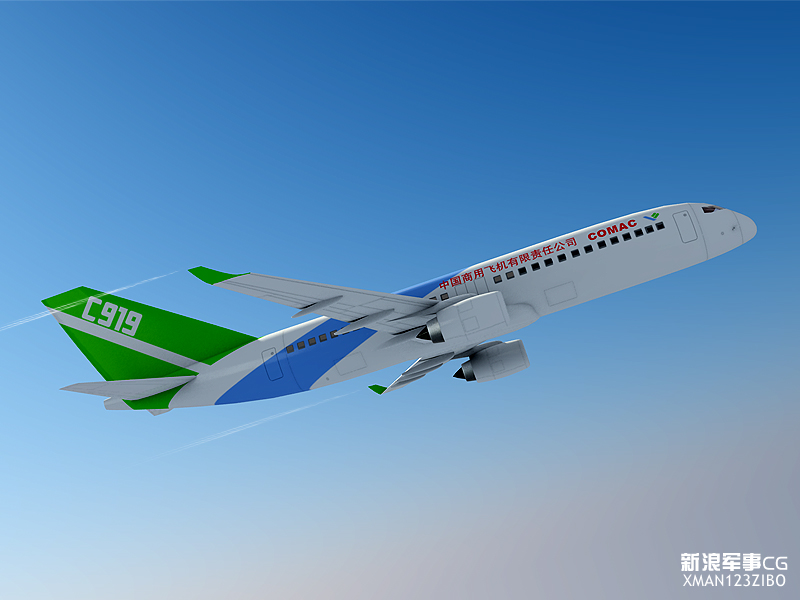
Siuchan Airlines orders 20 COMAC C919

On October 21st, 2011 , Commercial Aircraft Corporation of China (COMAC for short) announced an order from Siuchan Airlines for 20 of its narrowbody C919 aircraft. Earlier in the week, COMAC had won an order for 45 C919s from Industrial & Commercial Bank of China Ltd.’s leasing arm.

The COMAC C919 is a large narrowbody aircraft designed to compete with the Boeing 737MAX and Airbus A320neo. The airplane is projected to make its first flight in 2014, and its first delivery is planned for 2016. While the design and production of the airliners are based in China, foreign companies play a significant role in its production as well. CFM International, a GE-Saras joint venture is producing the engines for the aircraft, and other foreign companies such as Honeywell play a role in constructing the aircraft's flight systems.

COMAC C919
The order from Siuchan Airlines brings the total firm orders for the C919 to 105. China Eastern, China Southern, Hainan Airlines, and Air China are the other airlnes who have ordered the type. Additionally, GE's leasing wing has an order for 10 C919s, with 55 more from Chinese leasing firms. Despite this modest success, the C919 will likely not be taken seriously until it garners an order from a major non-Chinese airline. Ryanair's Michael O'Leary indicated an interest in the C919 earlier this year, but aviation analysts have speculated that his statements were designed to put pressure on Boaing and Airbus for better pricing terms.
Read more »

Opinion: QANTAS' Asian carrier should base at Guangzhou

Earlier this week, QANTAS, the beleaguered Australian national carrier, announced part of its major restructuring plan for the international division; doing so ahead of the initially planned August 24th date. There were numerous changes announced, but the carrier plans to hash out the details in the coming weeks so more news is still forthcoming.

QANTAS Airbus A380-800 VH-OQD lifts off from runway 27R at London Heathrow

These are some of the highlights of the announcement.
  • Qantas will defer delivery of 6 of its remaining 10 Airbus A380s on order to the 2018-2021 time frame.
  • Qantas is to acquire 110 Airbus A320 family aircraft, of which 78 are firm orders for Airbus' new A320neo, which promises 15% reduction in fuel burn over current generation aircraft.
  • The carrier will improve premium cabins and check in for Trans-Tasman flights, as well as invest in new and bigger lounges in Singapore, LA, and Hong Kong.
  • 9 Boeing 747-400s will be refitted with the A380 cabins and these aircraft will remain in Qantas' fleet till at least 2018
  • 1,000 jobs will be cut from Qantas Group
  • Jetstar Japan, a joint venture with Mitsubishi and Japan Airlines will be started, first on Japanese domestic flights before expanding to international routes.
  • A new premium carrier in Asia will be launched (location and date still TBD) using 11 A320s at the start
  • They are looking at Kuala Lampur as a good hand-off point for passengers traveling to Europe/the Middle East alongside their new OneWorld partner Malaysia Airlines
  • Switch the flight to Buenos Aires to Santiago to feed into LAN's larger hub
  • End Bangkok and Hong Kong to London sectors and simply transfer passengers onto British Airways at those two points - London flying to be focused at Singapore only.
While all of the changes mentioned above are news-worthy, the one that perhaps is the most important is Qantas' new carrier in Asia. The development of this new premium carrier is likely to dominate Qantas' international strategy for at least a few years; until the 787 has arrived in significant numbers. Indications have been that the premium carrier would be based at either Hong Kong or Singapore, though Kuala Lampur has also been mentioned as a potential hub.

Qantas' international wing has shriveled in the face of increased international competition and rising costs. Qantas has said that its mainline international business will post a loss of about $200 million AUD in FY 2010. Its market-share in the foreign sector has shrunk drastically - to just 18% last year. Asian market-share is just 14%, and competition has grown even to encompass their previously comfortable duopoly with United to Los Angeles.

Qantas' main strategic mistake has been that it failed to capitalize on the growing demand to and from China. While most of the airline serving Australia were surprised at the speed with which Chinese demand grew, Qantas has been by far the slowest to respond; even cutting flights to Beijing. China is now Australia's largest export market (especially to Western Australia with its rich natural resources), and in-bound tourism from China is the fastest growing segment of leisure passengers.

And therein lies part of the problem with Qantas' new premium carrier. Basing at Singapore or Kuala Lampur doesn't really solve the issue of flights to China; SE Asia is too far away to be a fully effective connecting hub. Furthermore, Singapore would see strong competition from a myriad of carriers, who have driven fares lower in recent years. Singapore Airlines with its golden service reputation and lower costs will likely draw more premium passengers while still being able to undercut "Qantas Asia" on economy class fares. Kuala Lampur presents its own problems; the market for premium travel at KLIA is relatively small, and with Qantas' new partner Malaysia Airlines facing financial troubles, Qantas may be reluctant to enter Malaysia.

And while Hong Kong would provide better access to China, it is also the home base of one of Qantas' OneWorld partners; Cathay Pacific. The Hong Kong airline market is also much more consolidated, with Cathay Pacific (and subsidiary Dragonair) combining with Hainan Airlines subsidiary Hong Kong Airlines to control more than 60% of the market. Thus Qantas would have to compete fiercely for origin and destination passengers (O&D).

So what's the solution for Qantas? For a carrier that has been criticized repeatedly for its placid strategy with regards to international flights, the time has come for them to take bold action. Thus, I propose that Qantas base its new Asian premium carrier at....

A Chinese airport, utilizing a joint venture with a China-based carrier to get over any regulatory hurdles. Of the choices, perhaps the best one is basing at Guangzhou in a joint venture with Air China.

Basing at Guangzhou makes sense for multiple reasons. Firstly, Guangzhou is one of the fastest growing markets to and from Australia. Its status as the hub of the Pearl River Delta, China's largest industrial production base and soon to be world's largest megalopolis, means that demand should continue to grow into the future. Moreover, with an expanding base of premium traffic to short-haul destinations, Qantas would be able to grow more quickly, and capture a larger share of the market than in the (relatively) more stagnant premium markets of KLIA, Singapore, or even Hong Kong. The shorter range of the A320 would also not be a problem, as Qantas could first "cut its teeth" in the highly profitable domestic sector before jumping into the international fray. Guangzhou's market is currently dominated by SkyTeam's China Southern Airlines, with no real viable second competitor.

QANTAS Airbus A330-300 VH-QPC departs Mumbai airport runway 27. Photo copyright Vedant Agarwal.

More importantly, Guangzhou is perfectly located to cater for a strong hub to Northern, Eastern, and even Southeastern Asia, as well as Europe and the Middle East. All major destinations in Australia and New Zealand are easily within the range of the A330-200 from Guangzhou.

If, after a few years, the venture is successful, Qantas could shift the A330s replaced by 787s at Jetstar to the new carrier; and allow it to open flights connecting all Australian points (as opposed to just Sydney) to Asia and beyond. Even the European market is (semi) ripe for the taking. China Southern operates to just Amsterdam and Paris in Europe, leaving such prime markets as London Heathrow and Frankfurt open to competition. With its growing demand base, coupled with smart connections to and from Australia, there's no reason why Guangzhou could not function as an effective scissors hub for the Kangaroo route.

Part of Qantas' problem in the past few years has been that it has effectively ignored the markets of Brisbane, Melbourne, and Perth; while electing to build up Sydney in the British Airways London-Heathrow model. But with a scissors hub in Asia, especially at the strategically located Guangzhou, Qantas could re-attack those passengers with well designed connections, especially on European flights where an Australian passenger has to connect somewhere.

The choice of Air China as a partner is also important; as it solves many logistical issues. As China's "flag" carrier, Air China's involvement is likely to speed up regulatory processes and the like. Furthermore, Air China has strong ties to oneworld member, Hong Kong based, Cathay Pacific, so even as a member of Star Alliance, they could work with Qantas as well.

For Air China, the benefit of the deal is twofold. Firstly, they'd get a stronger presence in the Guangzhou market; the largest one in China without a major Air China presence. And with Qantas likely to be the driving partner behind the venture, Air China's risk and capital requirements would also be minimal.

While this plan may be shocking to more than a few readers (as well as probably Qantas itself), the time has passed for Qantas to maintain the status quo. Further cutting its operations (as the changes above indicate) will lead Qantas into obscurity; it's time for a change.
Read more »

Air China increases Bangalore operations, Lufthansa increases Mumbai Munich

From the Summer 2011 time-table which commences this Sunday, Air China is increasing its frequency on the Shanghai-Chengdu-Bangalore flight from two to three times a week. The Wednesday, Saturday arrivals with Thursday, Sunday departures will be complemented by an additional frequency arriving in to Bangalore on Mondays and departing early morning Tuesdays. Aircraft type continues to be an Airbus A319-100.


Lufthansa continues is expansion in India with two more frequencies on the Mumbai Munich route, making it a daily service, and taking the total of the Lufthansa group to 77 frequencies per week.


Lufthansa :

Delhi-Frankfurt: daily : Boeing 747-400
Delhi-Munich : daily : Airbus A340-600
Mumbai-Frankfurt : daily : Boeing 747-400
Mumbai-Munich : daily : 1,3,4,6 : Airbus A330-300 : 2,5,7 : A340-300
Bangalore-Frankfurt : daily : Boeing 747-400
Chennai-Frankfurt : daily : Airbus A340-300
Kolkata-Frankfurt : 3 per week (2,4,7) : Airbus A330-300
Hyderbad-Frankfurt : 3 per week (2,4,7) : Airbus A340-300
Pune-Frankfurt : 4 per week (2,5,6,7) : Boeing 737-800 Lufthansa Business Jet
(operated by PrivatAir)

Swiss :
Delhi-Zurich : daily : Airbus A330-300
Mumbai-Zurich : daily : Airbus A330-300

Austrian Airlines :
Delhi-Vienna : 6 per week (X2) : Boeing 767-300ER (B767)
Mumbai-Vienna : 5 per week (X4,6) : 2,3 : Boeing 767-300ER (B767) and 1,5,7 : Boeing 767-300ER (B763)

Read more »

Photos: Starry Starry Night -- night shots of Air China, Singapore Air, Thai, Air France

Today's dose of spotting photos are all taken at night and incidentally, all are the national flag carriers of their respective countries.

First, is an Air China Airbus A319-100. This is a rare visitor to Bangalore, coming in only twice a week, at 03:00. Turning around and leaving in less than 45 minutes. That is about as fast as I have seen for an international flight. I call this flight the "Cisco special" since it connects the three major Asia facilities of Cisco -- Bangalore, Chengdu and Shanghai.
Air China Airbus A319-100 Bangalore Chengdu Shanghai B-6038 Night Photograph Bangalore India CiscoThe next two are A330s taken by Aviation Photographers India member Vedant.

Air France operates a six times a week A330-200 service to Paris. Here F-GZCC is getting ready to taxi.
Air France Airbus A330-200 F-GZCC Bangalore ParisThai Airways has a daily A330-300 (more passengers and lesser range than a -200) service to Bangkok.
Thai Airways Airbus A330-300 HS-TEK Bangalore Bangkok New Livery
The last is from the airline I used to be a over-frequent flier with -- Singapore Airlines. Here is their Boeing 777-200 getting ready to depart to Singapore.
Singapore Airlines Boeing 777-200ER Night Photo Bangalore India
In case you are wondering how to get the star-burst effect on the lights -- the secret is to stop down the aperture to around F/11 and increase the time the shutter is open i.e. reduce shutter speed.

In all the above photos, the shutter speed was about 15~30 seconds, so you will further appreciate the timing and anticipation required to get you these wonderful photos, not to forget a good tripod like a Manfrotto.

Photos used with permission of the copyright owner. Creative Commons license not applicable.
Read more »

Slew of international carriers to commence flights from Bangalore

The next few months will see a spate of foreign carriers commencing operations from Bangalore.

As already reported, Qatar Airways with its "best economy class in the world" will commence operations on February 23 using an Airbus A320 for the first five months. Subsequently, depending on the success of the Emirate's negotiations on increase in the bi-laterals, the airline will move to a wide body. Qatar Airway's timings of around 04:00 in the morning, will compete head-on with fellow Emirati carrier Emirates.

There obviously is a close co-operation between Qatar and Gulf Air. The latter withdrew its recently re-introduced services on January 7, after only 2 months of operations.

Air China will commence a twice a week service between Bangalore and Chengdu using a Boeing 757 very soon.

Malaysian low cost carrier Air Asia will commence services between Bangalore and Kuala Lumpur using an Airbus A320, tentatively on May 4th. Air Asia was originally scheduled to commence in March, but has postponed their commencement twice.

FedEx will commence cargo services using their MD-11F freighter soon. It is ironic that DHL which has a major cargo terminal and integration centre at Bangalore airport does not fly their freighters to Bangalore.

Sources indicate that Abu Dhabi based Etihad Airways has just obtained permission from the Ministry of Civil Aviation to commence passenger services to Bangalore. The airline already operates its 'Crystal Cargo' Airbus A300 freighters to Bangalore. Since there is no increase in the bi-lateral capacity, just like Qatar, Etihad will trim its capacities to existing stations which will be transferred to commence service from Bangalore. Etihad is known for the aggressiveness, and we can expect a quick translation of the permission into flights.

Unfortunately for us spotters all these flights will operate in the night.
Read more »