Showing posts with label 767. Show all posts

Boeing Begins Assembling 3rd KC-46A Tanker Aircraft

By BA Staff

Boeing is assembling a third KC-46A test aircraft for the U.S. Air Force’s next-generation aerial refueling tanker program at the company’s Everett factory, keeping the program on schedule to complete production of four test aircraft by the third quarter of 2014.

Maureen Dougherty, Boeing vice president and KC-46 Tanker program manager said:
“In addition to the three KC-46A tankers now in production, our System Integration Labs are operational and we’re assembling a second boom. We remain on track to deliver the initial 18 KC-46A tankers by 2017.”
The KC-46A is based on the Boeing 767 commercial jetliner, a proven airframe in service as an airliner, freighter and tanker. Boeing has delivered more than 1,050 767s worldwide.

 Scott Campbell, vice president and general manager of the 767 program said:
"Our teams are maintaining their focus on quality and productivity as we move the first tankers through production."
The first test aircraft will roll out early next year. The first test flight of a fully provisioned KC-46A tanker is projected for early 2015, and the first delivery of a production aircraft to the Air Force is planned for early 2016. Boeing expects to build 179 tankers by 2027 if all options under the contract are exercised.

Read more »

Japan Airlines to launch Sky Suite on Tokyo Narita Vancouver route

by BA Staff

Japan Airlines will launch its upgraded cabin JAL Sky Suite II business class product on its revamped 767-300ER service between Tokyo (Narita) and Vancouver, from December 9, 2013.

The airline will also offer its Sky Wider improved economy class product on the same flight.

The Sky Suite II is a 24 seat business in a 1-2-1 configuration to offer direct aisle access to every passenger. The seat opens in to a full flat bed with a length of 200 cm and width of 52 cm. The TV screen is 15.4 inches, and each seat is equipped with a USB port and a universal AC power outlet.

The new Sky Wider economy class seats were initially tested in the airline's Boeing 777-300ERs. On the 767-300ERs 175 seats will be in a 2-3-2 abreast configuration. The new slim line seat offers increased pitch of 5 cm (2 inches) to 84 cm., a 10.6 inch touch sensitive TV screen, and each seat is equipped with a USB port and a universal AC power outlet.

The airline has also specially designated its 767s fitted with the Sky Suite product as SS6 in the time table.

After Vancouver, Kuala Lumpur will be the next destination, from January 2014, service by the revamped aircraft type. The airline also plans to expand this new service onto other long distance routes in South-east Asia and to Honolulu, Hawaii, USA.
Read more »

Boeing reports third quarter deliveries

by BA Staff

American manufacturer Boeing has reported its aircraft deliveries for the third quarter of 2013, with 213 deliveries recorded in the three month period, split as 170 Commercial and 43 Defense & Space. For the year to date, Boeing has recorded 595 deliveries, split as 476 Commercial and 119 Defense & Space.

Find the full breakdown of Boeing's third quarter and year to date deliveries in the table below:

Program3rd Quarter 2013Year to Date 2013
Commercial


737NG
112
330
747
4
16
767
5
17
777
26
73
787
23
40
Total
170
476


Defense & Space


AEW&C
0
0
Apache
11
31
Chinook
15
32
C-17
2
8
F-15
0
3
F/A-18EF & EA-18G
12
36
P-8
2
7
Satelites
1
2
Total
43
119
Read more »

Boeing drops 767-200ER and 767-400ER, launches 767-2CFX in latest pricing update

by Vinay Bhaskara

A 767-300F - Image Credit: Boeing
American aircraft manufacturer Boeing has released its latest aircraft pricing update, and there were several changes made. Firstly, the original equipment manufacturer (OEM) has dropped the 767-200ER and 767-400ER variants from its 767 product line. These aircraft can no longer be purchased by customers, though if a sizable enough order comes through for Boeing, they could easily re-start production, unlike the 757, whose production line has been retooled for the 737.

The 767-200ER was among the first 767 aircraft offered by Boeing, launching in 1982, the year its standard range cousin, the 767-200, entered service. Ethiopian Airlines was the launch customer for the type in December 1982. Over the years, the smaller 767-200ER was rapidly eclipsed by the larger 767-300 variant, which became the dominant variant in the overall program with 807 ordered (out of 1108 program wide) as of the June Boeing orders and deliveries (also O&D) spreadsheet. Overall, 121 767-200ERs were ordered and delivered, and 39 remain in passenger service. American Airlines is the largest operator with 12 in its fleet used on premium transcontinental routes within the US, though these aircraft will be retired quickly as American takes delivery of their replacement; the Airbus A321.

The 767-400ER was a bit more of an oddball, with only 2 operators (Delta Air Lines, and Continental Airlines - now United Airlines) ordering a total of 38 aircraft. Delta currently has 21 767-400ERs in its fleet, though some of these aircraft may be eventually replaced with the carrier's recent order for 10 additional Airbus A330-300s, while United has 16 frames remaining. The 767-400ER was designed to compete with the aforementioned A330-300, but largely failed to do so, with the A330-300 having won 635 orders over the course of its lifetime.

The 767 program itself had a seemingly bleak future as recently as 3 years ago, with orders slowing to a crawl (primarily existing 767 operators such as ANA and LAN ordering the 767-300ER as interim lift due to the 787 delays). But in February 2011, Boeing won a landmark aerial refueling tanker deal from the United States Air Force, worth nearly $30 billion over the contract's lifetime, with a design based around the 767 called the KC-46A. This made it possible for Boeing to extend the life cycle of the commercial variants of the 767, winning further orders, most notably for 46 767-300Fs from FedEx in 2011-12.

Interestingly, the commercial version of the KC-46A, the 767-2CFX has been added to the pricing table, though no price has been set for the aircraft yet. The table with updated prices from Boeing can be seen below. Interestingly, despite Lufthansa's order for 34 777X family (777-9) aircraft announced today, the type has not yet been formally launched. In all likelihood, formal launch will occur at this years Dubai Air Show, alongside a massive order from Emirates.


Aircraft
Price ($ million)
737

737-700
76.0
737-800
90.5
737-900ER
96.1
737 MAX 7
85.1
737 MAX 8
103.7
737 MAX 9
109.9
747

747-8i
356.9
747-8F
357.5
767

767-300ER
185.8
767-300F
188.0
767-2CFX
TBD
777

777-200ER
261.5
777-200LR
296.0
777-300ER
320.2
777F
300.5
787

787-8
211.8
787-9
249.5
787-10
288.7
Read more »

Jetairfly to Launch Miami-Brussels

by BA Staff

Image Credit: Mopje18
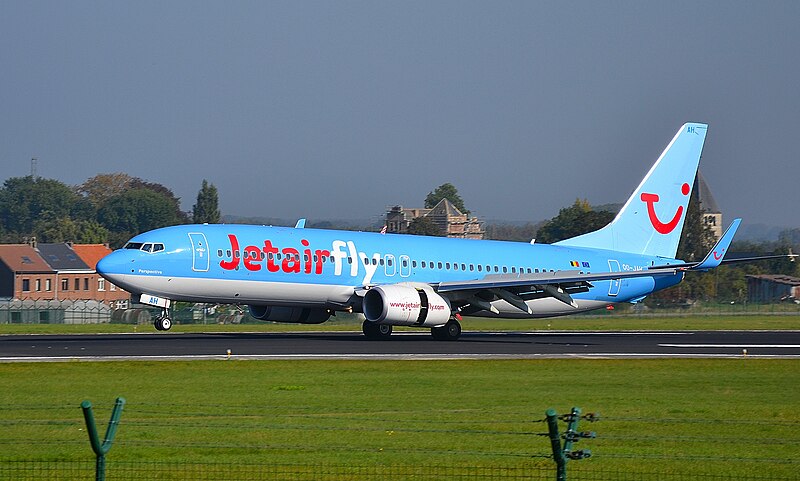
Belgian charter operator Jetairfly has announced the launch of twice weekly flights between its home base at Brussels and Miami, commencing 4th April, 2014 using Boeing 767-300ER aircraft. Miami becomes the airline's 107th destination around the globe, its 9th in the Americas, but its first in the United States.

Jetairfly is a subsidiary of parent company TUI Travel, a UK based charter airline group which includes Jetairfly, Corsair International, Thomson Airways, TUIFly, TUIFly Nordic, and Arkefly. Currently, Jetairfly operates a fleet of 22 passenger aircraft (4x Boeing 737-700, 14x Boeing 737-800, 2x Embraer E190, and 2x Boeing 767-300ER). Jetairfly also has 1 Boeing 787-8 Dreamliner on order and an undisclosed amount of 737 MAX as part of the larger TUI Travel order.

Jetairfly's long haul 767s are configured to seat 257 passengers with 2 classes of service (though no difference in seat). Economy Class offers full economy service with catering, while Comfort Class offers more legroom, amenity kits, iPad IFE, premium meals, free champagne and alcohol, newspapers, and at Brussels airport access to the VIP-lounge, separate check-in and security fast lane.
Read more »

British Airways long haul network changes: Summer 2014

by BA Staff

London based full service carrier British Airways has already begun to announce changes to its long haul network for the Summer 2014 season. Bangalore Aviation has prepared a summary of those changes below.

London Heathrow

  • Accra - 10x weekly service introduced for Winter 2013/14 continues and sees capacity increase from daily Boeing 777 + thrice weekly Boeing 767 to daily 747-400 plus thrice weekly 767.
  • Austin - NEW nonstop route to be served 5x weekly with Boeing 787 Dreamliner beginning 3rd March 2014, and up-gauged to daily from 4th May. 
  • Entebbe - Service increases from 3x weekly to 4x weekly
  • Jeddah - Upgraded from 3-class 767 to 4-class 777
  • Johannesburg - Frequency decreased from 17x weekly in Summer 2013 to 14x weekly in Summer 2014: 8x weekly 747-400, 6x Airbus A380
  • Los Angeles - Capacity decreased from 3x daily 747-400 to 2x daily A380
  • Seattle - Frequency increased from 10x weekly introduced for Winter 2013/14 to 12x weekly: now daily 777 plus 5x weekly 747-400
  • Tel Aviv- One of 3x daily flights up-gauged from 3-class Airbus A321 to 4-class 777
London Gatwick
  • Antigua - Punta Cana - Increases from 2x weekly to 3x weekly 777
  • Kingston - Increases from 3x weekly to 4x weekly
  • Orlando - Increases from 10x weekly to 13x weekly
  • St. Lucia - Increases from 6x weekly to 7x weekly
All changes are Summer 2014 vs. Summer 2013 unless otherwise noted
Read more »

Boeing Launches 787 Training in Miami

Training capability at Miami campus enhanced across airplane types

by BA Staff

Florida Gov. Scott and BFS VP Carbary in the 787 simulator
Boeing launched customer training for its 787 Dreamliner aircraft in Miami, Florida, site of the company's largest commercial aviation training campus. Aeromexico and LAN Airlines are the first two customers to train on the new 787 suites at the Boeing Flight Services Miami campus.

At an event attended by Florida Governor Rick Scott as well as a number of other federal, state and local officials, community leaders and airline customers, Boeing also established Miami as its pro forma flight training campus for the Americas -- the location where airline crews will receive the initial training provided to Boeing customers for new model airplane introductions.

Sherry Carbary, vice president, Boeing Flight Services said
"Miami has always been an important Boeing training campus and the largest campus in our global network. Now it will also play an expanded role in training the pilots and technicians who will fly and maintain the groundbreaking 787 Dreamliner," "Miami's location at the crossroads of the Americas offers tremendous advantages as a preferred location for airlines based in Latin America, Canada and the United States. Customers also travel from Europe, Africa, the Middle East and China to conduct training in Miami."
Boeing has greatly enhanced its overall training capability in Florida following an announcement in March 2013 that the company would relocate training devices from Seattle to Miami. To better serve airlines and meet growing personnel training requirements, two 787 full-flight simulators are now located at the Miami campus as well as an additional Next-Generation 737 full-flight simulator and 717, 747 and 767 simulators. An additional 777 simulator will be located in Miami later this year. These seven devices will bring total capability in Miami to 17 full-flight simulators across airplane types, making the campus one of the largest commercial flight training facilities in the world.

The consolidation of Boeing flight training campuses in the Americas is designed to bring training closer to where customers operate, reducing travel times for airline crews and the costs of sending students for training. Miami is an international hub for commercial aviation training and provides geographic diversity within the framework of Boeing's global commercial training network - and convenience that airlines prefer.

About the Boeing Edge

Boeing offers a comprehensive portfolio of commercial aviation services, collectively known as the Boeing Edge. Read more here.

Boeing Flight Services, is a business unit of Commercial Aviation Services, and operates a geographically diverse network of 20 flight and maintenance training campuses on six continents. In addition to Miami, Boeing offers 787 training in strategically located campuses in Singapore, Shanghai and London.
Read more »

Delta ending Seattle-Osaka

by Vinay Bhaskara
A Delta Air Lines Boeing 767-300ER - Image Credit: Delta Air Lines

As per Airline Route, Atlanta-based full service carrier Delta Air Lines is cancelling its 4 weekly services between Seattle-Tacoma and Osaka-Kansai. The flight, which was scheduled to operate throughout the IATA Winter 2013/14 season with a Boeing 767-300ER, was started in 2010 and will now end November 4th. Over the past three years, the flight has operated using a mix of Boeing 767-300ER and Airbus A330-300 aircraft. The route was served by pre-merger Northwest Airlines using a Douglas DC 10-30. But that flight was canceled in 2001.

Since its merger with Northwest Airlines in 2009, Delta has steadily grown its long haul presence in Seattle (with help from domestic code share partner Alaska Airlines). The carrier now serves six long haul destinations excluding Osaka, and will begin its seventh on 29th March 2014 with new nonstop services to London Heathrow in conjunction with equity partner Virgin Atlantic. At the time of the Northwest merger, Delta only had intercontinental service to Amsterdam, and Tokyo-Narita.

The cancellation of Seattle services marks another stage in the slow decline of long haul services from Osaka-Kansai. Today, Osaka-Kansai is down to 13 flights per week to the mainland - a daily Boeing 787 Dreamliner from San Francisco on United, thrice weekly Boeing 777-300ER to Los Angeles on Thai Airways, and thrice weekly Boeing 747-400 to New York JFK on China Airlines. Osaka-Kansai once had services from Los Angeles on United, Detroit on Northwest, and Dallas-Fort Worth on American (twice). But high airport operating costs thanks to the high construction costs at Kansai rendered much of the service unprofitable. Operating costs are no longer the main challenge. Kansai has reduced its costs sharply since opening (5% in the last year alone), and the airport has even become a favored base for Japanese low cost carriers (LCCs). However, the Kansai area as a whole has stagnated economically in the past few years, and this reduced demand has curtailed possible long haul flights. 
Read more »

Routes Analysis: British Airways grows Hyderabad - London

by Vinay Bhaskara

British Airways wide-bodies on the ramp at their global hub at London Heathrow
From October 27th, London based full service carrier British Airways will be up-gauging its services between Hyderabad and its global hub at London Heathrow to daily flights utilizing Boeing 777-200ER aircraft configured in a 275 seat 3-class configuration (48J/24Y+/203Y), including flat beds in Club World. The flights are currently served with 3-class Boeing 767-300ER aircraft configured with 189 seats (24J/24Y+/141Y) 6 times per week, and an up-gauge was already planned to 6 weekly flights on the 777-200ER for IATA Winter 2013-14.

Said Christopher Fordyce, British Airways Regional Commercial Manager India:
For British Airways, Hyderabad is truly a key market in our South Asian network. We have witnessed tremendous growth in the market since 2008, resulting in concerted growth in the outbound business and leisure tourism.... Our customers from Hyderabad will now be able to enjoy daily service to the UK whilst enjoying British Airways' unmatched inflight services and flying experience,
British Airways is the only European carrier remaining with service to Hyderabad, where yields for long haul connections to Europe and North America are coming under increasing pressure from the MEB3 carriers Emirates, Etihad Airways, and Qatar Airways (plus potentially an entrance from Turkish Airlines). Since the Global Financial Crisis in 2008-9, business traffic to and from Hyderabad has largely plateaued while leisure and VFR traffic has continued to grow. But such traffic is by and large, too low-yielding to sustain the European carriers with their ever increasing cost bases. KLM ended its short-lived Hyderabad services in 2008 after launching in 2005, while Lufthansa ended its Frankfurt - Hyderabad flights in 2011.

Hyderabad is still a massive demand center for services to North America. In 2011, Hyderabad had 481,748 passengers worth of origin and destination demand (O&D) demand to and from the United States. With 21 North American destinations served through its London Heathrow hub (plus Raleigh Durham through the joint venture partnership with American Airlines) - British Airways appears to be doing good business connecting passengers between Hyderabad and the US, and it has an advantage over the MEB3 who only serve 7-8 passenger destinations in North America. 
Read more »

Boeing 2nd quarter deliveries point to slow recovery from 787 fiasco

by Vinay Bhaskara

Chicago based airframer Boeing S.A. reported a 13% rise year over year in aircraft deliveries for the second quarter of 2013, after the resumption of 787 Dreamliner deliveries in May following its grounding earlier this year pushed the total to 169 aircraft, up from 150 a year prior and 137 in the first quarter of 2013.

Boeing delivered 116 737 Next-Generation narrow-bodies versus 109 a year earlier, 16 Dreamliners (against 6 in Q1 2012), 6 747-8 quad-jets, 8 767-300s (passenger and cargo), and 23 777s.

The rise in deliveries marked a positive step in Boeing's recovery from the grounding of its newest product line, the Boeing 787, in mid-January. Since that costly grounding, Boeing reported yet another quarterly profit, launched the largest iteration of the 787; the 787-10, with 102 orders at the Paris Air Show, and made progress towards the launch of the Boeing 777X program. The strong quarterly deliveries simply marks another step in Boeing's road to recovery.

Image courtesy Boeing

Read more »

Japan Airlines faces much smaller impact of Boeing 787 grounding

by Devesh Agarwal

The impact of the month old grounding of their Boeing 787 Dreamliners on Japan Airlines (JAL) appears to much smaller when compared to fellow Japanese carrier All Nippon Airways (ANA). "We operated only six Dreamliners out of a fleet of 200 aircraft, so the total impact of the Dreamliner grounding on us is very small" JAL CEO Masaru Onishi told Bangalore Aviation on the sidelines of the Oneworld event to mark the entry of Malaysia Airlines in to the alliance, on January 31.

Onishi-san explained that JAL operated six Dreamliners to Boston, San Diego, Singapore and Moscow, keeping one aircraft spare, a much smaller number when compared to the 24 Dreamliners in the fleet of fellow Japanese carrier ANA.

Keeping in mind his airline's focus on passenger convenience, he went on to say, that JAL had minimised disruptions by deploying Boeing 777s on the higher demand routes serviced by the 787, and 767s on the lower demand routes. JAL had also transferred some of its passengers on to fellow oneworld member American Airlines. While JAL did not transfer any passenger on to ANA, they did receive transferred passengers of ANA.

One route that was affected was Tokyo Narita - San Diego, which was specifically planned for 787 operations only. For JAL to operate the flight using 777s, the airline had to take specific certifications which take about three weeks. The airline has already commenced the certification process, but the San Diego flight is suspended till JAL completes the formalities and obtains the certification. [Editor's note: This morning Japan Airlines announced that it was indefinitely delaying the launch of its Narita Helsinki route, scheduled to commence on February 25.]

On operating costs, Onishi san conceded that airline was taking a hit. "With [Boeing] 777s we achieve about 60% passenger load factor compared to 80%+ in the 787s."

Onishi-san also appeared to be resigned to the fact, that the battery problem, which has resulted in the grounding of the global 787 fleet, is not going to be resolved any time soon. "We have had discussions with Boeing and they are doing their best to fix it [the problem], and we hope they do it within two months, but I cannot say for sure".

When asked what will be Japan Airlines' stand on compensation or their order book especially if the fix took longer than the anticipated two months, Onishi san refused to speculate, saying "Let us not focus on such issues right now. More important is the fix."

Onishi-san also indicated that JAL is committed to its 787 orders.
Read more »

Night photos from Delhi Indira Gandhi international airport - the Boeing collection

Thanks to the support of the kind friends at Delhi International Airport (P) Ltd. (DIAL) who operate the Indira Gandhi International Airport (IGIA), and the DGCA, some members of the Aviation Photographers India, went airside for some photography. Click here to see photographs from the entire group.

Below are some night photographs from the event taken by the Bangalore Aviation team of Devesh and Vedant. Photographing airliners at night is very challenging, very tiring, but at the end of it, most exhilarating. It is when the big boys from across the world come, the airport is relatively quiet so we can get up close to the planes, and the creativity we can exercise with the light. For example the star bursts are not generated using any filters. They are created by stopping down the aperture and increasing the time the shutter is open.

We hope you enjoy. Do take the time to leave a comment, either here, or on the photograph page itself. Considering we are hobbyists, praise always helps.

Today is the Boeing collection from the 757 to the new 747-8i. Click on the images to see the original photos in high resolution. We are excluding the 777s which will be posted in a separate collection tomorrow.

Lufthansa Boeing 747-8i D-ABYA


China Southern Airlines Boeing 757-200 B-2823


China Southern Airlines Boeing 757-200 B-2812 (another night, another plane). Compare the star bursts between the two photos. This one is created used a prime 50mm f/1.8 Nikon lens, and at around Rs. 8,000 it is a steal, compared to the 24~70mm f/2.8, used for the shot above, which costs six figures.


Kenya Airways Boeing 767-300ER 5Y-KYX


Read more »

Planespotting Photos: Newark Liberty International Airport

Earlier this week, I got a chance to go planespotting at Newark (well technically I stood atop my car in an IKEA parking lot across the street from Newark's runway) and I'd like to share some of the fruits of my trip.

While I am nowhere near the level of photographer that Devesh or Vedant is, here are the cream of my photos. You can click on the photos to view a larger version.

United Airlines Boeing 737-500 (N32626)- Ex Continental Airlines bird that has been repainted.


Southwest Airlines Boeing 737-700 taking off over the Newark skyline.


The same Southwest Boeing 737-700 (N7669W) taxiing


United Airlines Boeing 777-224ER (N77012) gliding in to land with the control tower in the background.


The same United Airlines Boeing 777 in flight.


United Airlines Boeing 757-224 (N12125)taking off over the Newark skyline.


JetBlue Airbus A320-200 in flight (N503JB)


Porter Airlines Bombardier Dash 8 Q400 (C-GLQB)


United Airlines Boeing 757-224 (N19130)


A rarity. ex-Continental Airlines 737-824 which has not yet been repainted into United Airlines colors (N76504).


Southwest 737-700 landing with Newark skyline in the background.


Readers, please do share your thoughts on my photos. Feedback is very much appreciated.
Read more »

Video: LOT Polish Airlines Boeing 767-300 power slides on Warsaw airport runway.

From the Aviation Herald
A LOT Polish Airlines Boeing 767-300, registration SP-LPC performing flight LO-16 from Newark,NJ (USA) to Warsaw (Poland) with 220 passengers and 10 crew, was on approach to Warsaw's runway 33 when the crew aborted the approach at 3000 feet reporting an unsafe gear indication for all three gear struts at about 13:10L (12:10Z) and entered a holding to troubleshoot the problem for about 80 minutes. Visual verification by fighter aircraft showed none of the gear struts was down, attempts to lower the gear alternatively failed. The aircraft subsequently performed a text book gear up landing on runway 33 at 14:40L (13:40Z), the aircraft was evacuated after stand still. No injuries occurred.
Hats off to the captain on a text book belly-landing and a hat tip to the You Tube users for the videos.


Read more »

Spotting images: Boeing and Russian freighters

Thanks to a technology based economy (sorry world, but Bangalore is a lot more than just BPO outsourcing), Bangalore has always been a preferred destination for air cargo.

Bio-technology, electronics, aviation, pharmaceuticals, high-end precision engineering, floriculture, fresh produce, and the outsourcing industry which buys tons of imported computers, ensure that Bangalore is the leading hub for air cargo in Southern India, ahead of Chennai and Hyderabad, and third behind Mumbai (the economic capital of India) and the national capital New Delhi.

As the Asian economies recover and lead the world back from the economic slowdown, a few pictures of some cargo beauties from Bangalore and Mumbai for your pleasure. Click on any image for a high resolution view.

Volga Dnepr Airlines. Ilyushin IL-76TD Vladimir Kokkinaki RA-76950
Volga Dnepr Airlines. Ilyushin IL-76TD Vladimir Kokkinaki RA-76950United Parcel Service Boeing MD-11F N293UP
United Parcel Service Boeing MD-11F N293UPUnited Parcel Service Boeing 767-300F (Extended Range) N302UP
United Parcel Service Boeing 767-300F (Extended Range) N302UPBlue Dart Aviation Boeing 757-200PCF (Passenger Converted Freighter) VT-BDM
Blue Dart Aviation Boeing 757-200PCF (Passenger Converted Freighter) VT-BDMBlue Dart Aviation Boeing 737-200 Passenger Converted Freighter VT-BDG
Blue Dart Aviation Boeing 737-200 Passenger Converted Freighter VT-BDGOne of the biggest in the sky. Volga Dnepr Airlines Antonov An-124-100 Ruslan RA-82081. Put in perspective the people working on the taxiway in the background.
Volga Dnepr Airlines Antonov An-124-100 Ruslan RA-82081Photo used with permission.
Read more »

Boeing and Airbus: 40 years of rivalry and one-upmanship - Part two

Continuing the story on the forty year old rivalry between Airbus and Boeing from yesterday, we pick up the rivalry from the mid 1980s till date.

Kingfisher Airlines Airbus A330-200 VT-VJK Bangalore AviationFollowing the success of the A320, Airbus next introduced the four engined A340 and twin-engine A330 mid-sized aircraft in 1987. While the A340 was designed to compete in the long distance over-water intercontinental routes, Airbus intended the A330 to compete directly in the ETOPS (Extended-range Twin-engine Operation Performance Standards) market, i.e. the Boeing 767, but airlines purchased it to replace the McDonnell Douglas DC-10 since the A330 is 38% more fuel efficient. The A330's fuselage and wings are virtually identical to the A340 thus offering a common rating for both aircraft a'la Boeing 767/757. Both the A340 and A330 borrow heavily from the A320 fly-by-wire and flightdeck, thus offering airlines the ability to move pilots between the narrow and wide-bodies with minimal training, again like the Boeing 767/757. The A340 was not as successful the A330 was. Singapore_Airlines_A340-500_9V-SGEBy the end of May 2009 a total of 1,021 aircraft of the A330 have been ordered (557 A330-200, 65 A330-200F and 399 A330-300) and 616 delivered (346 A330-200 and 270 A330-300) while a total of 385 A340s had been ordered (28 A340-200, 218 A340-300, 35 A340-500 and 104 A340-600) and 365 delivered (28 A340-200, 218 A340-300, 29 A340-500 and 90 A340-600). It is Singapore Airlines with an A340-500 that still holds the record for the world's longest non-stop commercial flight between Newark Liberty airport, USA and Singapore Changi.

Boeing responded the best way it could; by introducing the world's largest twin-engined jet the 777, commonly referred to as the "Triple Seven". Initially conceived as a triple engined jet to compete with the McDonnell Douglas DC-10 and MD-11 and the Lockheed L1011 Tristar, the 777 can carry between 283 and 368 passengers in a three-class configuration and has a range from 5,235 to 9,380 nautical miles (9,695 to 17,372 km). Designed to bridge the capacity difference between the 767 and 747, the original 777-200 model first entered service in 1995 with United Airlines, and was stretched by 33.3 ft (10.1 m) as the 777-300 introduced in 1998. The 777-300ER (Extended Range) and 777-200LR (Long Range) variants entered service in 2004 and 2006, respectively, while a freighter version, the 777F, first flew in 2008. It's ease of use, passenger comfort, and operating economics have made it a favourite of airlines, and the 777 has blow the bottom out of the Airbus A340. With 77 777s, Singapore Airlines operates the largest 777 fleet of any airline, but will soon be passed by Emirates airlines. In total, 56 customers have placed orders for 1,107 777s, with 784 delivered as of May 31, 2009.

The Boeing 737 is the best selling commercial airliner of all time, with the 6,000th aircraft being delivered very recently. Goaded by the runaway success of the modern Airbus A320 Boeing initiated development of an updated series of 737, now called the 737 Classic, with the 737 Next Generation or Next Gen (737NG) program encompassing the -600, -700, -800 and -900 was announced on November 17, 1993. The first NG, the 2,843rd 737 built, to roll out was a -700, on December 8, 1996. The 737NG is essentially a new aircraft retaining important commonality from previous 737 models. The wing area is increased by 25% and span by 16 ft (4.9 m), which increased the total fuel capacity by 30%. Coupled with the new, quieter, fuel-efficient CFM56-7B engines range is increased by 900 NM. Boeing also bridged the generational gap with the A320 bringing in the full "glass cockpit" with six LCD screens and modern avionics. The passenger experience was also spruced up with improvements similar to those on the Boeing 777, featuring more curved surfaces and larger overhead bins. To compete with the A321 on April 27, 2007, Boeing delivered the first of the newest 737 variant, the 737-900ER, to launch customer Lion Air. Seating capacity is increased to 180 passengers in a 2-class configuration or 215 passengers in a single-class layout. Additional fuel capacity and standard winglets improve range to that of other 737NG variants. SpiceJet is the largest operator of the 737-900ER in India followed by Jet Airways.

On 19 December 2000, Airbus decided to end the three decade old monopoly of the Boeing 747 jumbo jet and formally launched the largest passenger aircraft in the world, the Airbus A380 superjumbo. The A380's upper deck extends along the entire length of the fuselage, which allows for a cabin with 50% more floor space than the next-largest airliner, the Boeing 747-400 and provides seating for 525 people in standard three-class configuration or up to 853 people in all economy class configurations. Most airlines have outfitted their A380s with uber-luxurious first class private suites, one even offering on-board showers. The first A380, serial number MSN001 and registration F-WWOW, was unveiled at a ceremony in Toulouse on January 18, 2005. Its maiden flight took place at 08:29 UTC (10:29 a.m. local time) April 27, 2005. The first aircraft delivered (MSN003, registered 9V-SKA) was handed over to launch customer Singapore Airlines on 15 October 2007 and entered commercial service on 25 October 2007 with an inaugural flight between Singapore and Sydney (flight number SQ380). Emirates was the second airline to take delivery of the A380 on 28 July 2008 and Qantas followed on 19 September 2008.

Major structural sections of the A380 are built in France, Germany, Spain, and the United Kingdom. Due to their size, they are brought to the assembly hall in Toulouse in France by surface transportation which in the logistics world is considered a work of art. The front and rear sections of the fuselage are loaded on the Airbus Roll-on/roll-off (RORO) ship, Ville de Bordeaux, in Hamburg in northern Germany, from where the ship moves to the Mostyn docks in the United Kingdom to pick up the the gigantic wings, which are manufactured at Filton in Bristol and Broughton in North Wales. In Saint-Nazaire in western France, the ship trades the fuselage sections from Hamburg for larger, assembled sections, some of which include the nose. The ship unloads in Bordeaux. The ship then picks up the belly and tail sections by Construcciones Aeronáuticas SA (CASA) in Cádiz in southern Spain, and delivers them to Bordeaux. The A380 parts are then transported by barge to Langon, and by oversize road convoys to the assembly hall in Toulouse. After assembly, the aircraft are flown to Hamburg Finkenwerder Airport (XFW) to be furnished and painted. It takes 3,600 litres (950 US gallons) of paint to cover the 3,100 m2 (33,000 sq ft) exterior of an A380.

With the loss of the VLA (Very Large Aircraft) monopoly, Boeing is focussing its future dreams on an aircraft that would replace the 767 and over-take the A330. The Boeing 787 Dreamliner is a mid-sized, wide-body, twin-engine jet airliner currently under gauntlet development and is expected to have its first flight before the end of this month. It will carry between 210 and 330 passengers depending on variant and seating configuration and designed to be more fuel-efficient than earlier Boeing airliners and will be the first major airliner to use composite materials for most of its construction. The 787 also features a state of the art cockpit and passenger cabin. Boeing even offers its own version of the famous Airbus cabin "mood lighting".

Boeing featured its first 787 in a roll-out ceremony on July 8, 2007, at its Everett assembly factory, by which time it had become the fastest-selling wide-body airliner in history with nearly 600 orders. A total of 861 Boeing 787s have been ordered by 56 customers as of April 2009. Originally scheduled to enter service in May 2008 with Japan's All Nippon Airways, production has been delayed several times and is currently scheduled to enter into service in February 2010.

In my humble opinion, the single best resource on the Dreamliner is Jon Ostrower The FlightBlogger.

After initially claiming the A330 would be able to compete with the 787 Dreamliner, the massive success of the 787 prompted Airbus to develop and announce the A350XWB (eXtra Wide Body) which will become more of a competitor to the Boeing 777 as well as some models of the Boeing 787. The A350XWB cabin is 13 cm (5.1 in) wider at eye level than the competing Boeing 787, and 28 cm (11 in) narrower than the Boeing 777, and all A350 passenger models will have a range of at least 8,000 NM (15,000 km). Like the Boeing 787, the A350XWB will make extensive use of composite materials in place of the traditional aluminium, and have a state of the art cockpit. The fuselage will be of parallel cross-section from Door 1 to Door 4 thus providing for maximum volume in the passenger cabin. The plane has till date logged 483 orders and is currently under development and scheduled to enter service in 2013, about the same time the 787-9 variant of the Dreamliner will.

and so the rivalry and one-upmanship carries on.

Please do post your views via a comment.
Read more »

Boeing and Airbus: 40 years of rivalry and one-upmanship - Part one

Forty years ago as the 1969 Paris Air Show unfolded, the world was abuzz over the Boeing 747 and the BAC-Aerospatiale Concorde both whom had just made their first flights just a few months before.

At the same time, European aerospace companies were finalising a consortium to wrest back dominance of the United States in the commercial aviation market.

Within months of the show the European aerospace companies created Airbus Industrie which would take on the industry leaders of the day Boeing, Lockheed, and McDonnell Douglas. Today Airbus SAS and Boeing are the two survivors battling it out in an intense global duopoly.

In a two part series I take you on a look back at the rivalry over the past forty years and the one-upmanship practised by both companies reflected in the aircraft developed and produced.

1969 was clearly for Boeing. Its 747 Jumbo Jet reigned for more than 36 years as the Queen of the skies. It is among the world's most recognizable aircraft, and was the first wide body ever produced. As of May 2009, 1,416 aircraft have been built, with 107 more in various configurations remaining on order. The next version of the aircraft, the 747-8, is in production and scheduled to enter service in 2010 but the project is highly delayed. The 747 is supposed to be replaced by the Boeing Y3 (part of the Boeing Yellowstone Project) in the future. [Note: I have not covered my beloved Concorde since it is not an Airbus product per se.]

But just as Boeing was celebrating the 747 debut, France and Germany who were later joined by Spain and the United Kingdom set up the Airbus Industrie consortium in 1970 and launched their first plane, the A300. The first twin engine wide-body aircraft, the A300 entered service in 1974 with Air France. The A300 was the first airliner to use just-in-time manufacturing techniques. Complete aircraft sections were manufactured by consortium partners all over Europe. These were airlifted to the final assembly line at Toulouse-Blagnac. Incidentally, today Boeing uses the same technique, ferrying the wings and other parts of the soon to fly 787 Dreamliner from production facilities in the far east. Airbus sold 561 of the planes and the final production A300 an A300F freighter for FedEx, made its initial flight on 18 April 2007 and was delivered on 12 July 2007.

To counter the Airbus A300 and Boeing launched development of its twin-engine wide-body the 767 in 1978 which entered service in 1982. The 767 was conceived and designed in tandem with the narrow-body Boeing 757 twin-engine jet with both aircraft sharing common design features and flight decks. The 767 was followed the A300 cockpit and became the first Boeing wide-body airliner to enter service with a two-person crew flight deck, eliminating the need for a flight engineer. The first 767 entered service in 1982. Though orders started tapering off in the 1990s, updated versions of the plane are still in production, including the 767-400ER (extended range) model. American Airlines has outfitted many of its 767s with the Aviation Partners winglets in a bid to improve the fuel efficiency. There have been over 1,000 767s ordered with over 900 delivered as of 2009. The -300/-300ER models are the most popular variants, accounting for approximately two-thirds of all 767s ordered. As of 2009, Delta Air Lines operates the largest 767 fleet of any airline.

Airbus next widened its product offering and offered a replacement for the venerable Boeing 727 three-engine jet, the most popular aircraft at the time. At the same time the A320 also targeted Boeing's best seller the narrow-body 737. After the oil price shocks of the late 1970s, the new Airbus would be of the same size, yet offer vastly improved operating economics and significantly quieter engines. The digital technology in the A320 would herald a two generation technological leap over the all-analogue Boeing 727 and a generation ahead of the hybrid Boeing 737-300/-400/-500 series. The new Airbus was also wider than the 737s by almost eight inches providing passengers that crucial extra inch of shoulder space in the same six abreast seating layout. In 1984 Airbus launched the A320 and again Air France was the launch customer, The airliner became the best selling aircraft for Airbus, who quickly developed two shorter and smaller versions, the A319 and A318, and the longer and larger A321. By the end of May 2009 a total of 6,321 aircraft of the A320 family have been ordered and 3,893 delivered. The order tally went up today with Qatar Airways announcing an order for 20 Airbus A320s and four A321s. The A320 family is the second best-selling jet airliner family of all time after its primary competition, the Boeing 737 family which recently crossed the 6,000th aircraft delivery mark.

Do visit Bangalore Aviation tomorrow and read the continuation of this 40 year old rivalry.

Images courtesy Wikipedia and Airbus SAS
Read more »

The typical takeoff and climb angles of all Boeing planes

In the recent issue of Boeing's AERO magazine there is an article titled Exceeding tire speed during takeoff in which there is this nice graphic that demonstrates the recommended take-off rotation and climb angles for all Boeing aircraft.

I was surprised that despite it's length, the Boeing 747-400 Jumbo Jet has a rotation angle of 10 degrees. Compare that to 7 to 9 degrees for the 737s and 777s. The king of the angle is the MD-11 with a take-off rotation of up to 10 degrees and a climb angle of a whopping 25 degrees. Then I remembered who made the F15 Eagles.

Typical takeoff and climb angles for all Boeing aircraft 717, 737, 747, 757, 767, 777, MD11, MD80, MD90Image courtesy Boeing AERO magazine Q2 2009.
Read more »

Image: Boeing delivers 50th 767 to Japan Airlines

Boeing delivered the 404th Boeing airplane and 50th 767 to Japan Airlines (JAL), the fifth-largest 767 operator in the world.

The new plane pictured below on May 7 leaving on its ferry flight from Paine Field in Everett to the New Tokyo International Airport at Narita in Japan, is a 767-300ER, and is registered JA622J.

Japan Airlines is one of Boeing's most loyal customers, with it's international fleet comprising of Boeing 747s, 777s, and 767s, and the MD-11 made by the erstwhile McDonnell Douglas, now a part of Boeing.

Image courtesy Boeing.
Read more »