Showing posts with label Star Alliance. Show all posts

Air India optimistic of joining the Star alliance

by Devesh Agarwal

Unlike news reports which indicate Air India will re-commence the joining process with Star Alliance, and therefore leave a possibility of a negative outcome, a press release by the national carrier exudes confidence that the carrier will surely join the alliance.
Air India set to join Star Alliance

The National Carrier is set to join Star Alliance, the leading global alliance of 28 top international carriers. In a major decision today in Vienna, Star Alliance has unanimously decided to lift the earlier suspension of the process for Air India entry into the Alliance. With this decision, final process for eventual entry of Air India has begun. Once the airline becomes a member, Air India passengers will enjoy enormous benefits, including seamless transfers while travelling across the world, more frequent flyer mileage points, code sharing leading to a wider choice of flights and access to facilities at over 1000 lounges worldwide. The Star Alliance network offers 21,900 daily flights to 1328 airports in 195 countries.

Established in 1997, Star Alliance today is the biggest alliance of airlines which offers its customers convenient worldwide reach and a smoother travel experience. In order to become a member, an airline is required to meet and comply with the highest standards of customer service, security and technical infrastructure in the industry.

The present list of members include Adria Airways, Aegean Airlines, Air Canada, Air China, Air New Zealand, ANA, Asiana Airlines, Austrian, Avianca, Brussels Airlines, Copa Airlines , Croatia Airlines , EGYPTAIR, Ethiopian Airlines, EVA Air, LOT Polish Airlines, Lufthansa, Scandinavian Airlines, Shenzhen Airlines, Singapore Airlines, South African Airways, SWISS, TAM Airlines, TAP Portugal, THAI, Turkish Airlines, United Airlines, US Airways.

The Alliance offers passengers a choice of Silver or Gold Status benefits across the alliance relevant to the passengers frequent flyer tier level. The traveller’s status is recognised around the world through out the Star Alliance network at all member airlines. Passengers automatically get the alliance benefits on travelling on the member airline also ensuring more mileage points at the same time.

Whenever a member of the frequent flyer programme travels on any of the Star Alliance member airlines and flies with another member airline he can earn and redeem miles or points on one frequent flyer programme.
What are your thoughts on the airline joining the carrier? Will the second time be the charm? Share your thoughts via a comment.
Read more »

PHOTOS: Star Alliance opens new lounge at Los Angeles International Airport

by BA Staff

The new joint Star Alliance lounge at the Tom Bradley International Terminal (TBIT) at Los Angeles International Airport opened its doors on 25th September. The new lounge, designed by global architectural firm Gensler, has more than 18,000 square feet of floor space, and an open air terrace offering panoramic views of the airport's northern runway looking towards the Hollywood Hills. In addition to the terrace, the lounge also offers a bar area, a library space, a den, a study, a media room, and eight shower rooms.

The lounge has space for around 400 passengers, including an exclusive area for passengers traveling in First Class. Access is provided for passengers traveling in Business or First Class, or for passengers with Star Alliance Gold frequent flyer status. The following are pictures of the new lounge:

Image Credit: Star Alliance

Image Credit: Star Alliance

Read more »

United Airlines announces new routes from its Chicago hub at O'Hare International Airport

By BA Staff

United Airlines plans to announce a new nonstop service from its Chicago Hub at O'Hare International Airport to Elmira, N.Y., and State College, Pa using its United Express regional brand. The airline also plans to begin new service from Chicago to Topeka, Kan., subject to government approval. Terminal 1 houses the United Airlines hub and departures for some of its Star Alliance partners. United's hub at O'Hare is its second largest, and serving over 150 destinations with 570 flights per day in conjunction with United Express

Elmira and Topeka are both new destinations in United's route network. United currently serves State College from its hub at Washington-Dulles. 

Karen Catlin, United's managing director for Midwest and Canada sales, had this to say about the new route:
"By adding these new routes, United continues to strengthen Chicago's best route network, travelers from Elmira, State College and Topeka will have improved access to the nation's third largest city and one-stop access to more of the world from United's Chicago hub."
The schedule is shown below:
 Chicago – Elmira Elmira – Chicago
DepartsArrivesDepartsArrives
2:15 p.m.5:00 p.m.6:15 a.m.7:18 a.m.
9:00 p.m.11:45 p.m.5:30 p.m.6:33 p.m.
Chicago – State College State College – Chicago
DepartsArrivesDepartsArrives
1:55 p.m.4:33 p.m.6:20 a.m.7:17 a.m.
6:45 p.m.9:23 p.m.5:03 p.m.6:00 p.m.
Chicago – Topeka Topeka – Chicago
DepartsArrivesDepartsArrives
1:00 p.m.2:44 p.m.6:00 a.m.7:36 a.m.
6:45 p.m.10:14 p.m.3:14 p.m.4:50 p.m.

With these new routes, United has added service to ten new destinations from Chicago since the beginning of 2013. Other new year-round and seasonal destinations include Mobile, Ala.; Fairbanks, Alaska; Nassau, Bahamas; Shannon, Ireland; San Jose, Costa Rica; Thunder Bay, Ontario; and Saskatoon, Saskatchewan.
Read more »

Routes: Copa Airlines grows its Panama City hub further

by BA Staff

Already one of the world's fastest growing airlines, Central American Star Alliance carrier Copa Airlines is growing its hub at Panama City's Tocumen International Airport further this winter by increasing frequencies to several destinations.

San Jose (CR) - 8th daily flight introduced from 3rd October using Boeing 737-700 equipment, with schedule as below:

CM116 ~ PTY-SJO ~ D:1526  A:1546 ~ 73G ~ Daily
CM115 ~ SJO-PTY ~ D:1804 A:2020 ~ 73G ~ Daily

Kingston - service increases from 3x weekly to 4x weekly from 16th December on Embraer E190 equipment

Montego Bay - service increases from 4x weekly to 5x weekly on varied equipment from 11th December

Punta Cana - service increases from 25x weekly to 30x weekly from 14th December (up to 32x weekly from 1st February 2014)

St. Maarten - service increases from 2x weekly to 4x weekly using E190s from 12th December

Charlottetown - service increases from daily to 11x weekly


Read more »

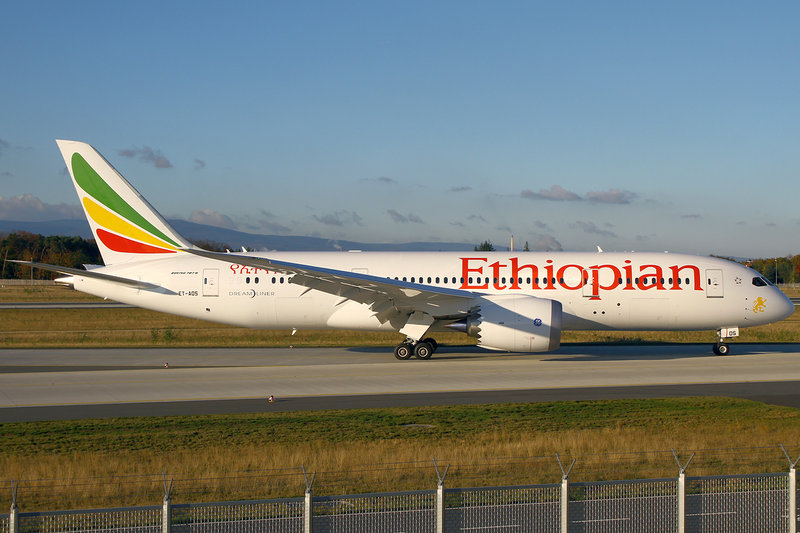
Ethiopian Airlines reports record profits, stands behind Dreamliner despite fire

Image Credit: Konstantin von Wedelstaedt
by Vinay Bhaskara

African carrier Ethiopian Airlines has announced a record net profit of 2.03 billion birr (US $107.6 million) for the period from July 2012 - June 2013, up 178% from 734 million birr (US $39.2 million)year-over-year (YOY). Operating profitability also rose a healthy 170% YOY to 2.7 billion birr (US $143.1 billion), from 1 billion birr (US $53.0 million). While the carrier has not yet formally released its financial results, CEO Tewolde Gebremariam presented these figures as coming from Ethiopian's un-audited results for the period. The formal announcement of results should come soon.

Interestingly, Gebremariam attributed Ethiopian's profitability in part to the troubled Boeing 787-8 Dreamliners, citing the fuel savings driven by the aircraft's increased fuel efficiency. His comments come just a month and a half after an Ethiopian Dreamliner memorably caught fire at London's Heathrow Airport in early July (an incident later attributed to a Honeywell Emergency Locator Transmitter), and a three month long grounding of the aircraft due to battery issues earlier this year. Gebremariam admitted that the Dreamliners had caused some issues for Ethiopian this past financial year:
Definitely the incidents and grounding have some impact. We were very fortunate that coincidentally the grounding of the planes were in what we call slack season. It's a slow demand season. So were able to minimize the level of the impact.
However, he also said that the carrier has seen a demand boost from the Dreamliners:
Whenever we introduce the aircraft in any route, the load factor immediately increases, which means our customers love the plane, they are enjoying its features
Ethiopian says that it will take delivery of its remaining 8 Dreamliners on order (5 direct orders and 3 leases), bringing the carrier's active fleet of 787-8 Dreamliners to 12 (13 frames on the books but one is currently indisposed at Heathrow Airport). Ethiopian currently operates a fleet of 54 passenger aircraft (with 31 more on order - 14 Airbus A350-900s, 8 Boeing 787-8 Dreamliners, 4 Boeing 777-300ERs, and 5 Boeing 737-800s) serving 80 passenger destinations around the globe. Based in Addis Ababa, Ethiopian is a member of the Star Alliance partnership of global airlines, and is one of the world's fastest growing airlines.
Read more »

American Airlines adds new Latin American routes, moves closer to LATAM


by Vinay Bhaskara


Yesterday, Dallas Fort Worth based American Airlines announced an expansion of its Latin American network, saying that it would launch services between its largest hub at Dallas-Fort Worth International Airport and Bogota, Colombia, as well as a likely triangular routing between its largest Latin American gateway at Miami and the Brazilian cities of Porto Alegre and Curitiba. Both services are projected to begin in "late 2013."

The move marks American's latest round of long haul expansion in Dallas after it announced service from Dallas - Fort Worth to Lima, Peru and Seoul, South Korea earlier this year and recently took delivery of its first Boeing 777-300ER. Following its entrance into Ch.11 bankruptcy protection in late 2011, American had temporarily slowed down international growth. But that pattern appears to have shifted, and both of these additions make a lot of sense.

Dallas-Bogota allows American to connect with Oneworld partner LAN Colombia (via the newly signed code share agreement) and serve a growing local market, while the burgeoning economic and cultural ties between Miami and Brazil with robust leisure and business traffic alike will make the second route a winner (Porto Alegre is the one of the largest Brazilian cities without service to Miami).

Additionally, they launched two new code shares in the region; the aforementioned LAN Colombia deal and another agreement with Brazilian carrier TAM. "American's new partnerships with TAM and LAN Colombia further strengthen our longstanding relationship with LATAM Airlines Group, Latin America's largest and most premier airline group," said Virasb Vahidi, American's Chief Commercial Officer.

After LAN and TAM merged late last year to create Latin America's largest airline, it was rumored that the merged carrier would gravitate towards the Oneworld alliance (TAM was previously a member of Star Alliance), and the new code share agreement only firms that suspicion. The deal will expand American's already massive Brazilian footprint and give Oneworld customers more seamless connections throughout the Americas.
Read more »

MAPS: New international flying rights granted to Indian carriers

India's erstwhile civil aviation ministry has granted new international flying rights to both national carrier Air India, and private carriers Jet Airways and SpiceJet.

First up is Air India, which received flying rights for  several new routes from its Delhi and Mumbai hubs.


The Sydney and Melbourne rights give credence to the idea that Air India plans to begin operations on the Kangaroo route. 

Meanwhile, Jet Airways received a mix of routes from Delhi and Mumbai as well.


Of these routes, Mumbai-Zurich and Delhi-Tashkent are the best prospects (especially the former if Jet Airways is able to secure a place in the Star Alliance). Finally, SpiceJet secured a potpourri of international rights, though a couple could be used to augment their burgeoning central hub in Delhi.
Read more »

India seeks Lufthansa help for Air India to join Star Alliance, again. Jet can join too.

At the Directors General of Civil Aviation conference being held in New Delhi, India's civil aviation minister, Mr. Ajit Singh said that his ministry would once again seek the help of German carrier Deutsche Lufthansa for Air India to enter (may be re-entry) the Star Alliance. In August, the world's largest grouping of airlines had rejected the national carrier's application to join the network.

The minister also offered a carrot saying, that the ministry was open to Air India and Jet Airways joining the alliance at the same time. The Star Alliance has already invited Jet Airways to become a member, but the private Indian carrier has not yet initiated formal steps to becoming a member.

The Economic Times reports and quotes the minister
Civil Aviation minister told media that Lufthansa, which is the founding member of Star Alliance, was given a lot of benefits to ensure that Air India joins the grouping.

"I believe a lot of facilities were given to the airline (Lufthansa) so that it would mentor Air India to join Star Alliance. They were given a lot of flights, it was made almost open skies for them. Now we are going to talk to Lufthansa to adhere to the plan we had," Singh said.
This is an exposè of a very serious nature. As AJ from Live from a Lounge puts it
The Government of India, being the interested party, and the owner of Air India, gave away national property (bilateral rights to fly) bringing in a lot of Lufthansa flights to India, just to ensure Air India got into the alliance.
At a time when the country is abuzz with unchecked distribution of natural resources like Coalgate and Spectrum, unbridled granting of bi-lateral air services capacity is a serious charge, one that has been previously levelled on the ministry when Praful Patel was at the helm, by an organisation no less, than the Comptroller and Auditor General of India. But then, coming to think of it, the statement by Mr. Ajit Singh relates to the time when Mr. Praful Patel WAS the minister of civil aviation.

Mr. Singh also informed that the ministry was looking at the all the existing bilateral Air Services Agreements, and exploring if the limitation of aircraft type could be removed. Such a move would mostly benefit existing middle eastern operators to India Emirates, Qatar Airways, Etihad, along with Singapore Airlines and possibly Lufthansa.

Read more »

Singapore Airlines opens new SilverKris lounge at New Delhi IGI airport T3

Singapore Airlines has opened its new Silver Kris lounge at New Delhi Indira Gandhi International Airport Terminal 3, its 13th lounge worldwide.
Singapore Airlines SilverKris Lounge New Delhi Airport Terminal 3
The 80 seat capacity lounge is made with wood and marble tones. The lounge is open to First and Business Class passengers of Singapore Airlines as well as elite members of PPS Club, KrisFlyer Elite Gold and Star Alliance Gold members.

Singapore Airlines SilverKris Lounge New Delhi Airport Terminal 3
The airline’s Senior Vice President Product and Services Tan Pee Teck said
“We chose Delhi as it is one of our busiest markets in India, with two flights a day to Singapore. It is also part of our ongoing commitment to customer service, which we believe starts from the ground and continues in the air. By offering customers an inviting space to relax in comfort, we hope to enhance their travel experience even before they board their flight,”
The lounge will offer hot meals, light snacks and beverages along with Internet access terminals and complimentary wireless broadband.
Read more »

Star Alliance members reject Air India, invite Jet Airways. Air India should choose oneworld

The Star Alliance, a global grouping of 27 airlines, has rejected the application of national carrier Air India to join the group. In over 14 years, and 28 applicants, this is the first time the application of any airline has been rejected.

A source, who wants to remain anonymous, confirmed, the alliance had effectively rejected Air India's application last year itself, but for diplomatic reasons termed the action, at that time, as a "suspension". The mountainous losses of Air India, and its crashing brand value, especially due to the recent pilots' strike, proved to be the proverbial straw that broke the camel's back. At a recent meeting, it is learnt, the majority of members of the alliance voted to reject Air India's application. The ballot is done in extreme secret and even the alliance members do not know of the vote of other members.

This rejection opens the door for India's largest private airline, Jet Airways, who has always eyed joining the alliance. Our co-editor Vinay Bhaskara has done an analysis on what this means for Jet.

As per a report in the Business Standard,
Ajit Singh, Minister for Civil Aviation, Government of India, said, “To be part of the Alliance, every member has to agree and that has not happened, especially after the pilots’ strike, when we lost a lot of credibility. They have practically said no, and had sent us a letter last week. We have asked Air India to look for other options and alliances.” Air India will now hold talks with other airline alliances like Sky Team and One World,

Which alliance for Air India?

In our opinion, oneworld will be the next best choice for Air India. The alliance is strongly committed to India, coming agonisingly close to being the first alliance to induct an Indian carrier, Kingfisher Airlines, before the carrier financially imploded. The alliance has also seen the closure of other members, Hungary's Malev and Mexico's Mexicana. So it is hungry for new members. The CEO of oneworld, Bruce Ashby, has strong Indian aviation experience as CEO of LCC IndiGo, and can work the delicate egos of the Indian bureaucracy.

Air India already operates flights to many oneworld hubs, London (British), Chicago and New York (American), Hong Kong (Cathay), Singapore (Cathay and Qantas), and Tokyo (JAL). Soon it will also commence flights to Sydney, hub of Qantas. Conversely, all existing oneworld carriers, save American, Qantas and LAN, operate to either, or both, Air India's hubs in Delhi and Mumbai.

oneworld currently has a weak presence in the Indian and South Asian market, and lacks strong connecting hubs east of Helsinki and west of Singapore. Amman, Jordan is too small, and Colombo, Sri Lanka is too far South.


Along with Air India, oneworld can bridge this gap and gain a commanding presence in the Gulf to South-East Asia geography with the upcoming entries of Malaysia Airlines, and Sri Lankan Airlines.


T3 in Delhi is already a true connecting hub for Air India, has an existing strong portfolio of destinations, not just in India, but across south Asia, and the Gulf. One the integrated terminal 2 is completed in Mumbai, it will only add to the hub strength of Air India.

Adding Air India to the fold would also solve one of oneworld's biggest problems; getting passengers to and from secondary Indian destinations. Air India already operates connecting flights from various cities across India to connect and feed its long distance international flights from Delhi and Mumbai.

Having solved many of its system's problems during the attempted integration with Star, Air India will also be far more ready, and its integration quicker, should oneworld decide to pursue a partnership.

Air India used to provide good inflight service, and with the assistance of oneworld and the backing of respected airlines like British Airways and Cathay Pacific would hopefully allow Air India to re-shape itself as an excellent service provider.

Frequent Flyer Programme

With Jet being invited and a virtual shoo-in to join the Star Alliance, its frequent flyer programme (FFP) JetPrivilege is going to get a massive boost, with members being able to accrue and redeem miles across all the member airlines. Air India's Flying Returns FFP risks being swept away and becoming irrelevant as both passengers and partners seek a broader base.

 oneworld members have been voted as having the best FFPs in the world, American Airlines in the Americas, British Airways in Europe and Africa, and Cathay Pacific in the Asia, Middle East, Oceania geographies respectively. An alliance with oneworld will also provide Air India the similar broad-basing as well as linkages with existing oneworld partners in the non-airline section.

What are your thoughts? Share a comment via our new Disqus 2012 comment system below.

Read more »

Analysis: Jet Airways Spinning Off Jet Priviledge

Mumbai based full service carrier Jet Airways recently released its annual report for fiscal year 2011-2012, and amongst the many things discussed was this (not so) little nugget about Jet Airways' frequent flyer program JetPrivilege.
The loyalty industry is evolving in India. Your Company proposes to leverage this evolving business opportunity by setting up a marketing services company engaged in the business of managing reward points and loyalty programs for its program partners. Initially, the marketing services company will be a 100% subsidiary company. As and when negotiations with the potential knowledge partners crystallize into a concrete decision, it is proposed that some percentage of the Company’s stake be offered to the knowledge partners.

Your Company currently runs a frequent flyer programme, the JetPrivilege programme, through which members can earn and redeem JPMiles. The JetPrivilege programme is managed and operated in-house. Your Company proposes to transfer the JetPrivilege programme to the marketing services company and in the process transform the JetPrivilege programme into a larger retail-based coalition loyalty program and through its operations unlock greater commercial value.

Approval of the Shareholders for transfer of the JetPrivilege programme to the subsidiary company will be sought through postal ballot in due course.

Therefore, the Board of Directors, at the Meeting held on 24th May, 2012, granted its unanimous approval for an investment up to 100% in the Share Capital of the proposed maketing services company.
While Jet Airways did not give any timeline for the move, it is still interesting that they would choose to spin off JetPriviledge, especially in light of their comments about increasing ancillary revenue during the first quarter analyst's conference call. Jet Airways is certainly not the first airline to spin off its frequent flyer program and use it for profit generation (known as a profit centre). Air Canada's Aeroplan and American Airlines' AAdvantage are both run separately as profit centres where the airline will sell off its miles to various partners (primarily credit cards), and then allow those partners to use the miles as rewards for their own loyalty programs, then provide award space where those miles can be redeemed for flights. At Western airlines, such profit centre frequent flyer programs have annual turnover of more than $1 billion and profits that run into the hundreds of millions of dollars.

The move also comes at a time when Jet is almost entirely remaking JetPrivilege. The program already has a ton of airline redemption partners, and the recently announced entrance into Star Alliance (pending government approval) will only make the frequent flyer program more attractive. Jet also recently dropped its 10 year partnership with CitiBank in favor of three different miles-earning credit card partners.

I think that the spin-off is likely to be very beneficial to Jet, as their frequent flyer program is already the most attractive one in India, and the potential addition of the entire Star Alliance global network to the redemption options will make Jet Airways frequent flyer miles a very valuable commodity. At the same time, Jet Airways has to be careful not to overuse the profit centre capability. Have you ever heard the saying, "if everybody's rich, then no one is?" Similarly, if the spin off creates a ton more Jet miles, then the existing miles will be devalued. The prices for award redemption would go up, which could anger and drive away current Jet Airways frequent flyers, who in the end are much more important to the company's prosperity than transitory mileage program partners.
Read more »

Analysis: Jet Airways asks for Indian government approval to join Star Alliance

Earlier today, a report from liveMint.com (India’s version of the Wall Street journal), stated that Mumbai based full service carrier Jet Airways has formally asked the Indian government for approval to join the Star Alliance global partnership of carriers.

Readers of Bangalore Aviation will remember that beleaguered national carrier Air India was put on hold indefinitely by Star Alliance in August of last year after a more than 4 years long admission process when Star Alliance claimed that Air India did not meet the minimum standards required for membership. While the fiasco cost Air India *only* Rs. 69 Crore (a veritable drop in the bucket for an airline that loses close to Rs. 20 Crore daily) in Star Alliance entrance fees, as well as the loss of a few minor code share partnerships with non-Star Alliance airlines, the rejection severely wounded the Government of India’s (GOI) pride as Air India became the first airline out of 28 applicants over 14 years to be rejected.  Rumors (unsubstantiated but credible) also emerged from our sources that GOI was particularly incensed by Star Alliance’s insistence on admitting Jet Airways into the alliance simultaneously with Air India.

The rationale for Jet Airways to join Star Alliance is very clear for both parties.

Said Jet Airways senior vice-president, planning and alliance, Raj Sivakumar, in a 16 July letter to aviation secretary Syed Nasim Zaidi:

In order to build the right global partnership and to support our future expansion plans, Jet has been evaluating the potential of joining a global alliance. We are pleased to inform you that we have made the decision to join Star Alliance….We request ministry approval to join Star Alliance. This would allow us to complete the comprehensive integration process as soon as possible in order to be better prepared for our planned international expansion.
Meanwhile, Star Alliance CEO Mark Schwab said in a March letter to Jet Airways chairman Naresh Goyal:

“I am writing following our last week meeting to confirm the interest of our members in naming Jet Airways in Star Alliance. Our members feel that the membership of Jet Airways in Star would be of mutual interest to them and Jet Airways, evidenced by the continuing discussions over several years. We trust that you share the same view…. To move this along, I would invite you to confirm the interest of Jet in joining Star Alliance, which we would take to the chief executive board for final approval and following which, we would establish project teams to manage and drive integration process.”
For Jet Airways, joining Star Alliance would present immediate financial benefits. It would right increase exponentially the value of the JetPriviledge frequent flyer program which has lost some of its luster in the past year, because JetPriviledge members would now be able to earn and redeem miles across Star Alliance’s global network, which encompasses more than 1,356 destinations in 193 countries around the globe. This would instantly make Jet Airways’ frequent flyer program the most attractive one in India for frequent international travelers, which could drive significant increases in JetPriviledge member levels. It would also increase the value of JetPriviledge for existing members, who in addition to the aforementioned international earning and redemption would also get the chance to qualify for Star Alliance Silver or Gold Status, which give frequent flyer access to Star Alliance lounges, free checked bags, and a host of other benefits when flying Star Alliance carriers. 

From a general business strategy sense, Jet has the closest relationships with Star Alliance carriers already, especially with part-Lufthansa owned Brussels Airlines who provides European and a touch of African feed into Jet Airways’ India-North America scissors hub in Brussels. Joining Star Alliance would allow Jet Airways to potentially pursue the trans-Atlantic joint venture strategy we outline in part one of our analysis of Jet Airways’ international operations (part 2 will be out soon). Jet will also get the lion’s share of Star Alliance premium and business travel within India (a source of additional revenue), and will be more easily able to flow its passengers onto the Star Alliance network at international Star Alliance hubs like Frankfurt and Brussels in Europe, Newark and Toronto in North America, and Bangkok and Singapore in Asia.

For Star Alliance, the addition of Jet Airways fills the single biggest “hole” in their global network; India. While Star Alliance does have the best bracketed coverage of India by any of the three major global alliances, by virtue of large Indian operations from Lufthansa, Thai Airways, and Singapore Airlines, India is undoubtedly the most important market in which Star Alliance is lacking. So the single biggest benefit provided by adding Jet Airways to the alliance would be to give the alliance an impenetrable edge in the Indian domestic market and unparalleled access to India. Similar benefits would apply to general Star Alliance frequent flyers that fly to India often, who would get access to more lounges within India as well as better earning and redemption for Indian flight.

While the mutual benefit is patently obvious, the more interesting question is how will the Ministry of Civil Aviation respond? GOI has been known to hold grudges before as any government is wont to when its perceived interests are challenged. Air India is GOI's "baby" for lack of a better word, and when somebody attack's its baby, no mother is eager to provide assistance to the attackers. On the other hand, allowing Jet to enter Star Alliance would be clearly beneficial to many Indian citizens, which is something that GOI is mandated to accomplish. So the essential question is whether the stung pride of GOI and the civil aviation ministry has healed enough to allow Jet's entry. Naresh Goyal is a man with serious clout in the civil aviation ministry and that opposing force will be enough to make the discussion of Jet Airways and Star Alliance compelling theater at the Ministry of Civil Aviation in the coming months
Read more »

Lufthansa group analysis - Part 2: India Operations

Vinay Bhaskara

India is the second largest market for German carrier Lufthansa, after North America, in numbers. In return the all member airlines of the "Lufthansa Group" including SWISS, and Austrian Airlines devote a considerable share of their fleet to India, while Brussels Airlines has a strategic partnership with India's largest private carrier Jet Airways.

Most Lufthansa loyalists were excited about Lufthansa's plans to its all new Boeing 747-8 Intercontinental (748i) to India, with its brand new flat bed business class product, feeling it once again demonstrated the commitment of the “Lufthansa Group” of airlines to their Indian operations. (Click to see videos and photos of the new Lufthansa business class.)

The deployment of the 747-8i was not driven solely by Lufthansa’s own priorities. The Government of India has been sitting on the carrier's request to deploy the Airbus A380 superjumbo to New Delhi. As per sources, the carrier has also run in to a diplomatic spat when the Star alliance "indefinitely suspended" national carrier Air India’s entry. Lufthansa is the mentor for Air India's entry, and is also a founding member of the alliance.

With the Indo-German bilateral agreement allowing generic "747" aircraft, most industry insiders felt operating the 747-8i was a smart move, especially on the lucrative Delhi and Bangalore sectors which. like all other Lufthansa Boeing 747-400 destinations, are suffering from an outdated business class cabin, that the 748i will remove.

Just last week, for unexplained reasons, Lufthansa put paid to the hopes of its many Indian fans and announced the 748i would be first deployed to other north American destinations like Chicago and Los Angeles, ahead of India. The reasons for this move remain unanswered, despite our best attempts.


There have been a few bumps in the road. In 2011, Lufthansa Group announced a couple of changes to its Indian operations, with the first being that Austrian Airlines service between Vienna and Mumbai was being canned yet again. The flight had just resumed in 2010 after being dropped before in 2008, but apparently Austrian Airlines’ network cuts (especially on the long haul side) were just too deep to make a Mumbai flight viable.

Meanwhile Lufthansa itself announced an end to flights between Kolkata and Frankfurt, marking another “nail in the coffin” for international long haul services from the city. Domestic traffic growth in Kolkata remains very strong, but if they are not careful over in Bengal, they might find their international airport in a state of permanent “bandh” from all non-Gulf international carriers.

Internationally, the Kolkata market is very low yield and dependent heavily on visiting family and relatives (VFR) traffic which becomes marginal in times of economic trouble, such as now., when carriers like Lufthansa have to face the dual threat of a double dip European recession and ever-rising fuel prices.

That being said, we’d like to take a look at Lufthansa Group’s operations within India.

Currently, the trio (Lufthansa, Swiss, Austrian) operate close to 66 flights per week for the April-June semi-peak season from five Indian ports to four European hubs.

Secondly, the entire business model for Lufthansa Group’s Indian operations is based on connecting traffic. In 2009-10, as per DGCA, Lufthansa proper carried 1.137 million passengers to and from India. A staggering 988,000 of those passengers or 87%, were carried as 6th freedom connecting passengers, while 149,000 were origin and destination (O&D) passengers traveling to Frankfurt and Munich. Meanwhile Swiss carried 203,000 total passengers to and from India, and 128,000 or 63% of those were 6th freedom connecting passengers, while 75,000 passengers flew directly to Zurich. Finally, Austrian carried 97,000 passengers, with 83,000 connecting and 14,000 O&D for an 86% connection ratio.

European connections certainly play a big role in Lufthansa Group operations from India, but these have become much more lower yielding in the past few years as gulf behemoth Emirates has continued to balloon and now offers the same one stop service to most European destinations as the European carriers.

Either way, Vienna, Munich, Frankfurt, and Zurich all have hundreds of European flights at every possible hour of the day, so the European connection line is clear. Furthermore, because of the continual frequency, the carriers do not need to structure their operations around European flights. Thus when analysing the structure of the Indian ops, we will primarily consider connections to North America and Brazil, which are the two largest traffic bases to and from India. For Indian Americans, the most important destinations are Toronto, New York/Newark, Los Angeles, San Francisco, Chicago, Boston, Washington D.C., Sao Paulo, Vancouver, Houston, and Dallas-Fort Worth.

On a hub by hub basis, all of the above destinations are served from Frankfurt with the remaining three hubs (Munich, Vienna, Zurich) having mixed services to those destinations. The tables below are as follow. The first table is a synopsis of India-EU services on Lufthansa group, with the arrival times into the European hub highlighted. The next four charts denote departure times (of the earliest flight when there are multiple daily flights) to the destinations we mentioned above from Frankfurt, Munich, Zurich, and Vienna in that order.

As expected, Frankfurt provides the most connectivity by far, with service to all of the destinations but two (Newark and Toronto) lining up within 2.5 hours of arrival times from India, which occur between 7 and 8:30 am. Furthermore, those two destinations have earlier service from Lufthansa’s trans-Atlantic joint venture (JV) partners United Airlines and Air Canada. This JV basically allows these carriers to act and operate as one airline across the Atlantic; they share revenues, costs, and profits).
Frankfurt is unique amongst these hubs as it has 2 banks of departures to North America, one that occurs in the morning around 10:00 am and is designed to facilitate connections from Asia and the Middle East, as well as one in the early evening around 6:00 pm to allow connections and O&D from Europe and Africa.

The one outlier from India is the flight from Pune, the all business class, PrivatAir operated, Boeing 737 Lufthansa Business Jet, which arrives in Frankfurt at 12:10 pm, and basically caters to the senior management O&D traffic between Europe, Germany included and the many European auto manufacturing companies located in Pune.

When traveling to these European airports (with the exception of Zurich) long haul connections are a little more complex, as passengers must often pass through security checkpoints for a second time. Thus the two to three hour wait till the US flights is actually quite necessary, and it is often all but impossible to make a long haul connection in Frankfurt in less than an hour. At the same time, Lufthansa cannot afford to put too much time between the connections so as for them to lose their viability amongst business travellers (the typical maximum is somewhere between 3 and 4 hours).

The operations in Munich and Zurich are a bit more mixed. Once again, flights are timed to arrive in the morning (excluding Delhi-Munich which is likely the way it is because of aircraft rotation needs), but the flights to North America are a little more diverse, primarily because neither Munich nor Zurich is a strong enough hub to support two banks worth of North American flights. Still the pattern is relatively clear; the core Indian flights arrive before flights to the US/NA depart in each case.

Vienna does not have the same value proposition, though the connection time is adequate (4 hours or so). But they no longer have enough US destinations to really sustain flights from Delhi, meaning that the route is heavily dependent on European connections. And with the MEB4 (MEB3 + Turkish) continuing to chip away at the Asia-Europe market, that’s not really a strong place to be from a yields/profitability perspective. Geographically, Vienna is just 400 km east of Munich, and as such is only a more convenient connecting point for travellers to the Balkans and Eastern Europe. But the primary base of profitable India-Europe connections is to Western Europe, and as such, Delhi-Vienna is a largely redundant route in the overall Lufthansa group. Thus we feel that it is likely that Vienna-Delhi will be cut again rather soon, especially with Austrian Airlines facing severe financial troubles. The 260 seats per day out of Delhi that are lost can be replaced entirely if Lufthansa is allowed to bring the 525 seat A380 onto Delhi-Frankfurt, or partially through up-gauge in equipment of both Munich and Frankfurt to Delhi.

While I chose Sao Paulo as a representative route for South America because it is the single largest destination from India, the same applies to Latin America in general, where the majority of Lufthansa departures are scheduled for the late night, creating a 12-15 hour wait between arrival from India and departure. This is largely a value proposition, as the South American O&D market favours these sorts of timings. However, what this has done in effect is allow the MEB4 to clean the EU carriers’ clocks on the growing India-Latin America market. Previously, passengers travelling from India to Latin America connected in Europe almost by default, as these were the only convenient one-stop options, even with double digit layover lengths.

But now, with the onset of Middle Eastern and even Asian flights to Latin America, it has become easier for Indian travellers to get to and from South/Central America, right as the market has begun to explode. Within a few years, it is projected that city pairs like Mumbai-Sao Paulo will have enough O&D demand to sustain a nonstop flight (though the distance is too far to permit such operations).

Thus Lufthansa has locked itself out of a growing market, a fact that becomes apparent when one realises that it is actually quicker to fly Mumbai-Singapore-Barcelona-Sao Paulo on Singapore Airlines than Mumbai-Frankfurt-Sao Paulo on Lufthansa thanks to the super long layover. Obviously for Lufthansa, their own O&D considerations are more important, but perhaps in the future, they will introduce another daily flight from Mumbai and Delhi that can connect more efficiently to their evening and night long haul banks; perhaps once they acquire the next generation of more efficient long haul aircraft like the Boeing 787 and Airbus A350.

So what does the future hold for Lufthansa group in India?

Firstly, consolidation will be very important. Hyderabad and Kolkata have already been dropped from the roster of destinations, and expect capacity to cluster in Mumbai, Delhi, and Bangalore (the three current Boeing 747-400 destinations). In my opinion, Austrian Airlines will keep its services to India limited to New Delhi, but there is strong future potential for flights to be added from either Munich or Zurich to Bangalore in the medium term, four to six years out, by some other member of the group.

Thus from a macro-level perspective, Lufthansa’s Indian operation will be largely stable as the carrier attempts to hold off the ever-growing threat from the MEB4. It will be critical that they find a local feeding partner as well, which can improve their traffic base in secondary cities like Ahmedabad, Kolkata, Hyderabad, Kochi, Amritsar and the like.

Whether the ever inconsistent Air India can reform its act enough to become that partner remains to be seen, but even the alternate case of taking on an LCC like SpiceJet is not the worst possible thing. It’s ironic, but perhaps for Lufthansa, the Indian Airlines-Air India merger was a bad thing. If the carriers had remained separate in 2007-8 then the well thought of and profitable (though it is unclear if that profitability would have survived the global financial crisis or onslaught of low cost carriers) Indian Airlines might have been the perfect feeder partner for both Lufthansa and Star Alliance.
Read more »

Jet Airways should strengthen its Brussels hub, not shift to Munich

Editor's note: This is Part 1 in a series of analyses answering the question: “What should Jet Airways do with its international operations?” Parts 2 and 3 will cover the idea of a Mumbai hub and the fate of Jet’s 777-300ER fleet.
Photo courtesy Jet Airways
Late last week, a report emerged from the Economic Times of India that India's largest private airline, Jet Airways, was considering a shift of its scissors-hub operation for flights to North America from Brussels to Munich. While questions have arisen about the factuality of the report, the combination of such rumours and the fact that Jet Airways recently applied for 35 weekly frequencies between India and Germany lends credence to the idea that Jet might actually consider such a move.

While Munich would appear to have a larger origin and destination (OD) market with North America and India, Brussels has the edge to North America. Munich, lying close to the automotive heartland of Germany, and virtually all German automotive majors having a presence in India, has the traffic to and from India, it is also a full-fledged hub for Star Alliance member and global behemoth Lufthansa, who operates more than 250 flights per day in Munich. Supposedly, the shift in scissors operation would be in conjunction with Jet Airways' entry into the Star Alliance global partnership of airlines.

However, it is doubtful that Jet Airways will be allowed entry into Star Alliance unimpeded. In August 2011, Air India’s long touted entrance into Star Alliance was delayed indefinitely, due to a variety of operational, financial, and service issues. However, reports that have emerged since that time give indication that one of the sticking points on Air India’s entry was that the Star Alliance insisted on the condition that Jet Airways be allowed to join the alliance simultaneously (listen to podcast here). Whether or not these reports are true, India’s government has taken a provocative stance, and is unlikely to allow the induction of Jet Airways without significant concessions from the alliance.

Regardless, there is a scenario under which a scissors hub in Munich just might be viable. The most important step for Jet Airways would be to secure antitrust immunity (ATI) and/or a joint venture with Lufthansa. This would allow the two airlines to coordinate on schedules, pricing, and service, as well as (most importantly) sharing costs and profits. Once this profit sharing plan is in place, it incentivises Lufthansa to slot Jet Airways’ flights into its current hub.

With that in mind, the potential exists for Jet Airways to integrate its scissors hub operations into the current Lufthansa hub structure at Munich. The current departure timings to North America from Munich are as follows (including Lufthansa’s partner airlines):

Newark: 0920 (United), Charlotte: 1125 (Lufthansa), Washington DC Dulles: 1140 (United), New York JFK: 1145 (Lufthansa), Toronto: 1150 (Air Canada), Philadelphia: 1215 (US Air), Chicago: 1235 (United), Newark: 1530 (Lufthansa), Chicago: 1535 (Lufthansa), Montreal: 1540 (Lufthansa), Los Angeles: 1545 (Lufthansa), Boston: 1555 (Lufthansa), Washington DC Dulles: 1555 (Lufthansa), San Francisco: 1605 (Lufthansa)

Current India operations are timed to arrive in the morning (from Mumbai) and around noon (from Delhi)

Currently, Jet Airways operates three sectors in each direction of Brussels; three to and from India - Mumbai, Delhi and Chennai and three to and from North America - Newark, New York JFK, and Toronto.

Under this hypothetical scenario, there is one potential path for Jet to follow. Their long haul flights should be integrated into Lufthansa’s afternoon departure bank and timed between 3:45 and 4:15 pm. Under this scenario, there would be overlap between Jet’s EWR service and Lufthansa’s, so the carrier would instead pair Mumbai service with Miami on a daily A330-200 service Mumbai-Munich-Miami. The Mumbai-Miami leg has more than 40,000 OD passengers per annum, the Munich-Miami leg has close to 50,000 OD passengers per annum, and the Mumbai-Munich leg has around 25,000 OD passengers per annum, for a sum OD of close to 115,000 passengers per annum. A daily A330-200 represents roughly 160,000 seats per annum, so when combined with new connections enabled by Lufthansa’s hub, the flight could be adequately filled.

Delhi-New York JFK and Chennai-Toronto services could be continued by simply substituting a Munich stop for the Brussels one once again retaining the usage of an A330-200. Finally, a Bangalore-Munich-Houston routing with A330-200 could be used to connect two Star Alliance hubs and feed Bangalore into the scissors hub. This routing would be more heavily dependent on connecting traffic from Lufthansa, and on connections with Latin America in Houston. All of these flights would be timed to arrive between 12 and 1 (with late morning departures from the Indian airports allowing for connections from other Indian cities).

Return flights for the 8 segments would work similarly, with early afternoon departures from the US (2pm~4 pm). Return flights would arrive in Europe in the early morning (6am~7 am), as do most trans-Atlantic flights, and then a departure bank back to India would leave around 9am~10 am.

This series of flights would maximise loads and utilisation of Jet’s flights thanks to the improved connections, especially on the long haul connections to the US which will improve the overall flight potential.

However, despite this potential viability, we feel instead that Jet Airways should maintain its scissors hub operation in Brussels, for a couple of important reasons.

The first is that OD between India and Brussels is more plentiful than to Munich, (roughly 140,000 annual passengers versus around 85,000 annual passengers) though Munich traffic is higher yielding. But even more importantly, OD traffic between Brussels and the US is more plentiful than from Munich (700,000 annual OD versus 600,000 – both estimated figures), and higher yielding. High-yield OD is critical to the profitability of long haul flights.

Secondly, Jet Airways has already built up significant loyalty in the Brussels-North America market, which is equally critical for the viability of these flights. Moving to Munich will mean that they would have to once again start from scratch in building customer loyalty, which is likely to be retained by Lufthansa anyway.

If Jet Airways can get a joint venture with Lufthansa in spite of the Air India-Star Alliance fiasco, then they can just as easily get a JV with Brussels based Brussels Airlines (with whom they already have a code-share agreement), who did not have as direct of a role in Air India’s deferral as Lufthansa, who sponsored the Indian national carrier’s entry into the alliance.

Once this JV is in hand, Jet Airways could proceed as follows. Brussels Airlines is already starting a daily Brussels-New York JFK flight to connect into their own African network, so with a JV, Jet could drop the Brussels-JFK segment of their flight from Delhi, and instead replace it with Chicago O’Hare (while Brussels-New York is a larger market, it also has much more competition). This route would continue to be served with an Airbus A330-200, while Mumbai-Brussels-Newark and Chennai-Brussels-Toronto will continue with their current equipment. Additionally, Bangalore-Brussels-San Francisco would be added daily using A330-200s.

While Bangalore-Brussels OD demand is very small, at just over 7,000 passengers per annum, there is a huge and well documented high-yielding OD demand between Bangalore and San Francisco (73,000 passengers per year) thanks to IT industry links, while Brussels-San Francisco is also a large market (57,000 passengers per year). This cumulative passenger base of 130,000 passengers should be more than enough (along with connections from both Jet Airways and Brussels Airlines short haul networks) to fill daily A330-200 flights on the 258 seat variant, or even 777-300ER of current configuration (it would provide for optimal utilisation of the 777-300ER fleet as one of few routes with huge high yielding OD traffic base).

Longer term, a second daily flight Mumbai-Brussels-Miami (50,000 passengers per annum Mumbai-Miami – 53,000 passengers per annum Brussels Miami) with low density A330-200, as well as a four times per week flight Delhi-Brussels-Vancouver (120,000 passengers per annum Delhi-Vancouver, 15-40 thousand passengers annually between Brussels and Western Canada) using a high density A330-300 (more on this in another part). Finally, a three times per week Chennai-Brussels-Los Angeles could be run with the same high density A330-300 to tap into the large OD market Chennai-Los Angeles (more than 15,000 passengers per annum) as well as Brussels-Los Angeles (69,000 OD passengers per year).

The aforementioned changes will allow Jet Airways to continue to grow critical mass at Brussels, and win an ever increasing share

So to summarise, here is our proposed structure of Jet Airways’ scissors hub in Brussels.

Near-term (within 1 year of writing):

Delhi-Brussels-Chicago O’hare: daily: A332
Mumbai-Brussels-Newark: daily: B77W
Chennai-Brussels-Toronto: daily: A332
Bangalore-Brussels-San Francisco: daily: A332 or B77W

Long-term (within 3-5 years of writing)

Delhi-Brussels-Vancouver: 4/week: A332
Chennai-Brussels-Los Angeles: 3/week: A332
Mumbai-Brussels-Miami: daily: A332

Map generated courtesy GCMap
Read more »

INFOGRAPHIC: Airline wise seat capacity offered at Bangalore

The below infographic shows the capacity offered, in seats per week, by each airline at Bangalore's Bengaluru International Airport. Please click on the image for a detailed view.

Airline wise capacity share ex Bangalore India at Bengaluru International Airport
Kingfisher with 65,724 seats, is still the market leader, but unlike earlier days, when the airline was considered based out of Bangalore, its lead over second place IndiGo, has shrunk significantly.

IndiGo, the Gurgaon based low cost carrier is showing a clear committment to the domestic segment at Bangalore, and has leapt almost a percentage point ahead of India market leader Jet Airways whose low capacity share is rather surprising.

Barring one sole flight to Dubai by Kingfisher, Air India is the only Indian carrier to operate international flights from Bangalore. Air India capacity is small since most of its operations are Airbus A319 based and few are A320. The national carrier does not operate any A321 or wide-body service ex Bangalore.

On the international side, Emirates is clearly the market leader with 21 A330-200 flights offering 10,416 seats a week, double that of its nearest competitor, Germany's Lufthansa which operates a daily Boeing 747-400 to Frankfurt.

With members Lufthansa, Singapore Airlines, Thai Airways and Air China operating flights to Bangalore, the Star alliance is clearly the market leader at present. With Kingfisher due to enter the oneworld alliance in early 2012, the balance could be redressed.
Read more »

Photos: Lufthansa rolls out their first Boeing 747-8i. Delivery scheduled for Feb 13th

By Devesh Agarwal and Vinay Bhaskara

Late on September 4th, 2011, the first Boeing 747-8 Intercontinental rolled out of a paint hangar near Boeing’s Everett Factory in Seattle in full Lufthansa colors. This first aircraft, which will be registered as D-ABYA, will undergo stringent ground tests ahead of planned initial test flights beginning in November.


As per Boeing
, this first aircraft is tentatively scheduled to be delivered to the German airline on Feburary 13, 2012 and enter service in spring of 2012.


Lufthansa is the launch customer of the Boeing 747-8 Intercontinental, a stretched re-engine of the popular Boeing 747-400 aircraft. According to Lufthansa:
“The Boeing 747-8 has been stretched by six metres compared with the Boeing 747-400. The new Jumbo measures 76.3 metres in length, making it the world’s longest passenger airliner. The Boeing 747-8 is also setting new standards in terms of sustainability. For example, the redesigned wings with their state-of-the-art profile and ranked wingtips give the aircraft an aerodynamic advantage. In addition, the newly developed GEnx-2B67 engines offer greater fuel efficiency as well as reduced emissions and noise levels. The Boeing 747-8 consumes 13 per cent less fuel than the Boeing 747-400.”
Lufthansa has firm orders for 20 Boeing 747-8 Intercontinental aircraft, which are scheduled to be delivered between 2012 and 2015. The carrier also has further purchase options for 20 more examples.


India is a large recepient of Lufthansa's existing Boeing 747-400 fleet, with the carrier operating the Jumbo jet to Bangalore, Delhi, and Mumbai out of a total six destinations to India. Clarification: Lufthansa will be suspending service to its seventh destination Hyderabad next month.


With the Government of India sitting on the carrier's request to operate the Airbus A380 super-jumbo on the Delhi-Frankfurt route for over a year, there was hope that Lufthansa would upgrade certain India routes to the 747-8i. However, a spokesperson for the airline indicated that the carrier "has no concrete plans yet for any changes in our existing fleet serving India" seeming to indicate a certain negative sentiment within the corridors of power within the civil aviation authorities following the rebuff of Air India by the Star alliance, an effort in which Lufthansa was the mentor to the national carrier.

Photos courtesy The Boeing Co. and Lufthansa A.G.
Read more »

Star Alliance indefinitely suspends Air India's membership application. An opening for Jet Airways?

India's national carrier Air India has achieved a rather dubious first -- the Star Alliance network of airlines, has suspended Air India's membership application indefinitely -- the first time it has done for any applicant airline.

In a diplomatically worded release, the network says
The member airlines of the Star Alliance network and Air India have jointly concluded that the integration of Air India into the global airline alliance will be suspended. This is due to the fact that Air India has not met the minimum joining conditions that were contractually agreed in December 2007.


Following a recent review of the status of Air India’s application at a meeting held between the Indian Ministry for Civil Aviation, Star Alliance CEO, Jaan Albrecht and the Air India CMD, Arvind Jadhav, the decision to suspend has received subsequent confirmation by the Star Alliance Chief Executive Board.


A spokesperson for Air India confirmed that the airline has received notice of the decision. He informed Bangalore Aviation that the carrier is in discussions with the alliance.

Since 2007, Air India has been grappling to meet an extensive list of requirements and the alliance has repeatedly revised its deadline for the carrier. Air India was given a final deadline of July 31 to join the group of airlines, the largest in the world, which has 27 members that carry more than 600 million passengers a year.

This is a major setback to the national carrier not just in reputation but also in terms of potential revenue. The alliance membership was expected to bring in about $150 million worth of desperately needed annual revenue and was a cornerstone of a turnaround plan of the airline.

An Air India source wishing to remain anonymous expressed surprise at the decision since the carrier has written confirmation from the alliance's integration process chief that the airline has met the minimum requirements.

However, an industry insider familiar with the workings of alliances, indicated that even if Air India has met the list of requirements, each member airline of the Star alliance also looks at the applicant airline in terms of its reputation, brand equity and loyalty, financial stability, etc. The financial mess at Air India, repeated strikes, and lack of a coherent turn-around plan or visibility in to the viability of the airline has eroded what little confidence the industry had for the carrier. Politics may have also played a role. Under pressure to support Air India, the Indian civil aviation ministry has dramatically scaled back granting additional bi-lateral rights to foreign carriers, many of them, members of the alliance. Is the Air India vote, a payback?

While all the parties are putting a positive spin on the decision, calling it an "indefinitely suspension", the statement by Star Alliance CEO, Jaan Albrecht, if read carefully, seems to indicate the Air India application is effectively dead
"Existing bilateral relationships with Star Alliance member airlines are not affected by this decision, which also leaves room to discuss a potential Alliance membership at a future stage, if deemed appropriate by both parties."
A spokesperson for the mentor for Air India's integration in to the Star alliance, Germany's Lufthansa, said that the decision of the alliance will not affect its existing bi-lateral relations with Air India which covers about 300 code-share flights globally.

The decision by the alliance opens an opportunity for Mumbai based Jet Airways who, despite regular announcements to the contrary remains keen to join the alliance. The alliance sees the India market as a major opportunity and is keen to have a member from India join the alliance.

Jet has existing bi-laterals with a few Star alliance members like United Airlines and Brussels Airlines, and has created a European scissor hub at Brussels. Industry scuttlebutt has it, that some Star member airlines are keen to have Jet in the alliance and Air India out.

The elephant in any Jet-Star alliance room will be Air India's boss -- the Ministry of Civil Aviation, who is without doubt, most unhappy with the decision of the alliance. But then, the political clout of Jet Airway's boss Mr. Naresh Goyal, is legendary.

What are your thoughts on these developments?
  • Does Air India deserve the decision of the alliance?
  • Should the alliance invite Jet Airways?
  • Should the alliance give Air India another chance?
  • Has Star alliance muddled its relations and strategy for India?
  • What advice would you give to Air India or the Star alliance?
Post your views via a comment.

We also recommend you read related articles here and here.
Read more »

bmi first to commence Amritsar London Heathrow direct service

bmi, British Midland International, Heathrow’s second largest airline, and a member of the Star Alliance will commence a thrice a week service between Amritsar and London Heathrow starting on 14 October 2011.

bmi Airbus A330-243bmi Airbus A330-242 G-WWBB. Photo copyright Devesh Agarwal.

Flights will operate to London Heathrow via Almaty in Kazakhstan. bmi will be the only airline to offer a direct route from Amritsar to the United Kingdom which has a very large Punjabi diaspora. Services will be operated on an Airbus A330 aircraft and will offer a full service Business Class and Economy cabin. The aircraft offers 36 Business and 196 Economy seats.

BD992 will depart Amritsar 04:10, arrive Almaty 07:45; depart Almaty 08:45, arrive London Heathrow 10:50 on Tuesdays, Fridays and Sundays

BD991 will depart Heathrow 09:55, arrive Almaty 23.20; depart Almaty 00.10+1, arrive Amritsar 02.45+1 on Mondays, Thursdays and Saturdays

Business Class customers get a 60” seat pitch and seat recline of 50 degrees, electronic seat controls, in-seat power, a 15” personal video screen and comfortable noise cancelling headphones. Economy passengers get a 32” seat pitch with a recline of six degrees and a personal 15” seat back video screen.

bmi is offering promotional fares starting at Rs. 39,428 including taxes. The bmi India call centre is at 1 800 209 8070.
Read more »

Jet Airways in talks with Air France-KLM, Delta, and Alitalia. To finally join SkyTeam?

Both Bloomberg and The Wall Street Journal are reporting that India's largest carrier Jet Airways is in talks with Air France-KLM, Alitalia and Delta Air Lines Inc. about joining the SkyTeam alliance.

Jet has long practised a policy of bi-lateral and code-share agreements and officially, its management has steadfastly refuted any speculation of carrier joining an alliance, but with Air India finally clearing its hurdles to enter the Star Alliance, and Kingfisher Airlines making progress as a member-elect of oneworld, Jet may not be able resist any longer. A source at Jet Airways said joining an alliance was now "inevitable".

Skyteam will be a good fit for Jet Airways. The Mumbai based carrier already flies to New York JFK, and Milan, major hubs for existing SkyTeam members Delta and Alitalia, in addition to Newark and twice daily to London Heathrow.

Jet Airways international expansion fitting with SkyTeam.
How Jet's international expansion fits with SkyTeam. Click on image for a larger view.

With Alitalia, Jet has also forged code-share agreements for onward connections to Europe. Its 2011 expansion includes Seoul Incheon, Amsterdam, and Rome again hubs for Korean Air Lines, KLM, and Alitalia.

While it has been denied permission, for now, by the Indian government to fly to Paris, the hub for Air France, industry insiders know that Jet will obtain the Paris permission soon enough.

Unlike Kingfisher which is a weak entrant and is being forced to compromise in return for entry in to oneworld, Jet will be in a strong negotiating position with SkyTeam. Jet offers a formidable pan-India network in both the full service and low cost segments, and more importantly, Jet fills a crucial void current missing in the Skyteam network, with its good network from the middle east to south-east Asia, which will also connect to existing SkyTeam members like China Southern and Vietnam Airlines and with Garuda Indonesia when it joins the alliance.

A possible demonstration of this strong position can be obtain from Dutch news site luchtvaartnieuws, which is reporting that Jet will move its Brussels hub to Amsterdam and take over one India USA route from KLM.

I have been long espousing that Jet should join SkyTeam sooner rather than later. Do you agree or disagree with my views? Please post a comment. Let's have a discussion.
Read more »

Video: Air India's Boeing 787 Dreamliner displays Star Alliance logo

Matt Cawby at Skyline Photography and author of the great Paine field blog, took this video of Air India's fourth Boeing 787 Dreamliner VT-AND being wheeled out of the paint shop.


Around the 2:00 minute mark in to the video, you will observe the Star Alliance logo just behind the Indian flag on the right side of the aircraft just adjacent to the cockpit windows.

The national carrier's entry in to the Star Alliance has been repeatedly delayed. Air India has announced an end of February merger deadline of its AI and IC flight code in to a single AI flight code, a key requirement of the alliance with an expected alliance joining date in the 2nd or 3rd quarter this year.
Read more »